
A new zero-carbon microgrid development underway in the UK could pilot a route to the use of microgrids that add far greater value to energy consumers.
The Grove Park housing and business development at Sellindge, near Ashford in Kent, will be powered exclusively via a renewable energy plus storage microgrid coupled with a smart grid management controller.
Housing developer Quinn Estates is working with SNRG SmartGrids, a microgrid-as-a-service company that is backed by Centrica, one of the UK’s largest energy companies. SNRG will design, finance, build and operate the privately owned microgrid, providing energy-as-a-service for the 162 houses being built at the project.
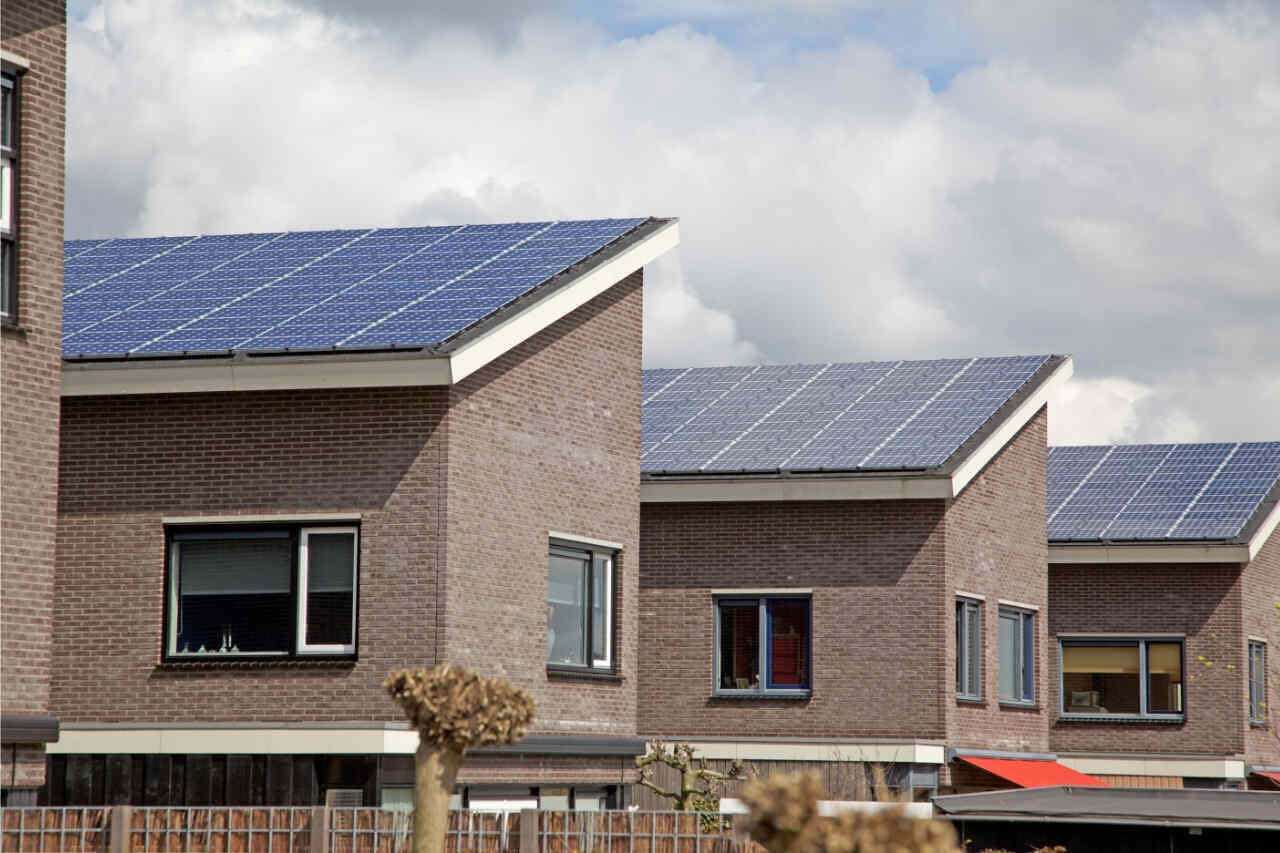
While SNRG is technology agnostic, it has developed its own in-house smart grid management system that can integrate with any appropriate technology as part of its solution. It is anticipated that the project will use local renewable energy generation and is likely to focus on rooftop solar PV as the main source, but it could also connect to such “off-site” generation assets as a nearby solar farm, wind capacity or air source heat pumps. A large community battery and electric vehicle (EV) chargers will also form part of the low-voltage smart network that will connect via the Centrica Honeycomb platform.
Grove Park has outline planning consent and although firm details for the microgrid are still being finalized, construction development is expected to commence by the middle of 2022. It will form part of a pipeline of some 24,000 homes that Quinn Estates has in planning across southeast England.
Value of the zero-carbon microgrid
“This project is reflective of the fact that we really have to decarbonise if we are going to meet our climate change goals. The Future Homes Standard will require new homes to be zero carbon-ready and all electric with no gas network connection. The government has set a target of implementing that by 2025,” Dan Nicholls, managing director of SNRG SmartGrids, told Microgrid Knowledge.
The SNRG business model is designed to reduce risk, cost and complexity for the construction industry as it moves to develop all electric housing. Part of the smart management system includes an EV charge management system to limit peak loads as part of a demand-side response capability.
Nicholls noted, “There is a knock-on benefit for the developer in terms of the amount of capacity that needs to be secured and the noncontestable costs associated with reinforcing the distribution network.” Consumers also have to shoulder some of this cost.
“There’s a wider benefit, too. If we are to meet the target of building 300,000 new electric-only homes a year in the UK, the costs of upgrading the grid to meet that need could be quite substantial. We can mitigate that with local energy systems,” Nicholls added.
Cost savings
SNRG aims to create an energy positive neighborhood, which will generate more power than it consumes and will save residents up to 30% on their energy bills. “Our vertically integrated local energy solution also ensures that consumers don’t pay more to live in an all-electric home,” he said.
The Grove Park project will include a total renewable energy generation portfolio of around 500 kW and thus at the small utility scale. But with a significant pipeline of potentially suitable projects under development, the microgrid-as-a-service model could see a substantial advantage emerge in terms of ancillary services and overall grid management.
“Building out these modules to serve the community does present an interesting opportunity in terms of new business models. You end up building a fairly significant generation portfolio that could potentially be aggregated and leveraged,” Nicholls said.
This article was originally published on Microgrid Knowledge. Reproduced here with permission.