
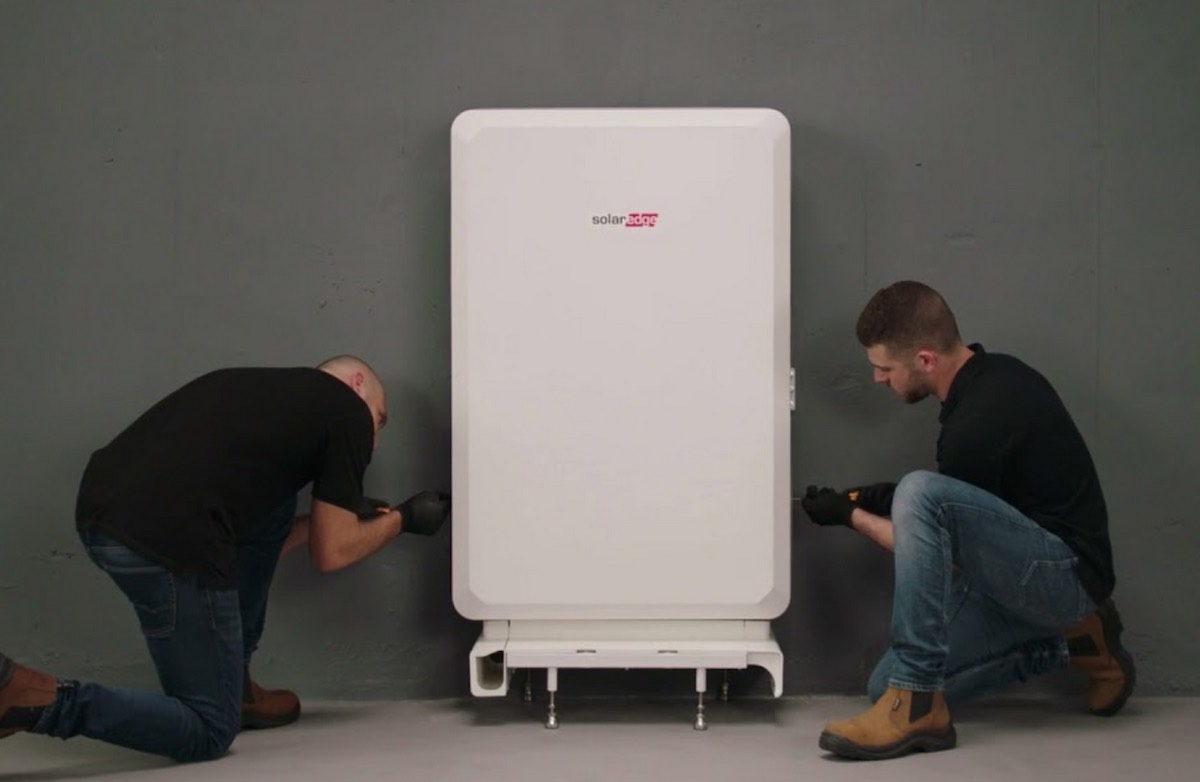

Australia’s Cheaper Home Battery scheme has kicked off at lightning speed, with more than 16,000 batteries installed in just 28 days, delivering the equivalent storage of two Hornsdale Big Batteries.
Or, as Kirsty Gowans, head of electricity at the Department of Climate Change, Energy, the Environment and Water (DCCEEW), told the Clean Energy Council Summit this week: “We beat Elon in less than 100 days – in just 28 days.”
The rollout is averaging 1,000 batteries a day, with the average battery size installed under the scheme between 17 and 18 kilowatt-hours.
Gowans said it demonstrated the power of incentives built around what consumers actually want. But speakers at several summit sessions, that focused on small-scale storage and distributed energy resources, also emphasised the next challenge: how to translate this wave of home storage into something that benefits not just individual households, but the energy system as a whole.
The Australian Energy Market Operator’s 2024 Integrated System Plan calls for orchestration—using virtual power plants (VPPs) and aggregators to coordinate battery dispatch – as critical to unlocking the full potential of home battery storage.
Although VPP participation isn’t mandatory under the Cheaper Home Battery scheme, all subsidised batteries must be VPP-ready, with software that enables future participation in the broader energy system.
But the government chose not to mandate VPP enrolment from the outset. Gowans said this was deliberate: “You have to win customers over by offering them real and genuine value, not forcing people.”
Matt Power, who leads the renewable energy target team at the Clean Energy Regulator, said the market will need to step up. “We expect the market will come up with a whole lot of products to encourage consumers to join VPPs. The more consumers can see a benefit with tariff reform, the more they will participate in aggregation.”
Speakers across the summit highlighted that stronger consumer propositions are essential for building trust and achieving system-wide benefits.
Dean Spaccavento, CEO and co-founder of Reposit Power, said the retail sector needs to rethink how it delivers value to households. Reposit Power specialises in smart battery control and VPP orchestration software, and have powered some of Australia’s first and largest residential VPPs, including network trials with SA Power Networks and Ausgrid.
“My way of doing it is guaranteeing no electricity bill for seven years, and the grand bargain is, you let us control your stuff [DER],” he said. “Leave whenever you want, but while I’m controlling your stuff, you get no bill.”
Spaccavento said consumers understand this kind of trade-off. “They can get their head around it, and they judge it to be fair. That’s it – this has to be fair.”
But he was critical of the Cheaper Home Battery scheme’s voluntary approach to VPPs, suggesting public subsidies should come with stronger expectations of public value.
“We’re giving people thousands of dollars to buy batteries with public money, and we’re not getting any public benefit for it,” Spaccavento argued. “We should be tightening down the eligibility criteria. It’s a lot of money.”
Mark Twidell, Industry Professor of Practice at UNSW, echoed the need to “respect consumer investments,” noting the growing importance of the prosumer economy as more households both consume and generate energy.
Other speakers identified tariff reform and better technology standards as vital enablers of consumer participation in VPPs.
Ausgrid’s distributed system operator, Alida Jansen Van Vuuren, said static tariffs are “a barrier” to integrating household storage.
Retailers like AGL are already testing new tariff structures aimed at shifting behaviour. Caitlin Trethewy, who oversees AGL’s VPP operations, said their new South Australian plan, which offers free electricity between 10 am and 1 pm, had received strong customer uptake. “Customers have been really responsive,” she said.
The plan is designed to encourage usage during periods of high solar generation and appeal to households without rooftop PV, including renters and those in public or shared housing. Trethewy said AGL had also acquired solar and battery systems in public housing as part of its broader community energy work.
But she flagged persistent technical hurdles that are slowing VPP development. “We need stronger interoperability standards,” she said. “One of the challenges is that different OEMs [manufacturers] have different technologies.”
Interoperability standards define how energy devices – like batteries and solar inverters – communicate and work together. As the number of home energy systems grows, ensuring they can integrate into VPPs is key to scaling their collective benefit across the grid.

Anne Delaney is the host of the SwitchedOn podcast and our Electrification Editor, She has had a successful career in journalism (the ABC and SBS), as a documentary film maker, and as an artist and sculptor.