

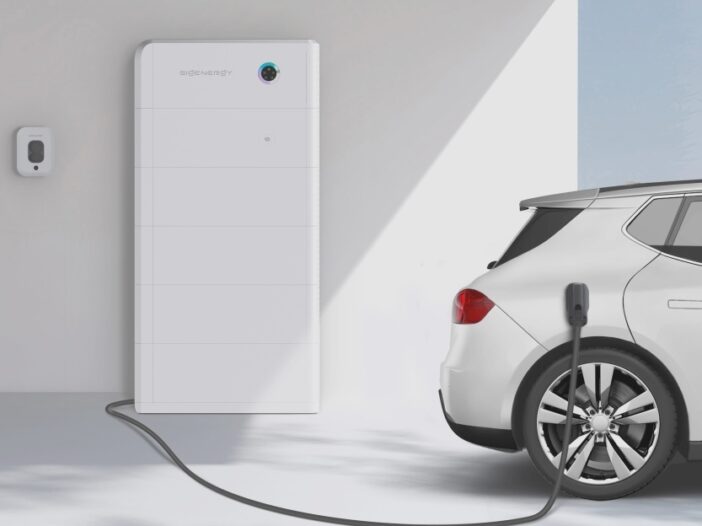
The government has announced a federal battery rebate that comes into effect on the 1st of July, although many eligible installations have already taken place.
The battery rebate offers customers as discount based on the usable kWh capacity of the battery that is installed and equates to around $335 per kWh assuming a STC price of $36.
The government has been describing it as a 30% discount, which in the past has been roughly correct for a typical 10kWh battery.
However, with the latest modular and stackable battery technology, the marginal cost of increasing a battery’s capacity is much lower.
This is because additional battery modules can be added into the ‘stack’ like lego, requiring only a few minutes from the installer and no additional components or wiring.
In fact, the marginal cost of additional battery modules will be lower than $335 per kWh for some of the cheaper battery brands on the market.
This has led us to an outcome where a customer can install a big battery for less overall cost than a small battery.
The below examples use two battery brands in the Australian market. Please note this article is not intended to rank or comment on these brands – please refer to Solar Choice’s independent product reviews to research their quality.
Big battery vs small battery – Sigenergy

Assumptions
- It takes negligible time/effort to install an extra battery module (if installer is already there)
- Installer doesn’t increase profit margin with larger battery
- Battery price breakdown estimated by Solar Choice’s vetted installers for single phase system
- Federal battery rebate estimated using Solar Choice’s federal rebate calculator
In this scenario, it only costs the homeowner $8,550 to get the first 8kWh of energy storage and an additional $6,600 to get a 48kWh battery that is 6x the size.
Big battery vs small battery – ESY Sunhome
When we look at some of the cheaper battery brands on the market, this equation shifts so that the rebate exceeds the marginal cost as you increase the battery size.

With cheaper battery brands the federal battery rebate will be greater than the holesale cost of additional modules. This means as you increase the battery capacity, the final cost to the customer will decrease!
Limitations of this analysis
Now it should be noted that the indicative prices referenced above will change for a variety of factors across Australia, including extra install requirements like bollards, shading enclosures or 3 phase systems.
Additionally, it’s probably fair to say that many installers will choose to increase the size of their profit margin as the battery size increases (although there’s really no additional costs).
What does this mean for the Australian battery market?
We’re already seeing the evidence of Australian homeowners ‘going big’ to take advantage of the rebate. In many cases the battery capacity will far exceed the electricity consumption requirements.
The fact the homeowners only have one chance to claim the federal battery rebate for their property provides an additional incentive to oversize the battery to avoid a more costly expansion in the future.
The government’s intended ‘30% discount’ is likely to cover a much larger proportion of the battery costs as many homeowners will install a larger battery size.
Our hope is that customers continue to do the right research on battery brands, and are not attracted to very large battery solutions with brands that offer lower quality products. We encourage you to do your research and check out our solar battery reviews.
Jeff Sykes is the CEO of Solar Choice.
A version of this article was originally published on Solar Choice here. Republished with permission.