
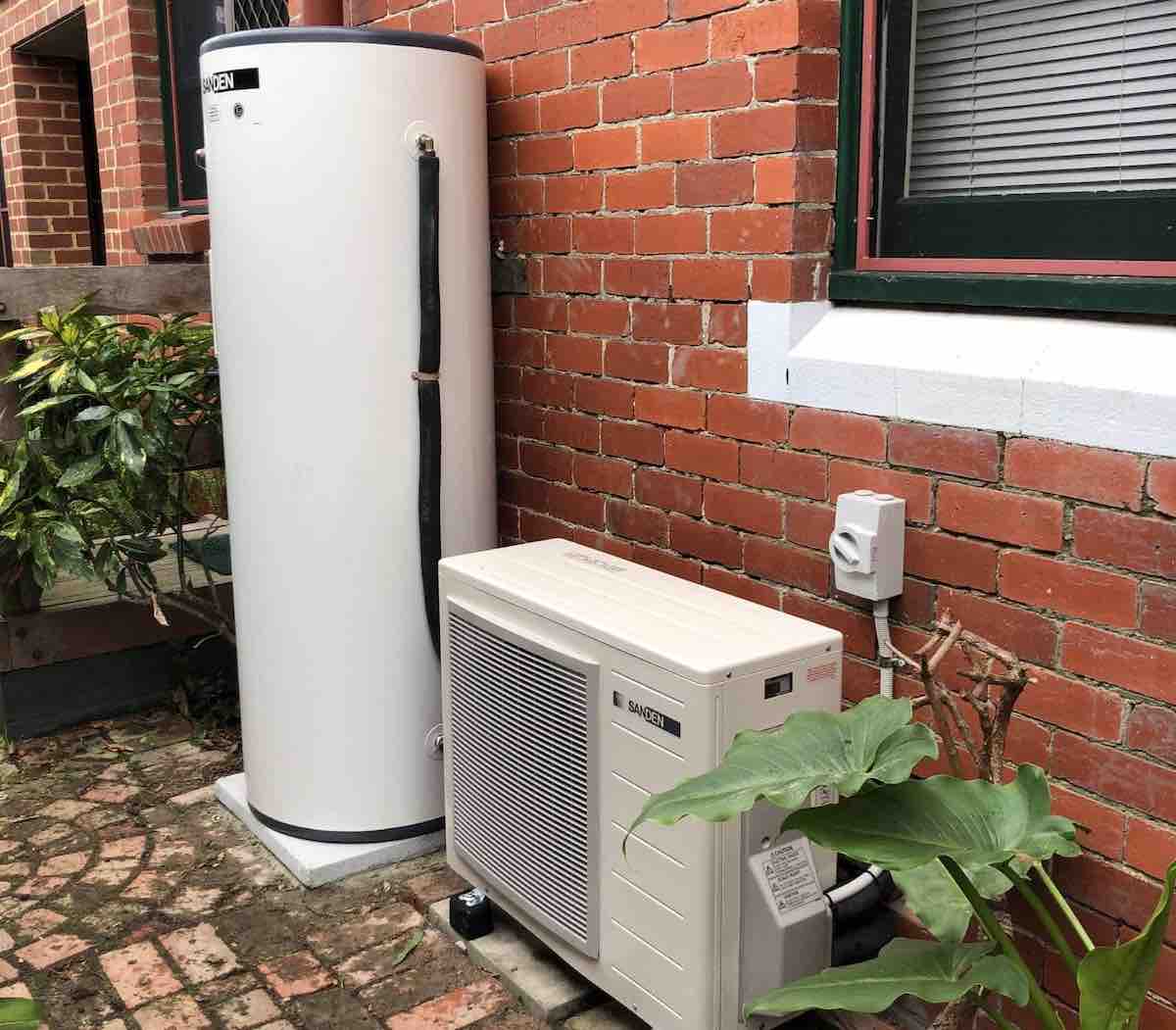

A University of New South Wales (UNSW) study has found the average Australian household could reduce its annual electricity bill by up to $400 by installing heat pump hot water and powering it in the middle of the day, using rooftop PV or a solar soak tariff when available.
The study, based on a four-person working family with an average daily hot water consumption of 200 litres, is part of the SolarShift project, funded by RACE for 2030, an industry-led cooperative headed up by the Collaboration for Energy and Environmental Markets (CEEM) at UNSW.
The project carried out detailed thermal modelling simulations and compared the financial and environmental impact of different water heating technologies.
The research considered a range of variables including household size, the amount and timing of daily hot water usage, and the various climates in capital cities around Australia.
Heat pumps themselves also reduce emissions significantly, with the report finding they produce 67 per cent lower emissions than resistive electric water heating systems.
Resistive systems are currently installed in about half of all Australian households, with most of the rest using gas.
But project lead Baran Yildiz, from the UNSW School of Photovoltaics and Renewable Energy Engineering, says the initial capital costs of installing heat pump hot water systems can be a barrier to many households, with the pay-back time ranging anywhere from one-and-a-half to nine years.
Replacing an instantaneous hot water heater with a heat pump can also be challenging where space is limited, for example in some apartment buildings.
But the benefits of installing electric heat pump hot water systems extend beyond household power bill savings.
With 40 per cent of Australian homes sporting rooftop solar – and more to come – Yildiz says the integration of all this solar power has brought significant challenges, including periods during the middle of the day which result in minimum demand issues that affect the stability of the grid.
All that excess solar power can also result in over-voltage, particularly in low-voltage networks like residential areas, and over-voltage can seriously damage equipment and infrastructure.
The current approach to minimise these problems involves curtailing rooftop solar generation and export, which means the very benefits rooftop solar are meant to provide – both in terms of cost-savings for the customer and reduced CO2 emissions – are reduced.
Diverting that excess solar energy to a household’s water heating system – which can store that excess generation as thermal energy – could reduce solar curtailment and take a chunk out of the consumer’s power bill by using low-cost solar energy instead of drawing power from the grid to heat the water.
And Yildiz says the benefits of using rooftop solar for water heating could increase in the future as solar feed-in tariffs are reduced and solar exports are curtailed.
“In fact all households can benefit from the rooftop solar revolution even if you don’t have a rooftop solar system” says Yildiz.
“There is more rooftop solar electricity generation in most parts of the grid than the households consume in the middle of the day, and this lowers the wholesale electricity prices.
“Households can find a retailer offer which offers cheaper or free day-time electricity, sometimes called a ‘solar soak tariff’ and program their water heaters to operate in the middle of the day to make use of excess solar in the network.”
Race for 2030 is a cooperative research centre for the electricity transition. The initiative hopes to deliver $3.8 billion of cumulative energy productive benefits – and 20 megatons of carbon emissions savings – by 2030.