
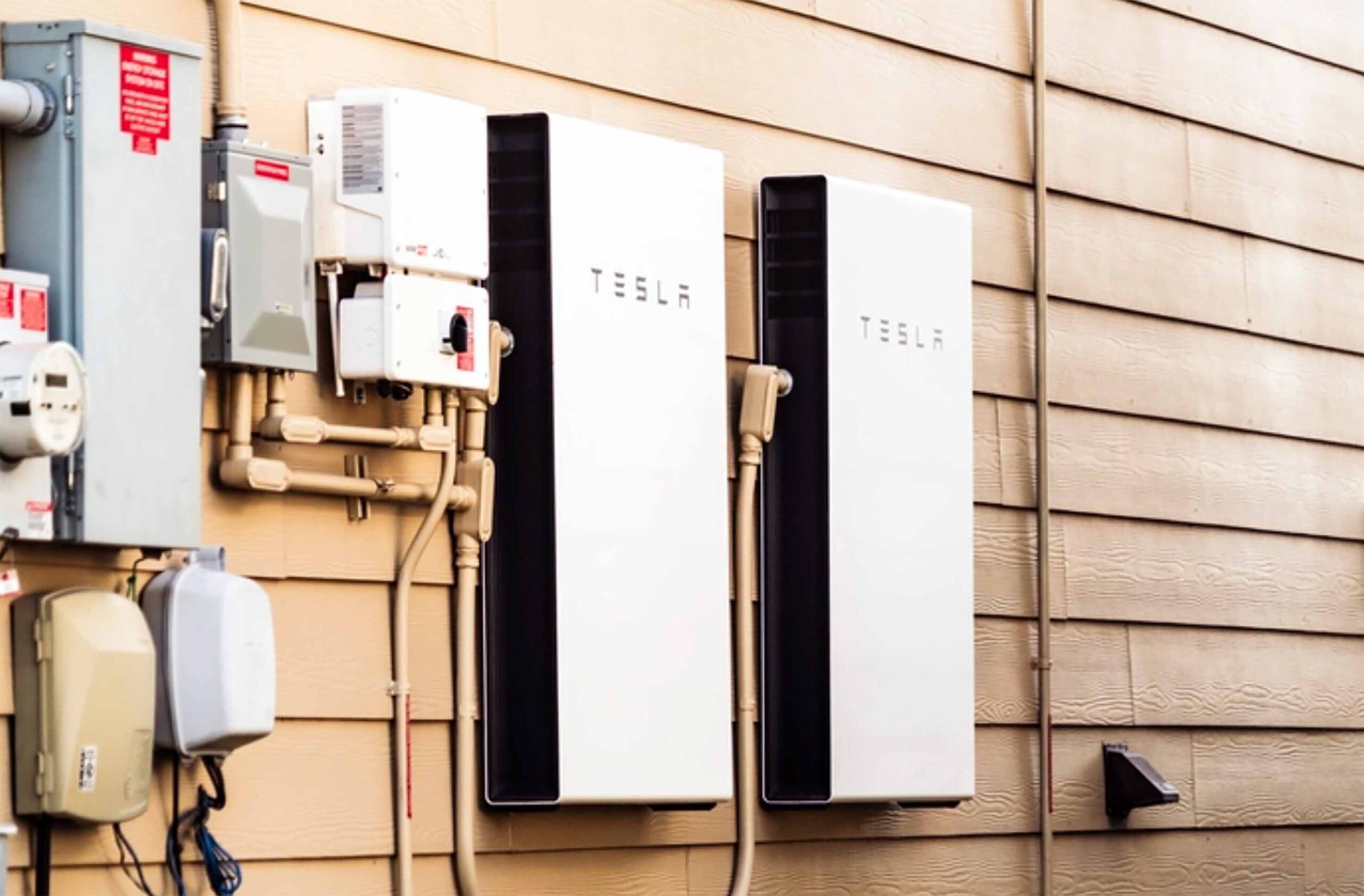

It’s anticipated that 5 million residential batteries and electric vehicles will populate the homes and driveways of Australia between now and 2030.
Those home batteries and EVs will equate to about 30 gigawatts (GW) of battery capacity. But the Australian Energy Market Operator (AEMO) predicts we will only need 18 GW of battery capacity by 2030.
“There will actually be more capacity in our home batteries and our EVs than the entire battery storage requirements we need for the energy transition,” Dan Adams, the co-founder and co-CEO of Amber Electric, told the SwitchedOn podcast. “It’s a massive opportunity to get us to a 100% renewable future.”
However, Adams says the key to how much of that home battery and EV capacity can be unlocked for the energy transition depends on whether customers are willing to trust someone else to automate their batteries. And to date, that’s not happening in Australia.
For instance, the uptake of Virtual Power Programs (VPPs) is low. VPPs are seen as one way to coordinate and manage numerous small-scale, decentralized energy resources like solar panels, EVs, and home batteries.
But 86% of households with a home battery opt out of VPPs because they don’t like the idea that an energy retailer will control their battery to make money.
Adams says consumers understandably don’t want to hand over control of the resources they have purchased to an energy retailer which makes money from getting their customers to use more energy. They also won’t hand over control to a business whose interests don’t align with their own.
Energy retailers keep consumers disengaged
The problem for the legacy energy retailers though is one of their own making. Adams argues many have spent decades ensuring their customers are disengaged from the energy system.
“You often hear that people aren’t engaged in energy, people don’t want to think about energy. That is by design – that’s just how the retailers make money.”
“The business model of traditional retailers has basically been to charge people a pretty competitive fixed price on day one to get them in, and then hope that they don’t really think about energy,” says Adams.
“They don’t give them any reason to engage, and then when they’re not looking, they slowly put up the price, and charge them more and more – it’s sort of a loyalty tax idea and so it is in their interest that customers are not engaged.”
However, to fully realise the potential of consumer energy resources for the energy transition Adams argues that “we need customers to trust us and to want to hand over the control of those of those devices.”
Amber disrupting energy retailing
Which is why Amber Electric set out to do something very different from other energy retailers.
Adams says their business model is based on building the trust of their customers by ensuring their customers retain control over their energy resources like batteries, and helping them maximise the value of their assets.
“People are willing to engage [with the energy market] if it can save them hundreds or even thousands of dollars a year. People do want to save money on their energy bills, and they do want to support the energy transition, and they do want to electrify their homes.”
For a fixed $19 a month subscription fee Amber gives customers direct access to the wholesale energy market. Rather than paying a fixed price for electricity, plus the retailer’s markup, customers can access cheaper, green electricity during the day directly from the energy market, when the grid gets an influx of renewables.
The downside is these customers risk having to pay more in the evening when the grid is mostly powered by fossil fuel energy.
Although households without batteries or solar can use Amber, it’s their customers with solar and batteries who can make money from selling power to the grid.
“They don’t really see us as an electricity retailer, sending them a bill every month,” says Adams. “They see us as giving them access to the market and giving them the technology to help make money out of their battery system.”
Battery customers have the option of allowing Amber to fully automate and control their battery and to sell power when the price is high, and buy when its low, within the constraints and preferences they set themselves. For instance, they can set the battery to ensure it never goes below 20% full.
But they also have the capacity to override anything Amber does, or manually control the battery entirely themselves. This has enabled Amber to provide additional services to the electricity grid.
“There was a period [recently] in NSW where the grid was constrained and the coal and gas generators were charging a fortune [for electricity],” says Adams. “We had thousands of our customers’ batteries automated to discharge into the grid.”
During that peak, which Adams acknowledges doesn’t happen all the time, Amber customers made an estimated $600,000 in over two days, an average of about $200 per customer.
“Our incentives are very aligned with the customers. What’s nice about that is that the customers incentives are aligned with a renewable transition.”
“We don’t make any money from selling energy to consumers,” says Adams. “We don’t want to be making money by selling energy because that creates a conflict of interest, and we’d have to choose between doing what’s right for the customer and what’s right for the business.”
Adams now looks forward to other companies competing with Amber because he believes that will help accelerate the energy transition.
“I expect a bunch of other competitors will come into the market doing the same thing as us.”
You can hear the full interview with Dan Adams on the SwitchedOn Australia podcast.

Anne Delaney is the host of the SwitchedOn podcast and our Electrification Editor, She has had a successful career in journalism (the ABC and SBS), as a documentary film maker, and as an artist and sculptor.