
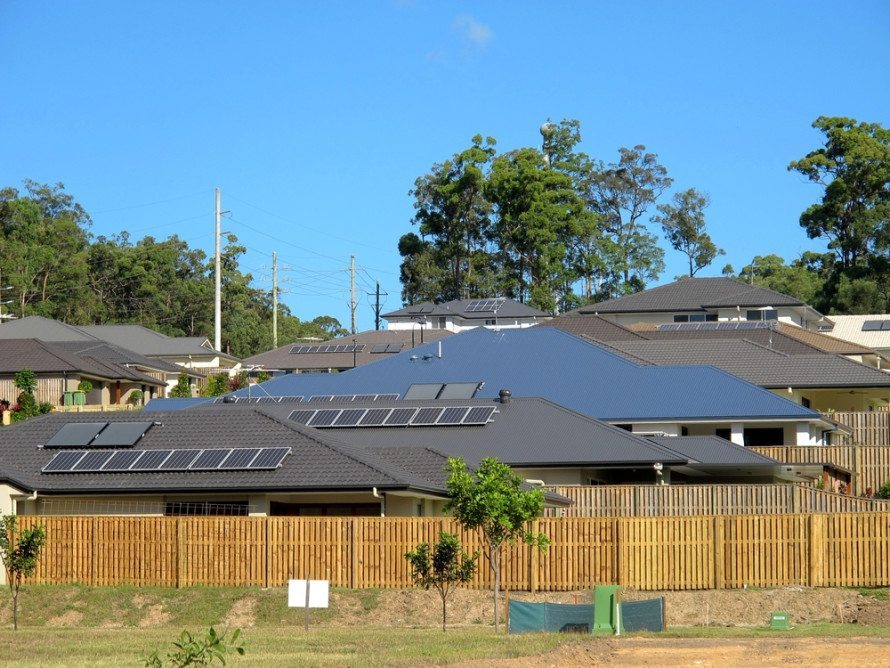
While the federal government continues to fight a losing battle for more centralised coal-fired power in Australia, Queensland government-owned utility Energy Queensland has become the latest major electricity company to turn to distributed renewable resources to help manage demand and drive down prices.

In an announcement at the close of the Powering North Queensland Summit in Townsville last week, state treasurer Curtis Pitt confirmed that Energy Queensland’s Energy Services division was partnering with Melbourne-based start-up, GreenSync, to create Australia’s largest “virtual power plant.”
Pitt said the state-wide Queensland VPP – which is not unlike others being piloted elsewhere in Australia, but at a much larger scale – would comprise a cloud-based, load control system created to manage extreme electricity demand during severe temperature events.
According to Energy Queensland’s executive general manager for Energy Services, Charles Rattray, distributed renewable energy customers, such as those with rooftop solar, would be enrolled into the virtual power plant platform ahead of peak summer demand.
“This innovative approach will… increase network resilience through increased automation and speed of response, grouping assets as portfolios to react to challenges and seize opportunities,” Rattray said on Friday.
The Energy Queensland-GreenSync partnership was first revealed the night before in Melbourne, at the official launch of GreenSync’s potentially game-changing trading platform for distributed energy resources, called deX, or Decentralised Energy Exchange.
As we reported last week, deX is an open exchange where energy capacity can be transacted between businesses, households, communities and utilities, and which promises to transform Australia’s energy industry.
Indeed, it is one of a suite of innovative new technologies the Australian Energy Market Operator says will be key to grid stability as another summer approaches and as old coal power continues to exit the NEM, replaced by more and more variable renewable energy generation.
This has not stopped the Turnbull government from continuing to campaign for ageing coal-fired plants to operate past their use-by dates, an idea that is not supported by AEMO, nor – it seems – by the owners of the coal plants.
And it has not stopped fossil fuel lobbyists, like former Coalition resources minister and current Queensland Resources Council chief, Ian Macfarlane, from calling for new coal plant.
“I think everyone is starting to come to the conclusion that we must have coal in the grid going forward,” Macfarlane said in comments published on Wednesday.
“The question is, do we need a new plant or upgrade old ones? …(Upgrading) doesn’t solve the problem of higher electricity costs in North Queensland. I think everyone realises that we need coal, except the State Government.”
Queensland treasurer Pitt, meanwhile, says the state’s plans for a virtual power plant system will have a positive impact on the affordability, reliability and sustainability of electricity supply – particularly during extreme weather events, such as Australia’s summer heatwaves, during which coal plants have been known to melt down.
Using GreenSync’s internet-of-things platform, it will do this by harnessing the state’s distributed renewable energy generation capacity – much of it installed on household and business rooftops – and using what is available to help balance supply and demand during critical peak periods.
In Queensland, this is no small resource. According to the Clean Energy Regulator’s latest data, the so-called Sunshine State leads the nation on rooftop solar uptake, with 34 per cent of houses said to have put PV panels on their roofs, so far, creating a total installed capacity of 1835MW. (*Editor’s note: Energy Queensland has since informed One Step that by its own data, PV penetration on detached houses is actually a bit over 28 per cent.)
“The virtual power plant will make a difference to everyday Queenslanders through helping to reduce market volatility and, ultimately, energy prices,” Pitt said.
“(The) partnership (with GreenSync) creates a real view to putting downward pressure on the cost of electricity for customers, with a particular focus on helping businesses manage their input costs.
“In doing this, Energy Queensland is helping make businesses more competitive while also stimulating the economy.
“The deployment of this technology over the coming months and years is also going to require a significant workforce for installation with the majority of work being completed by local, regional small businesses and Energy Queensland’s internal labour force where applicable.”
Rattray says another benefit of the partnership is that some of the hardware required to deliver the technology will be manufactured in Queensland.
“Energy Queensland’s Energy Services division was launched to lead new technology deployment to focus on putting downward pressure on costs for customers, improving security of supply and facilitating the uptake of renewable energy sources,” he said.
For GreenSync CEO Phil Blythe, the partnership with Energy Queensland is just one of many it has already sealed, and will established, as the energy market focus shifts from the idea of centralised fossil fuel generation, to dispatchable, flexible and fast response renewable energy generation, facilitated by technological innovation and energy storage.
“The application of GreenSync’s technology is going underpin the broader strategy for Energy Queensland and set the foundation for their energy future,” he said.
“This is a significant project for the people of Queensland and we’re thrilled to be working with Energy Services. With the rise of solar and battery storage, this partnership is going to better harness distributed energy resources and deliver increased befits for the community and the grid as a whole.”

Sophie is editor of One Step Off The Grid and editor of its sister site, Renew Economy. Sophie has been writing about clean energy for more than a decade.