
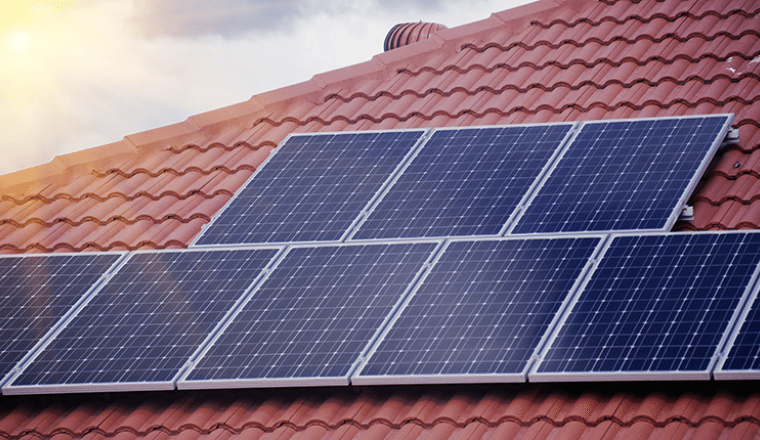

Another week, another tweak to the Victorian Labor government’s Solar Homes rebate, with the introduction of new requirements making “smart inverters” mandatory for solar systems installed under the scheme.
In a statement released on Tuesday, energy minister Lily D’Ambrosio said the new rule would ensure consumers who installed solar subsidised by the government paired their PV panels with inverters that responded dynamically to changes on the grid.
D’Ambrosio said the “smart meters” – which will be mandatory from July 1 – exceeded the minimum standards currently used in the industry.
The move seems also to be a concession to distribution companies in the state, that are trying – and not always succeeding – to accommodate huge amounts of new solar capacity that are being drummed up through the Solar Homes policy.
In a ‘Notice to Market’ accompanying the announcement, Solar Victoria specified the newly required inverter capabilities would prevent islanding during blackouts, and allow distribution networks to accommodate higher levels of solar PV penetration in the future.
D’Ambrosio said another key benefit of smart inverters was that they would allow the Australian Energy Market Operator (AEMO) to do more predictable modelling based of Australia’s already vast and still booming behind the meter solar resource, to manage energy demand and build greater reliability across the network.
Victoria has been a focal point of this boom, with the Solar Homes program expected to support the installation of more than 650,000 solar systems for owner occupiers, 50,000 systems for rental properties – not to mention 10,000 battery storage systems and 60,000 solar hot water systems.
“Victorians have been enthusiastic about adopting renewable energy technology, to take charge of their power bills and help protect the environment.”
“Ensuring all new systems are equipped with smart inverters will mean we have a more responsive grid that can handle the rapid uptake of renewable energy.”
“These changes are about ensuring solar panels continue to be rolled out effectively, safely and provide long-term security for the entire Victorian energy network.”
The new smart meter standard for the Solar Homes program follows the introduction just last month of a requirement that solar retailers wishing to participate in the rebate scheme must be signatories to the Clean Energy Council’s Solar Retailer Code of Conduct.
That adjustment to the rebate’s terms and conditions, like this week’s inverter mandate, are part of a broader effort by the state government to exert some quality control over the program, and avoid the market being flooded with sub-standard technology, installed by Johnny-come-lately companies.*
Sources in the Victorian solar industry say that most “quality” installers are using smart inverters already, and have been for some time now. But they also concede that there were a least half-a-dozen “dodgy” inverter brands still regularly being used that were letting the side down – and consumers, too.
Indeed, inverters are an extremely important ingredient in an efficient rooftop solar system – and will become increasingly important as battery storage becomes more popular.
As SolarEdge’s Lior Handlesman explained it back in 2016: “you can buy a top-of-the-line guitar, but if you don’t have a talented musician to play it, then it simply becomes decoration.
“In a PV plus storage system, the smart inverter controls when the PV is utilised, stored in a battery or transferred to the grid; and controls when the battery is charged, idle, or discharged to generate the maximum economic return.”
*This article has been updated to correct the suggestion that the introduction of inverter standards to the Solar Homes scheme by the Victorian government was “last minute.”

Sophie is editor of One Step Off The Grid and editor of its sister site, Renew Economy. Sophie has been writing about clean energy for more than a decade.