

The City of Melbourne has pledged to go “gas-free” in all of its local government buildings, shifting to all-electric power – as well as all electric vehicles – as part of a new plan to further crunch its emissions in line with Paris climate targets and its own goal of net-zero by 2040.
The council’s plan to quit gas was outlined this week as part of a new Emissions Reduction Plan for Council Operations 2021-26, endorsed by councillors at a Future Melbourne Committee meeting on Tuesday night.
Melbourne Lord Mayor Sally Capp said further cutting carbon emissions was a priority for the council, with $3.63 million earmarked in the plan to fund new initiatives over the coming five years.
The strategy, which will target the wedge of emissions left to address after the Council’s shift to sourcing 100% renewable electricity – a feat that was underpinned by the ground-breaking Melbourne Renewable Energy Project bulk-buy scheme – includes action on decarbonising the council’s vehicle fleet and its buildings.
On electric vehicles, the council has pledged to go from a fleet comprising 53 per cent fully electric or plug-in hybrid vehicles to one that is 100 per cent fully electric by 2025. But a shift to operating all the Council’s buildings on zero fossil fuels was pinpointed in the 36-page plan as “the next big challenge.”
“We need to eliminate our use of natural gas and completely ‘electrify’ building operations, so they are 100 per cent-renewable-energy run,” the plan says.
“Our CBE [Climate and Biodiversity Emergency] Response commits the City of Melbourne to eliminate the consumption of natural gas in its buildings over the next ten years.
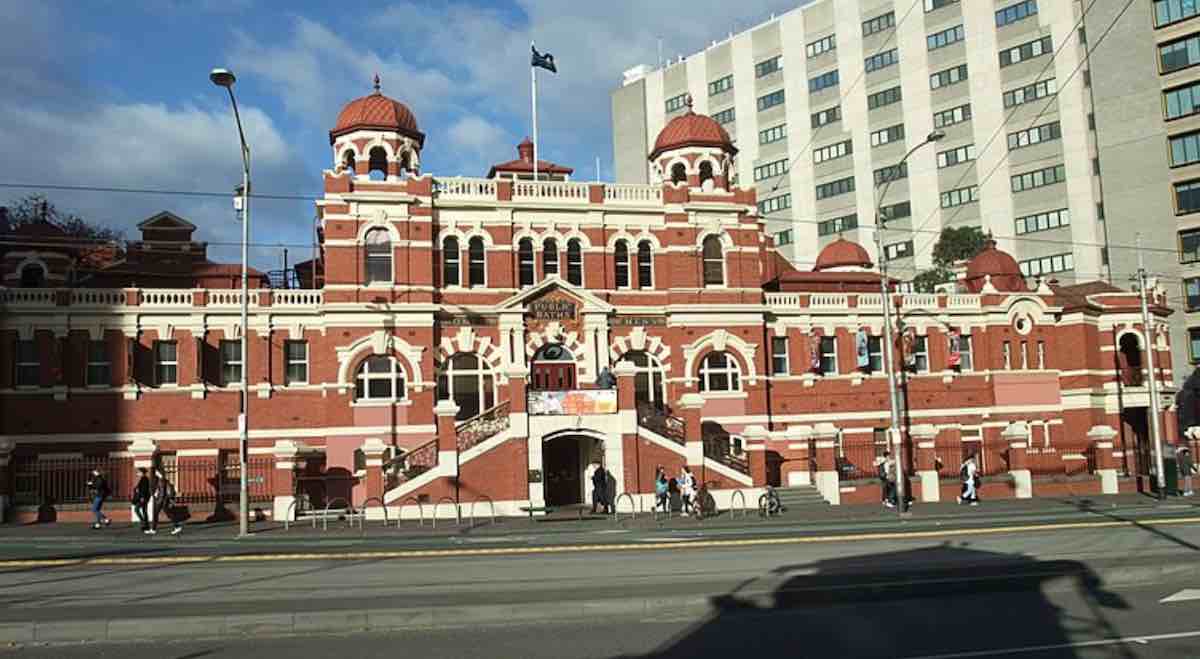
“As a result, the historic Melbourne Town Hall, the iconic City Baths and even the award-winning, highly efficient Council House Two will all go gas-free.
“We will continue the excellent work done in the last five years by ensuring that other building efficiency projects are data-driven through our Building Management Systems Strategy and setting a minimum performance standard across our major building assets,” the report said.
According to the plan, in 2019–20 the City of Melbourne’s total operational emissions were 12,345 tonnes of carbon dioxide equivalent, a 76 per cent reduction from 2011–12 when it generated 52,059 tonnes of carbon dioxide equivalent.
This had mainly been driven by the switch to a renewable electricity supply, which Council said had reduced emissions from energy use in local government buildings “significantly”.
The focus, now, had been switched to gas and fuel consumption which currently accounts for 12 per cent of Council emissions, as well as its supply chain, which accounts for 38 per cent.
“Since declaring a climate and biodiversity emergency, we’ve worked tirelessly to transition our city to a more sustainable and environmentally friendly place,” Lord Mayor Sally Capp said in a statement on Thursday.
“Over the past decade, we’ve managed to cut our own carbon emissions by 76 per cent, but we know there is more we can do, including reducing energy use in our Council buildings by converting from gas to electric.”
The pledge by the City of Melbourne to quit gas power in its buildings delivers a fresh blow to the gas industry which, as Tim Forcey wrote here recently, is in the midst of a “public-relations offensive targeting householders and decision-makers at all levels of government” arguing the case for the retail gas network.
The message from the industry was encapsulated neatly in a recent brochure from the Energy Network Association titled “Reliable and Clean Gas for Australian Homes” (July 2021). But as Forcey explains, these and other myths pedalled by the industry are easily debunkned.
Quite apart from the emissions embedded in gas all the way from extraction to delivery, it is not cheap – and not even that reliable.
“Australian gas left the “cheap” zone years ago. 2015 saw the first big price run up when a volume of exports that dwarfed domestic use began from Gladstone Queensland,” says Forcey.
And in overseas markets, most notably in the UK as it heads into winter, a 250% increase in prices since January, and 70% since August, has delivered a salient and timely lesson in the value of households going all-electric.
“Energy efficiency is… only the first step to reducing household exposure to gas price shocks,” The Conversation UK said last month. “The next is to move homes away from gas entirely, for example by installing heat pumps powered by (renewable) electricity in place of boilers.”

Sophie is editor of One Step Off The Grid and editor of its sister site, Renew Economy. Sophie has been writing about clean energy for more than a decade.