
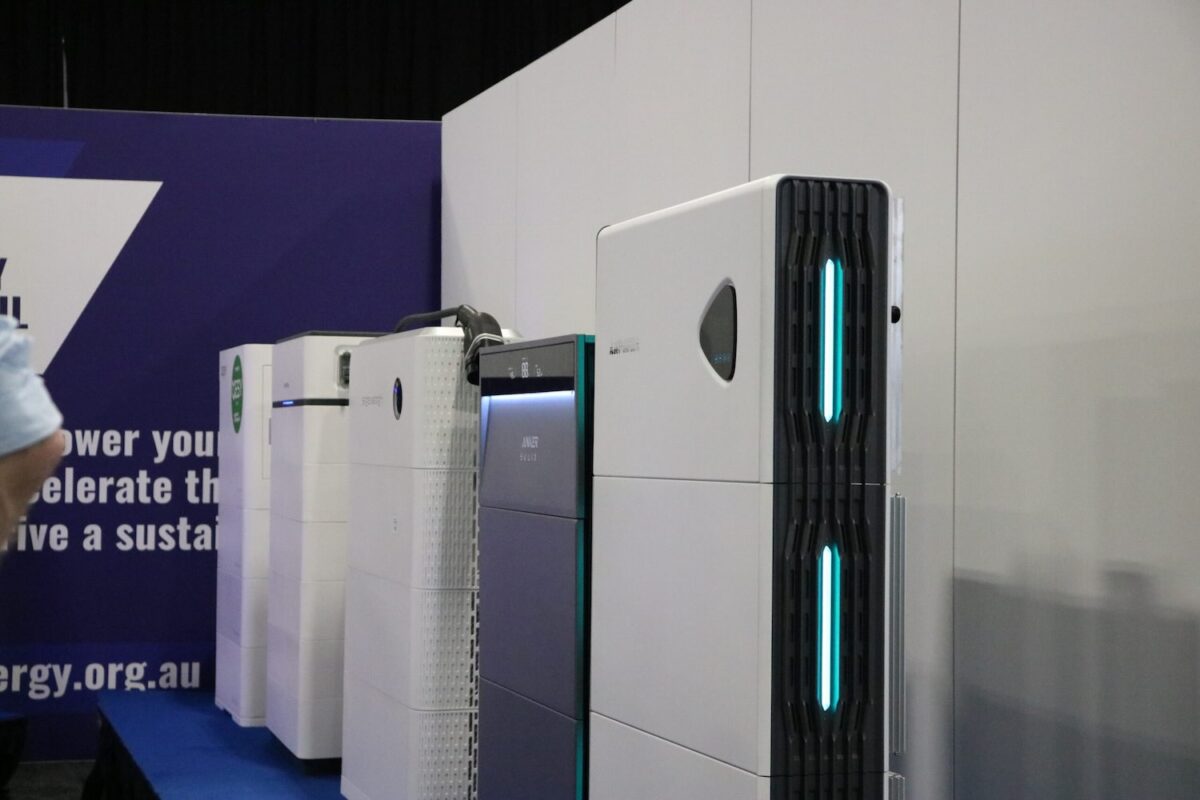
Australian consumers are being warned to choose well-established home battery brands to install through the federal government rebate, as demand for discounted energy storage systems surges past all expectations and puts strain on supply.
A new report from Green Energy Markets (GEM) lays bare the runaway success of the Albanese government’s Cheaper Home Batteries rebate, and digs down into the range of impacts this is likely to have on the grid.
The report, commissioned by the Smart Energy Council (SEC) and the ACF, essentially amounts to “an urgent reevaluation” of GEM’s previous modelling and projections, to correct a “seriously underestimated” rate of battery uptake under the federal scheme.
“What is abundantly clear is that actual installations have been running well above what we projected for 2027 and 2030, and even above levels projected for 2035,” the repot says.
“Since mid-July the average daily number of battery systems being registered (including weekends) has been running above 800,” it adds, compared to around 156 systems being installed per day in 2023.
“This is well ahead of what we expected in 2027 of 191 residential system additions per day and 2030 of 441 per day, and even noticeably above our 2035 projection of 606 system additions.
“In terms of megawatt-hours of storage, since mid-July 14.9MWh have been registered per day on average (including weekends) versus our projections of 2.0MWh in 2027, 7.1MWh for 2030 and 11.8MWh for 2035.”

For GEM, the drastically higher than projected level of home battery uptake – which the report says “are robust and are likely to be sustained” – means factoring in another possible reshape of the grid’s power supply.
See: Stunning success of home battery boom will slash rooftop solar exports, and reshape the grid – again
But the report also points to a “potential short-term cloud on the horizon” being the impact on home battery supply, with wholesalers encountering shortages of stock from a range of major manufacturers as they scramble to keep up with demand.
“For a number of the major manufacturers the Australian market for small residential scale systems has suddenly become equivalent in size to their European operations and will necessitate expansions in their residential system production capacity,” the report says.
Warwick Johnston, the founder and managing director of leading rooftop solar analytics outfit, SunWiz, says this is starting to show in the data on the brands being installed through the rebate.
Johnston says that while big-name brands like Sungrow, Alpha ESS, GoodWe and Tesla – and more recently Signenergy and Hinen – continue to dominate the rankings of battery installations, their market share is likely to be eroded somewhat with the launch of the rebate.
Johnston says that this will be less to do with consumer choice and more to do with product availability. He says soaring demand might mean than some lesser known battery brands get a foot in the door, as retailers try to meet demand.
This is without doubt a good thing for market competition and for pushing down the stubbornly static prices of home batteries. But it also increases the risk that consumers choose batteries because they are available and cheap, rather than based on quality, reliability or customer satisfaction.
“My message would be that it is really important that people choose a well established brand,” Johnston told One Step Off The Grid on Friday.
Johnston’s concern is that the market might see a repeat of some of the mistakes made in the rooftop solar boom, when little-known brands appear on the scene offering attractive deals, but then disappear just as quickly, leaving customers with no recourse if their products fail or need repairs.
“Consumers should look to products backed by companies with an established presence in Australia and with proven track-records for follow-up service,” he tells One Step Off The Grid.
“Don’t just get a battery because it’s available and cheap.”
See: Australia’s new top-selling home battery is a brand you’ve probably never heard of
Green Energy Markets says it is confident that any supply shortages that might arise as a result of demand generated by the rebate won’t hang around too long.
“The Australian residential market remains extremely small relative to overall global battery production which also serves electric vehicles and utility-scale systems,” the report says.
“Consequently, shortages of these residential systems should be relatively short-lived and over the length of the model period will even out.”
Renew Economy is seeking comment from Tesla and Sigenergy on how their supplies are tracking in Australia since July.
Tesla posted the below Tweet on X at the start of August, saying that more than 4,000 Powerwalls had been installed in July in Australia.
4000+ Aussies installed Powerwall in July
They’re now less reliant on the grid & save on energy costs
— Tesla Australia & New Zealand (@TeslaAUNZ) August 8, 2025

Sophie is editor of One Step Off The Grid and editor of its sister site, Renew Economy. Sophie has been writing about clean energy for more than a decade.