
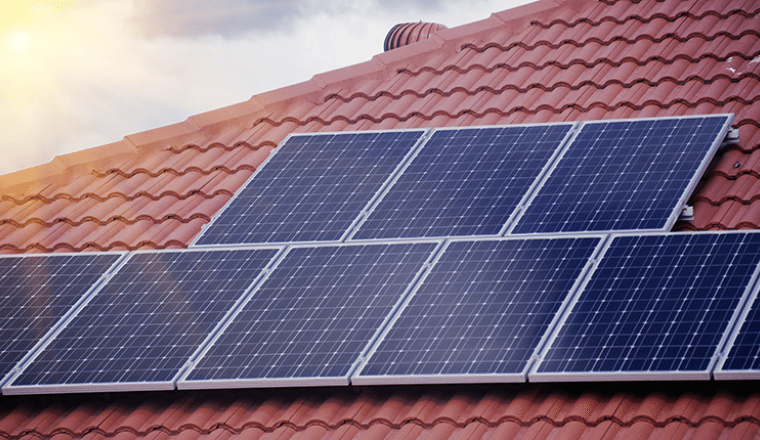
The Australian Competition and Consumer Commission, in a report on how electricity consumers have been ripped off by network companies, generators and retailers, has targeted the technology with the least impact, and probably biggest benefit – rooftop solar – for the most dramatic action.
The ACCC has called for the federal small-scale renewable energy scheme (SRES), which provides an upfront rebate, to be wound down and “abolished” by 2021.
At the same time, in a series of scatter-shot proposals, it has called on the federal government to underwrite the construction of new “dispatchable” generation, including coal and gas plants.
It also says it supports the proposed National Energy Guarantee, even though it admits it could further reduce competition, and therefore add to pricing pressures.
The bombshell, however, is the proposal to scrap the SRES scheme, which is already being progressively wound down, decreasing each year from 2016/17 until its planned phase out in 2030. But the ACCC wants this to be accelerated, saying it is unfair to non-solar customers.

Its own data estimates this scheme costs consumers, including those who do not own solar, no more than 40c a week – or about 5 per cent of total price rises in recent years that are largely due to inflated network costs, price gouging in wholesale markets and retail rip-offs
Nowhere in the 369 page report does the ACCC calculate the benefit of rooftop solar, despite most networks recognising it has reduced, delayed and narrowed the most costly part of the electricity market, the afternoon demand peak.
The ACCC makes one brief mention of the potential for rooftop solar to reduce demand and lower prices.
“Removing the SRES would save an average residential customer in the NEM $15–30 per year depending on state.” This equates to a saving to households of between 28c and 56c a week.
“This could be done by stating that certificates would no longer be created by new installations, or required to be redeemed by retailers, after a certain time.”
The decision is likely to make it harder for lower income and other households, that had hitherto found it difficult to find the money for rooftop solar, just as new programs are introduced that would make it easier for them to invest in the bill cutting technology.
Rooftop solar is currently going through another boom, with a record 1.5GW expected to be installed this year, as more businesses turn to the technology to deflect soaring grid costs. The rebate applies to installations of 100kW or less.
Indeed, rooftop solar is expected to continue to surge towards 58GW by 2050 – from just over 7GW now – as more households turn to rooftop solar, in particular renters and low-income households, and as larger business install even bigger systems (which would not qualify for the rebate).
This is considered to be a good thing. The Australian Energy Markert Operator says Australia can expect a grid that sources nearly half of its supply from distributed energy – including battery storage. BloombergNEF comes to the same conclusions.
A move to close the SRES scheme nearly a decade early would likely deprive lower income households of the opportunity to move into the market, although it would have no impact on industrial demand, which is expected to be close to 30GW by 2050.
The ACCC acknowledges the “inequity” of its proposal for those who had yet to install solar, suggesting that it would result in a significant downturn in installations, but said that by ending the scheme in 2021 – and not immediately, which it said was one option – could give people time to install.
(This suggests that the ACCC has learned nothing from the management of the feed-in tariff schemes, and the way those premium tariffs were managed, and which resulted in a boom-bust scenario for the industry).
The proposal was met with astonishment by the Smart Energy Council, which noted that installing solar was the one thing that households could do to combat the surge in prices caused by the unjustified and unfair increases in network, wholesale and retail costs identified by the ACCC.
“The one thing householders can do to slash their power bills is to install solar,” CEO John Grimes said in an email to stakeholders.
“The federal government needs to immediately rule out abolishing the SRES. Uncertainty around the SRES will cause unnecessary panic and confusion for consumers and the industry.”
Solar Citizens also responded. “Slashing the small-scale renewable energy scheme is absolutely the wrong way to go if you want to save households money on their electricity bill,” said senior campaigner Shani Tager.
“Already 1.8 million Australian households and businesses have put solar on their rooftops because it’s the best way to guarantee savings on your electricity bill.
“Energy consumers are tired of being taken for a ride by electricity retailers, which is why Australians are installing solar at record rates so that they can take the power back into their own hands.”
Indeed, the ACCC report continues its bias against renewable energy subsidies – saying that the large-scale renewable energy target had “distorted the market” in Australia. It did not recommend any changes or early phase-out of the LRET, though, despite widespread calls from conservatives to do so.
Extraordinarily, it focuses only on the “spot market” for the large-scale certificate price, which accounts for a tiny fraction of the market. It ignores the fact that most new wind and solar farms are signing contracts that attribute zero or minimal value to the LGCs.
Instead, the ACCC – which has dismissed price gouging by generators in the past as “the market at work”, with a light-touch regulatory supervision – wants more gas reserves opened up, and it wants government to underwrite new generation, including potentially coal plants.
It does, however, urge state governments to write down the value of state-owned networks, and wants to impose rules that limit companies with 20 per cent or more market share from acquiring more generation capacity.
Bids from coal generators in NSW and Queensland had increased far beyond the increased cost of generation, and even Snowy Hydro – the fourth biggest utility now owned by the federal government – has nearly doubled the price of its bids, even though the cost of hydro generation has, of course, not shifted a jot.
It notes that the lack of competition in the South Australian market had affected prices there, although it concedes this has been eased by the introduction of the Tesla big battery, and resumed generation from Pelican Point.
Ostensibly, this is in response to the inability of major customers to contract for more than five years. The ACCC says this should be open to all technologies that can prove to be dispatchable. It proposes a price of $45-50/MWh. The Nationals took it as a sign of support for their push for new coal generation.
The ACCC has recommeded the government underwrite baseload power investments. Once again common sense of @The_Nationals is vindicated!
— Matthew Canavan (@mattjcan) July 10, 2018

Giles Parkinson is founder and editor of One Step Off The Grid, and also edits and founded Renew Economy and The Driven. He has been a journalist for 35 years and is a former business and deputy editor of the Australian Financial Review.