


A 100 per cent off-grid, solar and battery-powered community in Victoria’s Yarra Valley region has introduced electric vehicles into the mix, and the success-story of the transition holds a message for us all: build it, and they will come.
Moora Moora was first established as an off-grid co-operative community in 1974 and has grown, since then, to host 30 off-grid homes, 70 people and, now, three fully electric cars.
Glen Morris, a solar and battery storage installer with decades of experience and a company called SolarQuip, has been a part of that community for 18 years now and, in this time, has established the Smart Energy Lab training facility on-site at Moora Moora.
Morris’ expertise and his position at the leading edge of distributed renewable energy technology and training – his tech workshops are renowned throughout the Australian renewables industry – has had its benefits for the rest of the cooperative.
While each of the households in the community have their own power solutions – ranging from solar, to wind and even micro-hydro power – Morris has been able to up the ante, often using equipment he is asked to demonstrate in training sessions, or to promote to the industry.
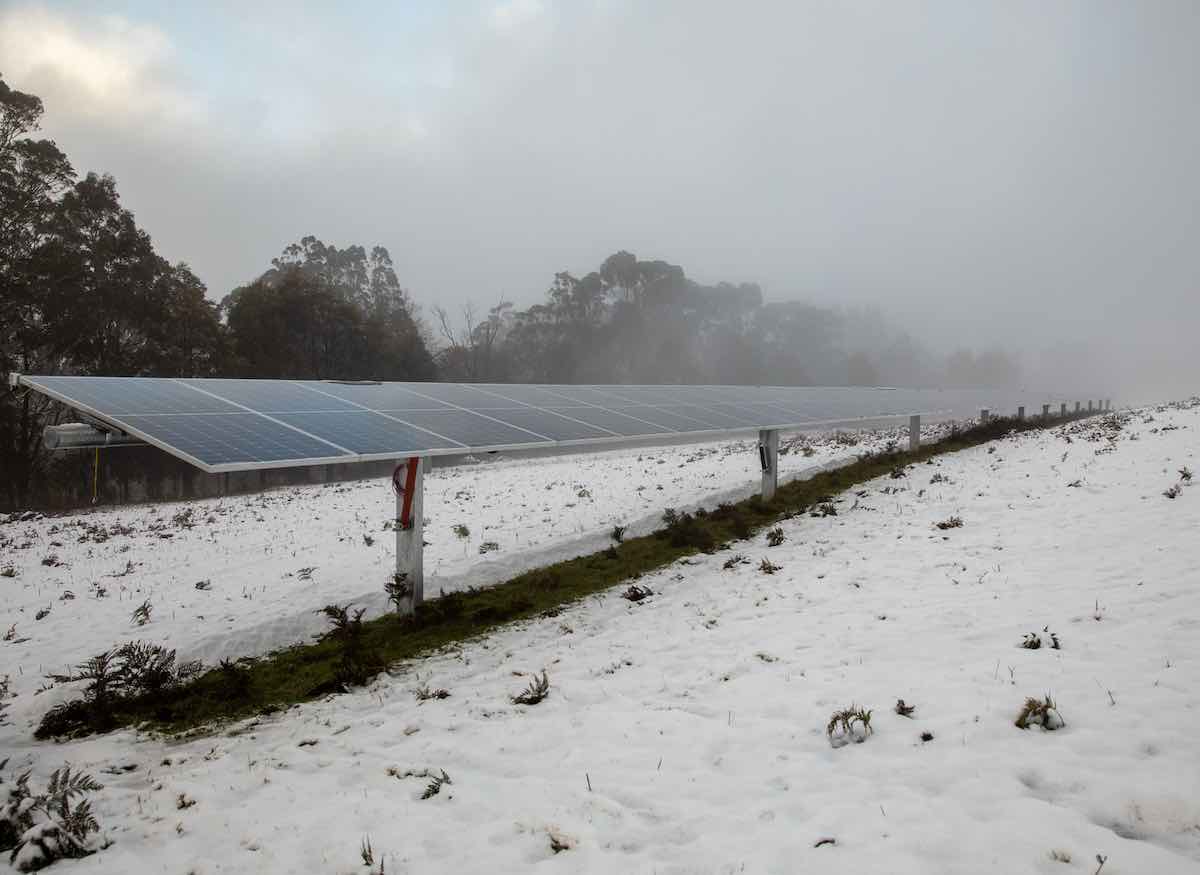
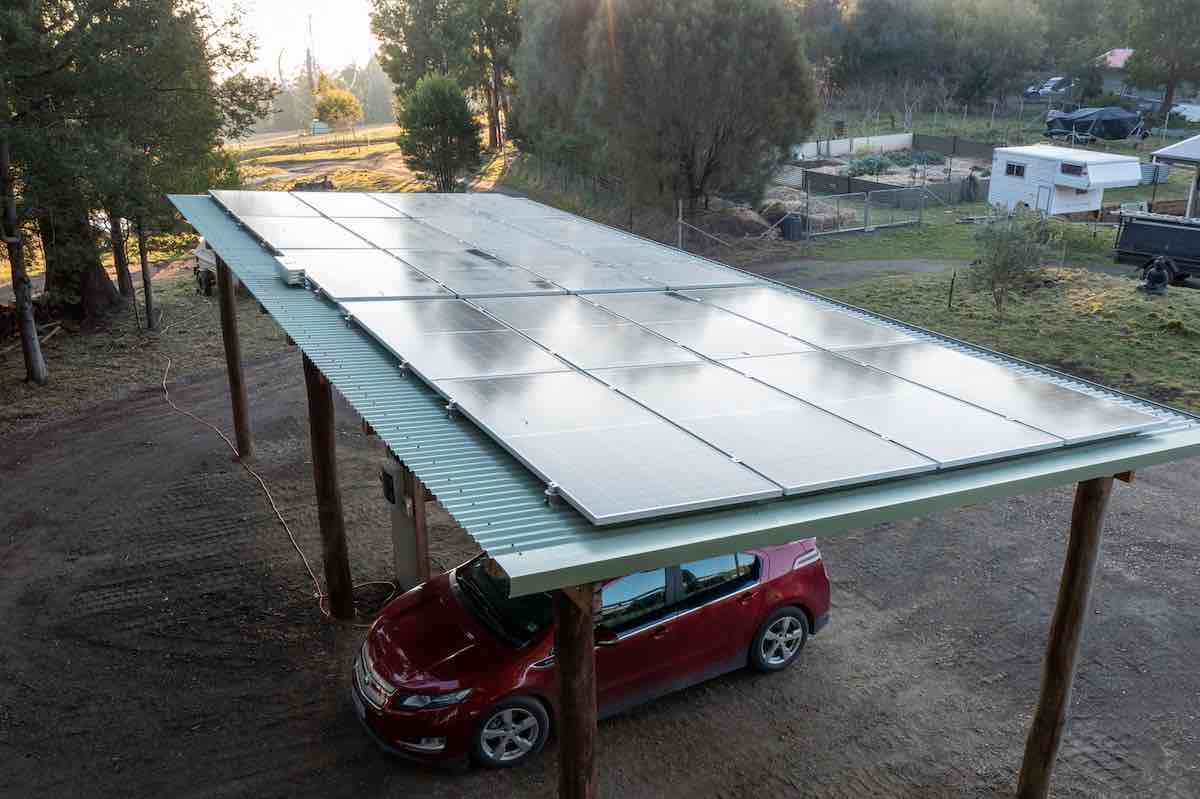
This was the case with the solar tracking system he installed that is optimising the generation output from a soon-to-be 100kW array Morris built as part of a solar and battery storage microgrid that helps power seven of Morris’ nearest neighbours in the community.
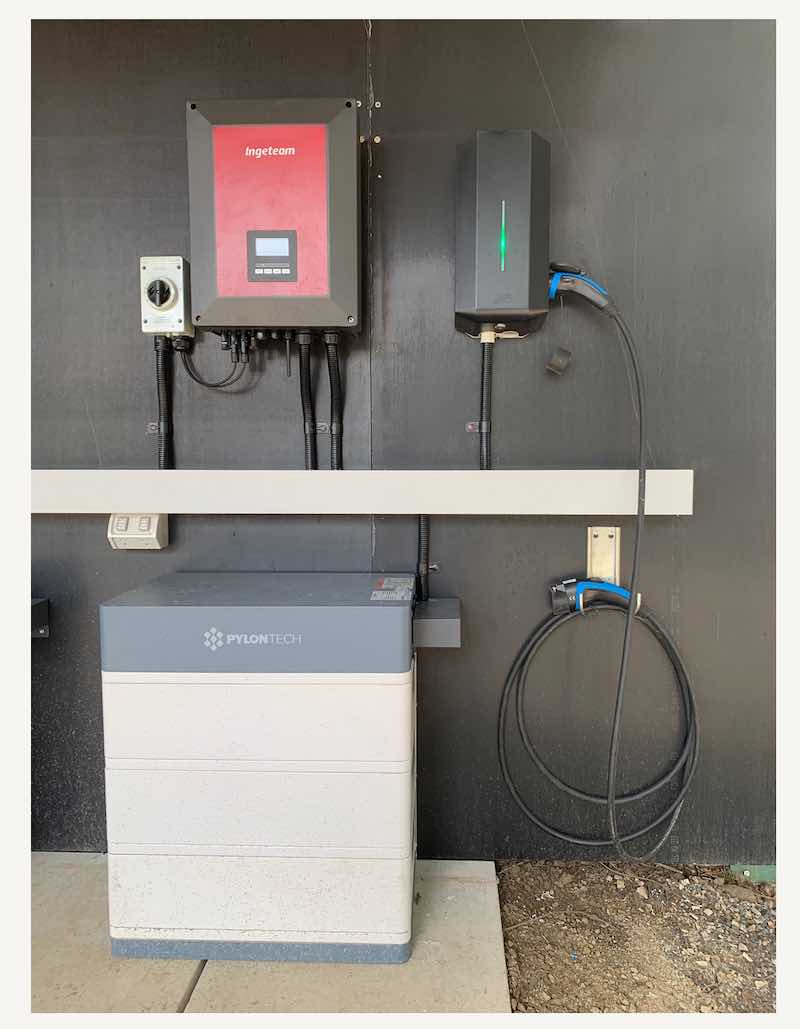
And this was also the case with electric vehicles. When Morris was offered the opportunity to install electric vehicle supply equipment (EVSE), no one in the community had any practical need for it. But Morris said yes. And then the EVs started arriving.
First was Morris’ partner, who bought a Kona Electric (“because of the excellent range”), followed by two neighbours, who also bought Konas. Another upgraded her utility for a hybrid plug-in Mitsubishi Outlander, while another again inherited her mother’s Holden Volt.
“It’s kind of a bit like, if you build the infrastructure, the cars will follow,” said Morris. “[The installation of the charging point] was probably only just at the end of last year… so, suddenly, all these EVs arrived. It’s amazing… So we then had to put more charging in.”
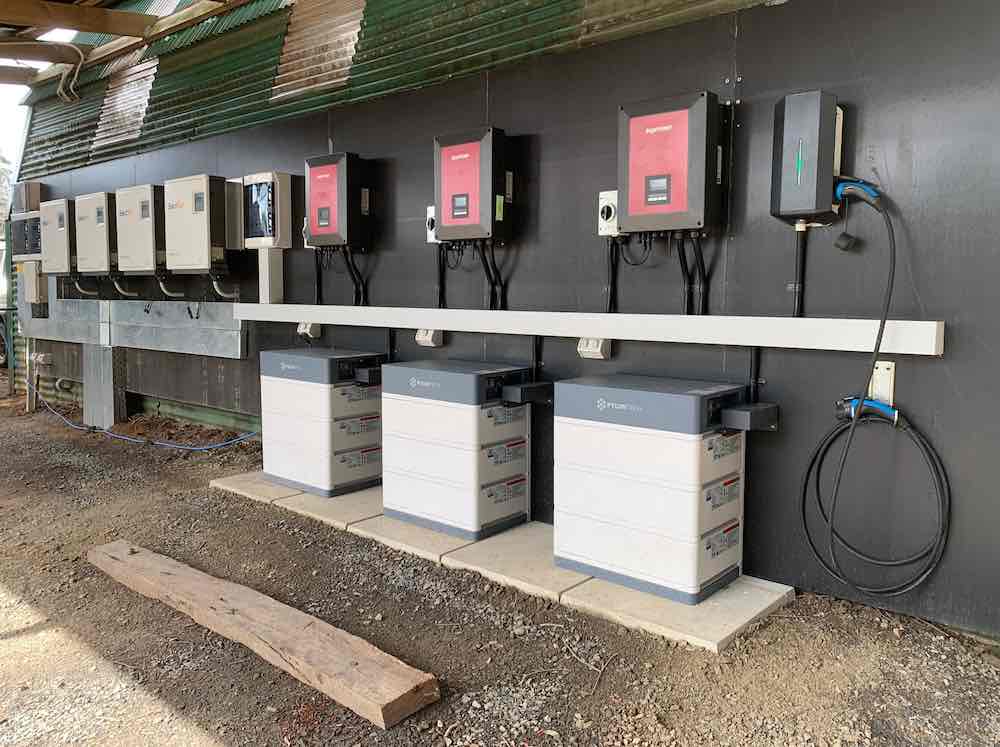
So far, the community is up to three 22kW charging points, which Morris says can fully recharge a Kona in roughly 1.5 hours after a day’s driving (“7.4kW x 1.5 = 11.1kWh of charge gets us to town and back ~ 40km.”).*
The charge points are connected up to the same solar microgrid that powers seven homes and Morris’ Lab. (Another community member has installed their own trickle charge system, powered by their own dedicated battery and solar add-on.)
Watch Morris’ new YouTube video at the end of the story explaining the finer details on how he set up the system an how it works.
“So we’ve got plenty of capacity,” Morris told The Driven from the Energy Lab by zoom. “On a sunny day, we could charge 10 cars, no trouble at all.”
And for overnight charging, Morris has built a range of dedicated battery systems just to charge the cars. “And so you pull up, plug your car in at the end of the day, in the morning it’s fully charged.”
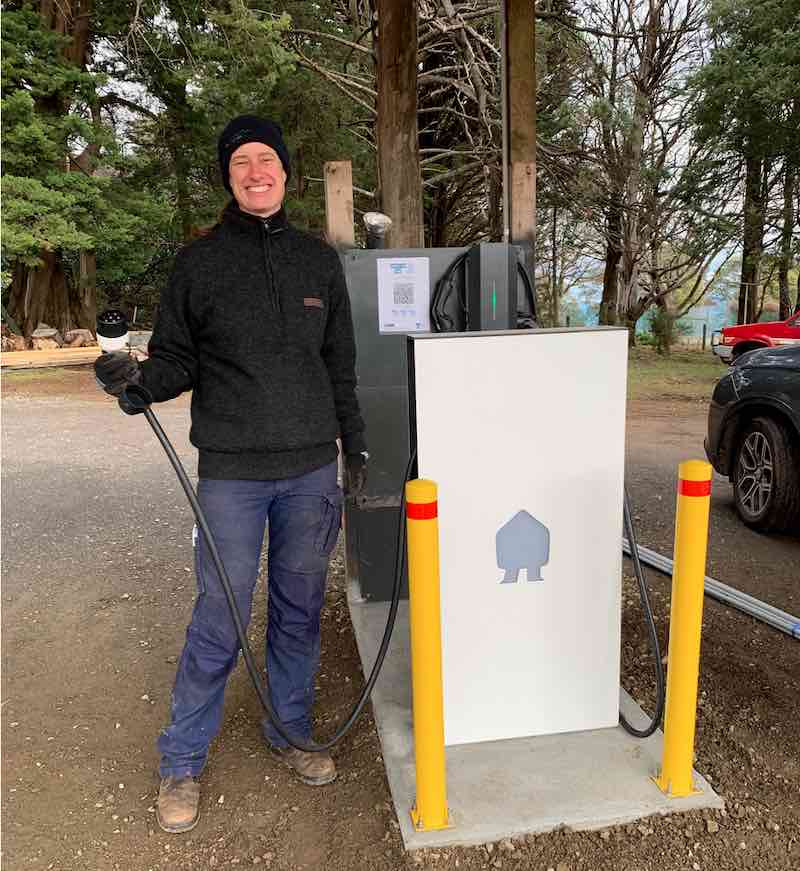
All of the cool tech aside – the charging set-up at Moora Moora also includes a Smappee system, which dynamically balances the load across multiple EVSE and optimises solar consumption (particularly good for on-grid applications) *see more details below – Morris says the switch to electric has been “just fabulous.”
“It’s just been a wonderful experience. I mean, you know, if you’ve ever driven an electric vehicle, the performance is insane… So, yeah, just really nice to drive, silent, beautiful responsiveness…”
The only down side, he adds, is that the Kona is a “city car” and his family lives on a dirt road, which doesn’t always make for the smoothest ride, particularly when there are potholes involved. But Morris has a solution for that – a downpayment on a Rivian ute.
“I think that … we’re at the tipping point, where a lot of people are looking at their next vehicle being electric. So it’s just a matter of changing the stock over.”
And, of course, having the infrastructure to support it. Certainly, that has been a non-negotiable in Morris’ neck of the woods, where he says the public charging options are currently pretty “terrible.”
“When we got our EV we thought we’d go try it out, so we drove into the underground carpark (of a nearby town) plugged into the first one – didn’t work. Plugged in to the second one – didn’t work; the third one didn’t work, and finally there was a Tesla one there at the end – and it worked.”
But Morris doesn’t buy the argument that the lack of access to a home charging point, particularly for those in the inner city and in apartments, should be a turn-off in the take-up of electric vehicles.
“Sometimes I get this negative comment from people saying, ‘It’s all very well, you can park your car next to a charger and charge it up, but what about people who live in the city who have on-street parking?’
“And I say, well, do you have a service station at home and you fill your car up? You know, we just have to think of charging as the same as fueling a car, it can be done at a centralised location or at home, depending on what your facilities are.”
But what Morris’ story does tell us is that for most people, “centralised” public EV charging infrastructure – and particularly public fast-charging – will have to become a lot more ubiquitous both in cities and regions before they feel confident in making the shift to electric. Build it, and they will come.
And once they do come, the feedback from those who have made the switch to an EV is that you won’t regret it, even when you’re living off grid.
“Look, there’s about a dozen moving parts in most EVs, servicing is so minimal,” Morris adds. “Because we bought our car new off a dealer we asked, what was the service costs, and they said, I think it was $168 for every 10,000km… [they said] we check the tires and brakes and upgrade the GPS. That’s it.”
*More details on the features of the Smappee:
- Dynamic load balancing across multiple EVSE to support overload protection and optimised solar consumption. This feature is perfect for retail facilities that may be happy to provide free solar charging to customers;
- Cloud monitoring, reporting, and control that also supports multiple sites;
- Enable charging via plug & charge, RFID, Smappee QR Code, or third-party CPO service;
- Adjustable LED Panel for ambient lighting and charger status indication;
- Manufactured with sustainable materials where possible including compressed timber laminate panels and hardwood timber plug holders.
*CORRECTION: This article has been amended to clarify that a 22kW charger delivers 11.1kWh of charge to a Kona in 1.5 hours, adding roughly 40km of range. It does not fully recharge the EV’s battery in that period of time, as the original article had mistakenly implied.

Sophie is editor of One Step Off The Grid and editor of its sister site, Renew Economy. Sophie has been writing about clean energy for more than a decade.