
• Skip to primary navigation
  • Skip to main content
  • Skip to primary sidebar
  • Skip to footer
One Step Off The Grid

One Step Off The Grid

Solar, storage and distributed energy news

  • Solar
  • Battery/Storage
  • Off-Grid
  • Efficiency
  • Software
  • Podcasts
  • Tariffs
  • Electric Vehicles
  • Electrification

Canola oil producer switches on 2.8 MW solar farm to power its crushing plant entirely with PV

November 27, 2024 by Joshua S Hill Leave a Comment

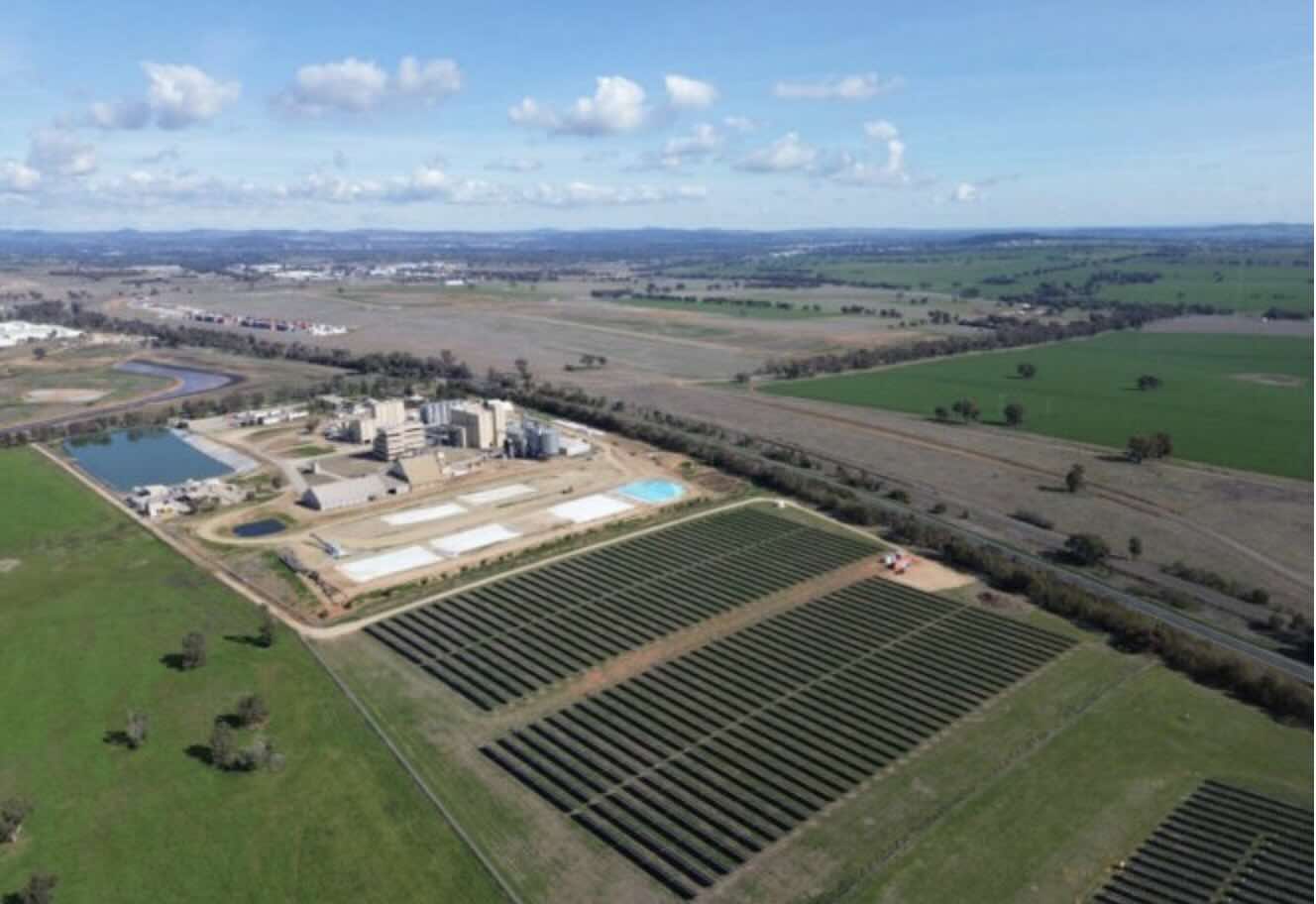
Image: Flow Power.

Australian renewable energy retailer Flow Power says it has switched on its largest behind-the-meter project, a 2.8MW solar farm which is now providing power to major canola oil producer Riverina Oils.

The solar farm is wwned and operated by Flow Power, and will supply power directly to the Riverina Oils oilseed crushing and refining plant via an underground 11kV cable.

The Riverina Oils Energy Project is located alongside the company’s plant in Bomen which has been operating since 2013.

It has a crushing capacity of 200,000 tonnes of oilseed annually, and produces over 80,000 tonnes of refined vegetable oil for the food industry and 120,000 tonnes of canola protein meal for the poultry, dairy and animal feed industry.

The two companies says the solar project now provides 100 per cent of the power to operate the plant.

“Investing in solar power is not just an environmental choice; it’s a strategic response to rising energy costs in manufacturing,” said Andrew Jackson, CEO of Riverina Oils.

“Through our partnership with Flow Power, Riverina Oils has successfully reduced operational expenses, stabilised energy prices, and gained a competitive edge in a rapidly evolving market.

“Riverina Oils is extremely proud to be working with Flow Power to contribute to long term, sustainable business practices. This project is also part of our overall commitment to a more sustainable business, including working with our growers and customers on sustainable supply chain solutions.”

Given that the Riverina serves as a massive hub for the New South Wales agricultural sector, the region generates huge volumes of biomass waste such as nut shells, cotton trash, and grape marc.

Riverina Oils is therefore also exploring the possibility of developing bioenergy solutions to further enhance its commitment to a circular and sustainable production system.

In addition to ensuring that this agricultural waste is put to good use as a source of biomass, it could also provide an additional revenue stream for farmers in the region.

Filed Under: News, Solar

Primary Sidebar

Sign up for our weekly newsletter

Emissions Counter

Renew Economy

RSS Energy News from Renew Economy

  • Why an oil crisis is bad news for Australia’s biggest coal state – and how to break the cycle
  • Energy Insiders Podcast: How the world’s fourth biggest economy plans to reach 100 pct clean energy
  • When will the energy sector understand the National Energy Objective? When will governments enforce its intent?
  • “It is paramount:” AEMO says system and market operator functions must be kept together
  • Powerful new rooftop solar panel promises system sizes “previously out of reach”

RSS Electric Vehicle News from The Driven

  • GAC opens orders for Aion UT electric hatchback, with initial drive-away price under $31,000
  • Zeekr launches 7X Black Edition after 2,200 sales in Australia
  • Tesla opens orders for its biggest Model Y, with lower than expected price and V2L
  • Volkswagen cuts emissions with big growth in EV sales, but falls short of EU target
  • EV charging facilities upgraded at two major hospitals

Press Releases

  • Huge luxury Saudi resort goes 100pct renewables with one of world’s biggest batteries
  • How solar + storage can be a game-changer for people with disabilities

Footer

Technologies

  • Solar
  • Battery/Storage
  • Electric Vehicles
  • Energy Efficiency
  • Software/Gadgets
  • Other Renewables
  • Policy
  • Tariffs
  • Contact
  • Advertise with us
  • About One Step Off The Grid
  • Terms of Use
  • Privacy Policy

Copyright © 2026 · OneStep Genesis on Genesis Framework · WordPress · Log in