
Rocky Mountain Institute
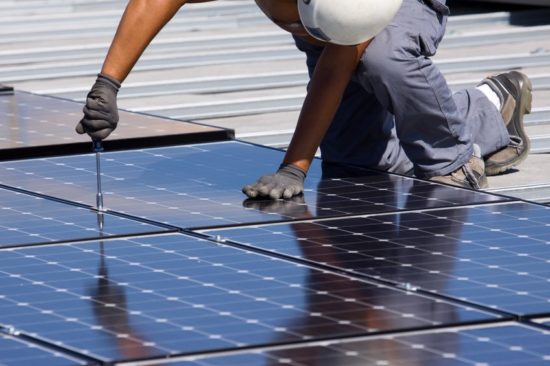
President Obama announced measures on July 19 to increase access to solar energy and energy efficiency by low- and moderate-income customers. Elements of the plan, called theClean Energy Savings For All Initiative, will bring 1,000 megawatts of solar energy by 2020 to a group that has thus far struggled to enjoy the benefits of the clean energy revolution. This is a booster shot in the arm that could stimulate and support activity in the private and NGO sectors that serve low-income customers. Coincidentally, RMI released a report the next day detailing emerging business models that are helping to ensure clean energy is available to all (not just those with access to capital and  credit) as these programs phase out.
Serving these customers can’t be ignored if we want a clean energy transition that benefits everyone. Creating a clean energy future for all is a core mission of RMI. We recognize if we want to see a complete transition away from fossil fuels to efficiency and clean energy in the United States, pathways are needed that enable low-income households to participate and benefit. Not only do low-income customers make up close to one-third of the nation’s households, these customers also account for over 20 percent of residential energy use in the U.S. That is why RMI’s eLab Leap initiative is working to empower and
improve the lives of low-income households and communities in a clean energy future.
A new mindset
Coreina Chan, a manager at RMI who leads eLab Leap, said, “It’s exciting that the president’s plan is providing federal investments to build and support financing mechanisms and business models around distributed energy resources in low-income communities.” There is a new mindset about this previously underserved market segment, Chan said, “Contrary to popular belief, this new mindset counts low-income households as a market opportunity. These households are a market opportunity because of their collective buying power, and because of their capacity to deliver valuable grid assets like efficiency and demand flexibility,” that can defer costly distribution grid upgrades.
As the cost of distributed energy resources (DERs) like solar keeps falling, their benefits are increasing and multiplying. “For the average customer, there are a lot more choices for what you can buy, for where you get your energy, for how you use it, for how you can manage it,” said Chan, “and that’s not actually the case for low-income customers.” eLab Leap is showing how proactive innovation can help ensure that low-income customers are not continually marginalized or isolated from clean energy options and benefits.
New business models for an emerging market
According to the new RMI eLab Leap report Breaking Ground: New Models that Deliver Energy Solutions to Low-Income Customers, new business models are emerging to serve low-income customers who have been unable to access DER benefits. eLab Leap has been engaging with, supporting, and learning from innovators in low-income communities around the country.
In general, these models apply a few building block concepts to serve low-income customers. For one, they identify unconventional sources of value, and provide pathways for tapping into that value. In Brownsville, a low-income neighborhood in New York City, ConEdison’s Brooklyn Queens Demand Management project is exploring ways to develop and compensate customer-side demand management, storage, and renewable generation to avoid building a $1.2 billion substation that would otherwise be required. In arrangements like these, low-income customers and community stakeholders have valuable physical assets like real estate for siting DERs; shareable personal assets like vehicles; social assets like political influence and access to trusted, established customer networks; and human resources like skills, expertise, and sweat equity.
Another basic concept is aggregation. “A lot of low-income communities are looking at how to aggregate their buying power,” said Chan. Aggregated demand for community solar projects is one of the key parts of Obama’s plan. It is also a key to the new market for demand response. “One person enrolling in a demand response program doesn’t interest utilities but 15,000 customers, that’s a different case, especially in dense, multi-family areas,” Chan said.
The new models also reorganize elements of existing models. In Chan’s words, “they’re evolving to meet the specific needs of low-income customers.” Some may introduce new third-party stakeholders and/or establish new relationships between existing stakeholders to enable different transactions and resource exchanges.
So, for example, “Some of the community solar models that are emerging are helping low-income customers bypass a usual barrier of entry, which is credit history,” Chan said. “In some cases they’ve created new entities, such as special purpose vehicles that protect investors and households from financial risks or that can take on debt in lieu of vetting individual credit histories of community members.” These emerging models may target a portfolio of different customer types to manage and reduce risk. RMI’s report explores several such co-op models, and there is room for more investigation as next-generation business models continue to spring up.
Beyond dollars and cents
These new business models can also serve broader community needs for low-income customers beyond individual household energy savings. Chan said, “People want to see enrichment and improvement in quality of life, so they’re really looking at these models as vehicles for broader investments into communities.” For example, a model could provide integrated community solar, energy efficiency services, and car sharing services, simplifying transactions for customers, lowering the cost of energy, and providing access to transportation options.
Government initiatives like those announced by the president can support and supplement the emergence of innovative business models. As these and other models become established and evolve, together with evolving regulatory and business environments, we expect to see further innovation that enables low-income households to benefit from DERs today, and to enable a clean energy future for all tomorrow.
Source: Rocky Mountain Institute. Reproduced with permission.