
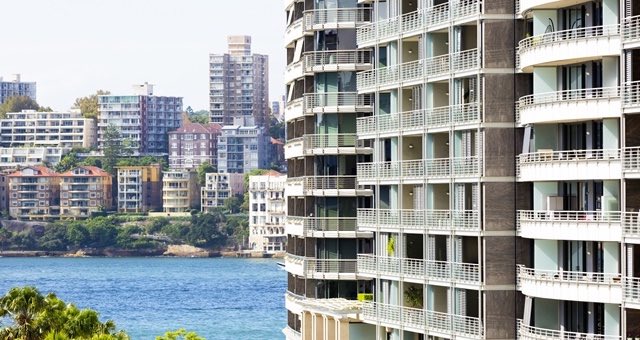

The COVID-19 pandemic highlighted the impacts of air quality on high-rise living. However, apartments face a range of atmospheric challenges. These include air and noise pollution, temperature and weather extremes, bushfire smoke and insects.
Our newly published research shows how apartment residents struggle with the impacts of unhealthy homes. It’s a result of decades of urban planning based on fossil fuel use and high-rise building standards poorly adapted to the Australian environment.
Our study involved residents of apartments in Liverpool CBD in New South Wales. They are exposed to particulate pollution from heavy truck movements tied to the Moorebank freight terminal, smoke from increasingly severe bushfires and a rising number of days of extreme heat each year.
Residents in our study preferred centrally located apartments to detached, car-dependent houses. However, our interviews revealed apartments were hot in summer, cold in winter and prone to mould, condensation, noise and air pollution. The lower people’s socioeconomic status, the more likely they are to be exposed to such problems.
At the same time, residents’ experiences pointed to low-cost, low-tech solutions. Sustainable, climate-adapted apartment designs would allow for better natural airflow, shading and screening.
Buildings that are bad for health and sleep
Ayasha’s experience in a two-bedroom apartment, built in 2017, highlighted the health costs of flawed design and a lack of insulation. She told us:
[…] at night-time it gets really cold because of the fog, like the interior glass gets wet and the room is always wet even when the heater is on […] Both of my daughter and me are having this cough thing because of the continuous heater […] For the last three weeks continuously she has this runny nose, like teary eyes and cough. She’s not recovering at all.
For Naomi, dampness in the 2016 two-bedroom apartment she and her husband bought caused concern about mould:
We’re conscious of the mould and we’re trying to keep the house aerated but it is very hard. In the bathroom, there’s a vent but it’s not strong and you don’t really want the window open for too long when it’s cold, so it does get a real build-up of moisture […] You’ll wake up and you can see a layer of wet all up the windows and on the ledge and it’s really hard to dry everything out.
Sarah’s 2018 apartment lacked flyscreens and ceiling fans to allow natural airflow through all the rooms. She said air conditioning became essential for coping with summer heat and avoiding unwanted insects.
We did open the doors a couple of times, the mosquitoes would get in and they would attack the baby. Like one time, she had 20 bites on her head one night […] and that was when we realised, no, we’re just gonna have to put the air con on.
Wanted: better regulations and development models
Residents’ experiences reflect low building standards in Australia.
Recent research on how to deliver sustainable apartment housing underscores the limitations of the National Construction Code, building materials and minimum regulations. This 2023 study called for better regulations targeting project design, compliance with standards, property valuation and transparent information about properties’ sustainability features.
As with all complex reforms, there are concerns the development industry will resist. Thus, some have suggested expanding the build-to-rent sector to achieve more sustainable apartment design.
Typically, diversified construction, finance and superannuation firms support this model of developing housing specifically to be rented. They have deeper pockets and a longer-term interest in the energy performance of buildings.
Yet studies show the build-to-rent sector is concentrated in higher-value locations. Costly subsidies and incentives would be needed to move it to areas where better, affordable housing is most needed.
Low-cost, low-tech solutions
Residents’ experiences reveal a range of low-cost, low-tech solutions that could easily be mandated for all apartment housing. These solutions include flyscreens, ceiling fans, external shading and adequate insulation.
Reminiscent of pre-air-conditioning building design, these solutions allow for flexibility in building facades, enabling both airflow and screening.
The same principles characterised early 20th-century, high-rise architecture. These buildings featured terraces, mesh balustrades, exhaust flues, cross-ventilation, sunrooms, external shading, louvres and screens “as a strategy of climate adaptability”.
The rise of air conditioning in the 20th century cemented apartments as enclosed environments. Models that depend on shutting the doors and windows and turning on the air conditioner are no longer viable in a climate crisis. Increasing living costs also mean many households can’t afford to use air conditioning.
COVID-19, too, has made enhancing natural airflow in buildings more important.
Time to champion an Australian high-rise architecture
Australian governments, including the NSW government, have committed to delivering more affordable housing. But high-rise developments are often sited in polluted, noisy, freezing and sweltering environments. They get clustered around freeways and other busy roads to avoid political backlash from residents opposed to such developments.
At the same time, housing researchers are increasingly concerned about the energy emissions of high-rise buildings.
Planning that optimises building orientation – to best access sunlight and ventilation – and apartment design standards adapted to the Australian environment are urgently needed. Otherwise households will be locked into unsustainable, single-access apartments devoid of cross-ventilation, screens or shading.
This sort of housing is bad for residents’ health and wellbeing. It will also add to energy poverty for decades to come.
Nicole Cook, Lecturer, School of Geography and Sustainable Communities, University of Wollongong and Sophie-May Kerr, Research Associate, City Futures Research Centre, UNSW Sydney
This article is republished from The Conversation under a Creative Commons license. Read the original article.