

Australian households have installed 28,000 solar energy storage systems in six weeks since the launch of the federal Cheaper Home Batteries rebate – around the same amount as was installed in the entire first six months of 2024.
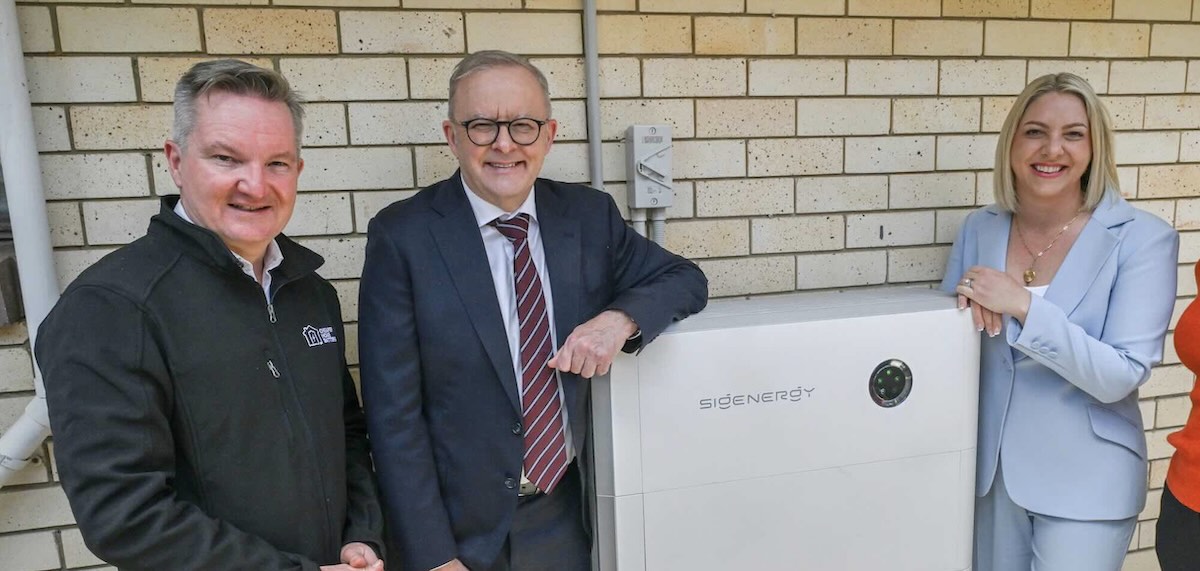
The astonishing figure was revealed by prime minister Anthony Albanese on Wednesday morning, ahead of a visit to see one of the discounted batteries installed at a home in Brisbane.
“I’ll be in Brisbane this morning looking at one of the 28,000 batteries that have been installed since July 1 as a result of the commitment we took to the election,” the PM told ABC Radio.
“That is 491 megawatt-hours, almost the equivalent of four of the Hornsdale big batteries, which at the time was the biggest battery in the world.
“That is not only making a difference to households in terms of reducing their energy bills permanently, but is also taking pressure off the grid.”
Federal Labor’s $2.3 billion Cheaper Home Batteries program was first unveiled by the Albanese government just weeks before the federal election and launched on July 01 to huge popular demand.
The rebate, which cuts the up-front cost of home battery installation by an average of around 30 per cent, is being rolled out through the existing Small-scale Renewable Energy Scheme that has so successfully helped Australia to become a global leader in rooftop solar uptake.
In a report on its first month in action, SunWiz said more than 19,000 home battery systems (19,592 according to the Clean Energy Regulator) had been registered through the scheme, with uptake rates increasing weekly.
Less than two weeks later, the number has jumped by another almost 10,000.
“So, this is Australians responding to good government policy,” said federal energy and climate minister Chris Bowen, who joined the PM for the Brisbane home visit.
“But it just goes to show that we’re all in as a country. Australians get it. The path to net zero is important for the planet, it’s good for the economy, good for their households.”
Rewiring Australia – whose research has found adding a battery to an average solar home can generate around $1,000 a year in savings, in conjunction with electric appliances – said on Wednesday it was “not surprised” by the level of uptake.
“Australians want cheaper power bills and more energy independence, and storing it yourself is one of the best ways to gain more savings, and more control,” says Rewiring Australia CEO Francis Vierboom.
“This subsidy will allow Australian families to save money on ever-increasing bills. At the same time, it’s helping those homes use clean energy around the clock, and getting us closer to zero emissions, especially as homes upgrade to all-electric and unsubscribe from gas.”

Sophie is editor of One Step Off The Grid and editor of its sister site, Renew Economy. Sophie has been writing about clean energy for more than a decade.