
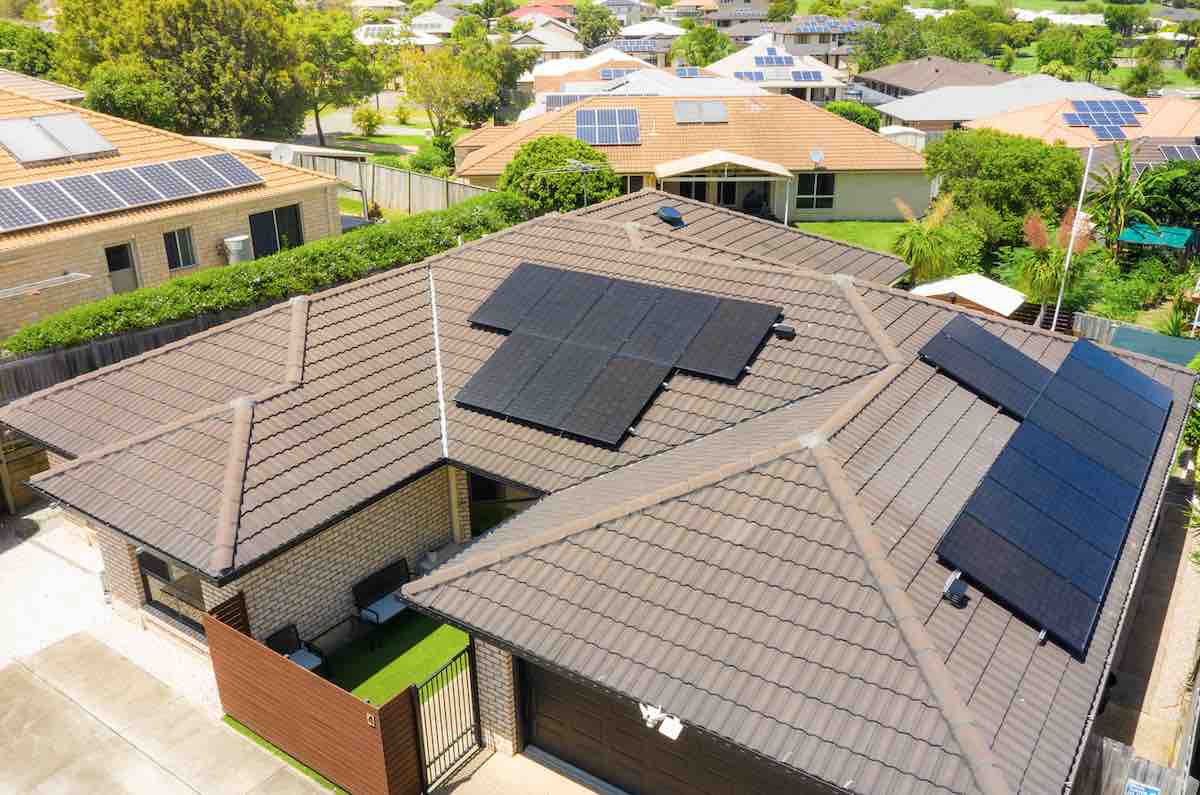
The federal government’s $2.3 billion Cheaper Home Batteries Program has officially launched, marking a major milestone in Australia’s shift to home energy self-sufficiency.
But while the spotlight has focused on the financial incentives for battery storage, there’s a bigger question facing the design and architecture community: Are we designing homes that can actually make the most of this energy?
As someone who leads a business focused on enabling smarter, more energy-efficient homes, I believe the rebate’s true significance isn’t just about affordability – it’s about enhancing potential.
Because without controls, batteries are just boxes. It’s the design thinking behind them that provides the opportunity to truly deliver value.
The design challenge of electrification
Over the past 18 months, we’ve seen a national pivot toward fully electric living. State-based gas bans, soaring energy prices, EV adoption and growing solar uptake are forcing a rethink of what constitutes a modern home.
But electrifying a home, while essential, is no longer enough. If the systems inside those homes can’t manage energy loads, prioritise solar use, or adapt to seasonal demand, then homeowners are left with complexity, inefficiency, and lost potential.
We’re already seeing this in real-world behaviour. Research shows over 7.6 million households in the country own at least one smart home device, with that figure expected to peak at 10.88 million users in 2028.
A survey of Clipsal smart home users shows that 65% plan to expand those systems within a year. Why? Because energy literacy is rising. People want more than savings – they want visibility and control.
The opportunity for architects and designers
This shift has significant implications for residential design. The National Construction Code (NCC) 2022’s 7-Star minimum, EV-ready requirements, and real-world climate pressures are driving up performance expectations.
But while material selections, thermal efficiency and appliance choices are standard practice, energy control systems are often still an afterthought.
That needs to change.
Designers now have a critical role to play in how well electrified homes function.
Considerations like:
- How and where batteries integrate with energy sources and controls (such as solar inverters and the switchboard)
- Whether heating and cooling zones are automated or overcompensated
- How electric hot water and EV charging are managed within household load limits
These aren’t engineering questions – they’re design decisions. They shape space, user experience, and long-term performance of the home.
From retrofit to foundation
The battery rebate launch is a chance to move the conversation forward. For too long, smart systems have been perceived as post-build tech upgrades. But in high-performance homes, these systems need to be part of the foundation, just like insulation or orientation.
A 2023 “Sustainability at Home” survey from Schneider Electric showed 59% of Australians now expect new homes to come equipped with smart systems, and 39% would pay more for homes that have them built in. That’s not hype – that’s a consumer signal. Clients want homes that do more, automatically.
And the industry is catching up. Architects, builders, and specifiers are increasingly collaborating with energy consultants and electricians to deliver integrated outcomes, not just compliant builds.
A smarter kind of future-readiness
Homes should be empowering. A truly smart home doesn’t just respond to a voice command, it protects comfort during heatwaves, shifts load off the grid during price spikes, and gives people peace of mind during uncertainty.
With Australia’s battery rebate now in place, the onus is on us as an industry to ensure those batteries actually work hard for the homes they serve.
That means designing for energy optimisation. Designing for automation. Designing for adaptation.
Because in the era of electrification, the most powerful homes won’t just generate energy — they’ll know how to use it well.
Chris Kerr is vice president and CEO of Clipsal at Schneider Electric