
Our home electrification journey took 14 years to complete (2008-2021). In 2007 we were already below-average energy users for a family of 4 in Brisbane, with a reasonably modest-sized 3 bedroom house, and efforts to use little aircon in summer (relying on fans instead) and no heating in winter, which you can manage in Brisbane.
We still of course purchased all our electricity from the grid, as well as gas (for cooking and heating water) and petrol for our car.
The graphs
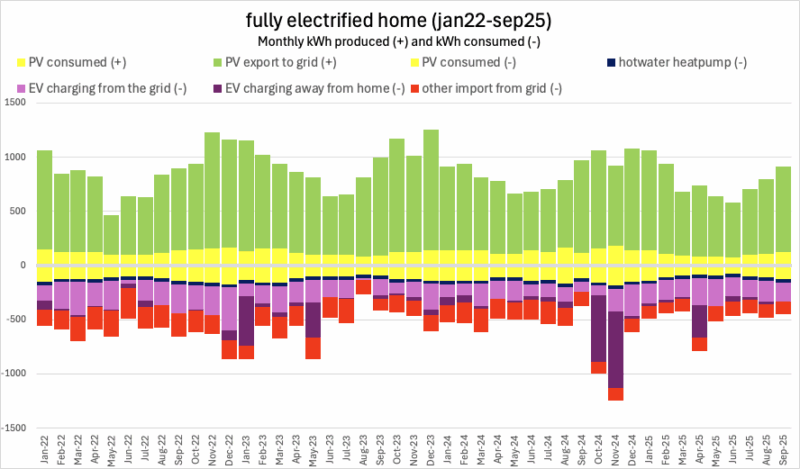
The two graphs below illustrate our electrification journey. The first graph (2007-2025) starts in 2007, the year before we started installing solar PV, and the second, monthly graph (2022-2025) begins in 2022 at the point when all our appliances and vehicles were finally electric .
The red area is the electricity we purchase from the grid for our electrical appliances and the grey is the gas purchased for cooking & heating water (converting the energy from MJ to the kWh equivalent).
The top half of the graphs (positive values) is the energy that we produce from solar PV and the bottom half (negative values) is the energy we consume, broken down into the different uses where possible.

First PV
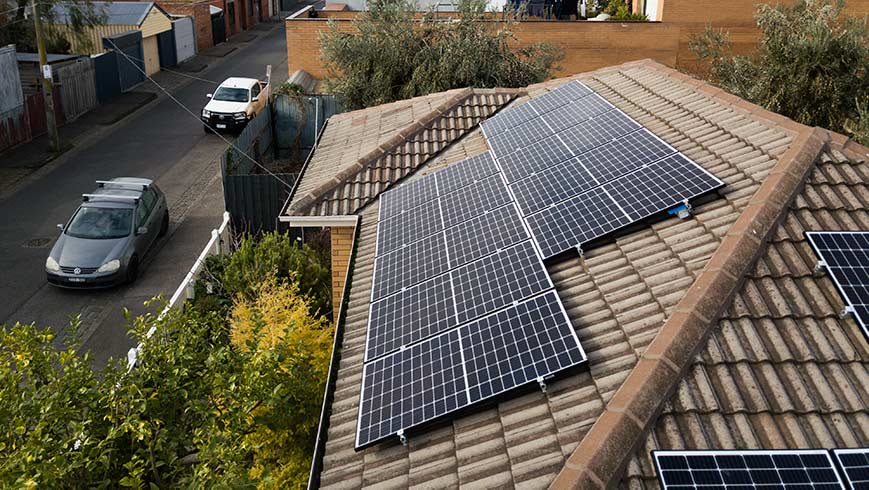
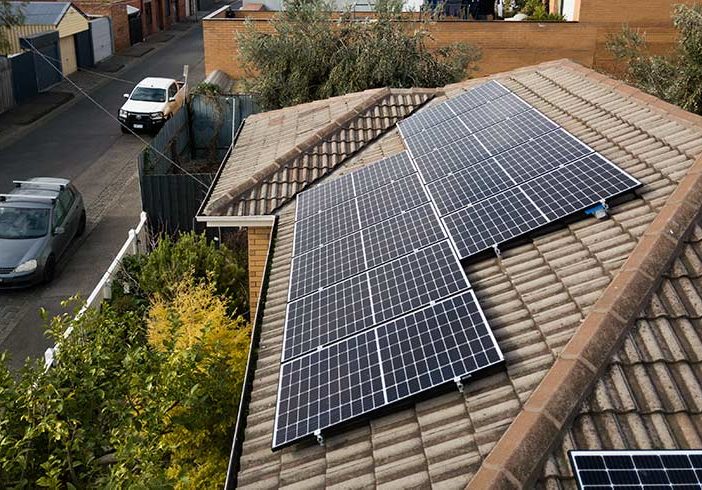
We started with 3kW of solar PV on our north roof in early 2008 (about $15K out of pocket), followed by more solar, 3kW west in 2010 and 3kW east in 2011.
The yellow area is the solar we use (shown both as some of what we produce and mirrored as some of what we consume) and the green is surplus solar sold to the grid (on a premium feed in tariff). The monthly graph shows the seasonality of solar PV generation, with more in summer and less in winter.
Then EV
The Nissan LEAF EV arrived in June 2012 as the first family-ish sized EV available in Australia. Although it had just 160km of range, it made sense to switch to an EV as our daily driver (including a weekly return trip to the Gold Coast from Brisbane) and we kept our old 9yo petrol Camry for longer trips.
Charging the LEAF at home at night (light purple area) almost doubled our daily electricity purchased from the grid (100% Greenpower), but as we rarely needed to buy petrol anymore, overall an EV was a big win in reducing fossil fuel.
At around $59K (in 2025 dollars) at best it got close to financially breaking even over its life, but fortunately there are many more affordable options today.
When an affordable longer distance EV was finally available in September 2019, the Camry was replaced by a Tesla Model 3 SR+ which had a range of 360km. This inspired a long distance road trip to Cairns and then to Melbourne.
The whole trip only cost $7.86 but that’s another story. Charging our EVs when away from home, mainly on road trips is also shown on the graph (dark purple area). In the monthly graph you can see road trips to Sydney (jan23 may23 apr25) and to Melbourne (oct24 nov24).
Getting off gas
When the gas cooktop died in 2018, we replaced it with an induction cooktop. The air in our kitchen was forever cleaner and you couldn’t even notice the extra electricity needed on the graphs.
The days of our gas hotwater were numbered, as we were keen to get off gas, but we kept it until 2021 a little before its end of life when it was finally replaced by an electric hotwater heatpump.
You can see on the graph that during 2019 & 2020 the gas hotwater (grey) was using the equivalent of 8kWh/day and from 2021 the electric hotwater heatump (dark blue) used just a miniscule 1kWh/day for our family of 4, which included teenagers at the time.
Aircon
The days seem to be getting much hotter in Queensland, so in 2022 we replaced our old 20yo aircon in our lounge, which we only used for the 33+ degree scorchers, with a new high efficiency unit, and also added a small unit in the study.
We started to use aircon more last summer and think we will need to use it even more in the years to come with our ageing bodies. It’s only the second day of October and it’s already the second day in spring when it’s been over 30 degrees.
Storage?
Once the premium feed-in tariff (which gives a financial incentive to export your solar rather than use it) finishes, we will heat our water and try to charge our EVs mostly during the day, rather than offpeak from the grid overnight like we do now.
We also don’t have a home battery, but that would allow us to use even more of our own solar production in the evenings and provide backup power in blackouts.
The final piece, which might even remove the need for a home battery, is a bi-directional EV charger (#bidi #V2G #V2H). One of our EVs is usually at home most evenings so could act as a home battery overnight. The electrification journey is not quite over, but we are happy we still generate significantly more energy than we consume.
If you are looking for tips on how to electrify, there are many great organisations and individuals out there (including Renew Beyond Zero Emissions Solar Citizens Australian Electric Vehicle Association (AEVA) MEEh Tim Forcey Zero Emissions Noosa Rewiring Australia and many more).
Thanks to these organisations for showing us the way!