

What’s in a name? According to Victoria’s pricing regulator, the answer to this question most famously posed by William Shakespeare’s Juliet is this: hundreds of dollars in missed savings for hundreds of thousands of electricity consumers, every year.
New research from the Essential Services Commission, published on Tuesday, has found that around 360,000 Victorians are – unwittingly – on older, more expensive versions of plans that have a cheaper alternative with the same name.
The study finds that these consumers are missing out on hundreds of dollars in savings – an average of $430 per year – because they are unaware they are on the higher-cost version of a plan.
The “same name, different price” power bill phenomenon was called out by consumer advocacy group Choice in a designated complaint to the Australian Competition and Consumer Commission (ACCC) in May 2025.
The Choice complaint outlined three “widespread concerning practices” by energy retailers, including prompts to switch better offers that refer to plans that do not appear to be available, or the customer is not eligible for.
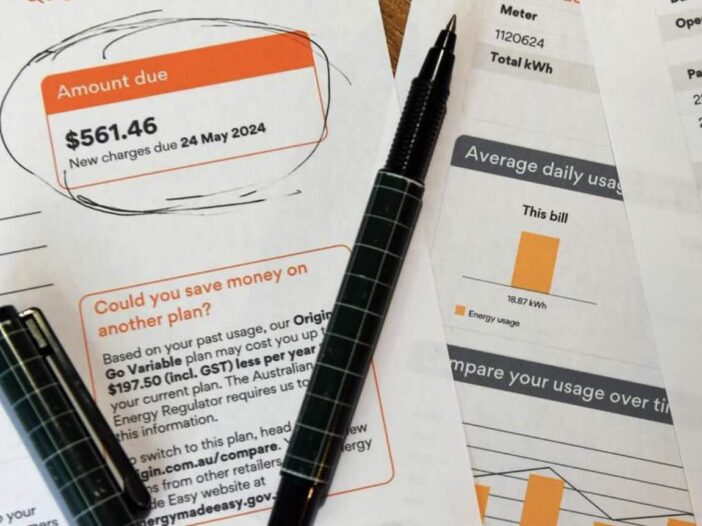
But one of the most concerning practices appears to have evolved from the introduction of a 2023 reform requiring retailers to include a “Better Offer” message on customers’ bills at least every 100 days.
In a review of 400 household bills, Choice found customers were often told they could save money by switching to a “better offer” which had the exact same name as their current plan, leading them to believe they were already getting the best price.
In its own review, the ESC says it has found that, for some plans, less than 25 per cent of customers are on the newest, cheapest version. Of the 10 most popular consumer energy plans, six have cheaper successors with the same name.
This happens, the ESC says, because some retailers update prices while using the same plan name when competing for new customers.
And to try clear the confusion the regulator is introducing new rules to ensure that the task of finding the best energy plan is not being made more difficult – “whether intentional or not” – for consumers.
“Re-using plan names undermines simplicity and accessibility, resulting in consumer harm. It makes switching to the best offer difficult for many consumers, particularly those experiencing vulnerability,” the ESC says.
“From 1 October 2026, new energy rules will require retailers to have processes that are effective in helping customers switch to a cheaper plan.
“A process will only be effective if it is both simple and accessible. In practice, this means that retailers should clearly distinguish between different plans so customers can easily see when a cheaper offer is available and switch with confidence,” it says.
“Same-name plans can be a significant barrier to switching to a retailer’s cheapest plan,” said ESC chair Gerargd Brody in a statement on Tuesday.
“The recently announced changes should remove this barrier and help customers identify cheaper plans.
“In the current climate, we know people are looking for ways to reduce costs,” Brody said.
“We expect retailers to design systems and publish new offers that clearly identify different plans, making it easier for customers to switch.”
The new rule is part of a broader suite of upcoming changes, the ESC says, including other rules to help Victorians switch to their retailer’s cheapest plan.
From the start of July, 2026, retailers must ensure that all customers on contracts older than four years are paying a reasonable price for their energy.
And from the start of October, 2026, retailers must automatically switch customers experiencing payment difficult to their retailer’s best plan.
Other changes, the regulator says, are designed to ensure customers “doing it tough” get the best price and stay connected, and to tackle the energy market’s ‘loyalty tax’.
“The commission will monitor how retailers meet their obligations to make switching to the best plan simpler and more accessible for consumers,” the ESC says.
Outside of Victoria in the other National Electricity Market (NEM) states, the Australian Energy Market Commission (AEMC) in September signed off on a new Australian Energy Regulator (AER) rule to make “better offer” messages on electricity bills harder for consumers to miss.
But Choice and Energy Consumers Australia (ECA) have expressed concerns that these reforms will do little to fix the problem, and say the system needs a reset.
“Even if specific tactics are banned, the market’s fundamental structure still works against consumers,” Jordan Cornelius, senior campaigns and policy adviser at Choice told the SwitchedOn Australia podcast in September.
“Equally important must be a rethink by regulators of the premise that only those consumers who have the skills and wherewithal to keep hunting down the best deals should be entitled to them,” ECA chief Brendan French told the podcast.
“Consumers shouldn’t be penalised simply because they don’t have the language, cognitive or digital skills – or even the available time – to constantly be on the lookout for cheaper prices. All too often we see that those with the lowest means are paying the highest prices, and that just shouldn’t happen for an essential service.”

Sophie is editor of One Step Off The Grid and editor of its sister site, Renew Economy. Sophie has been writing about clean energy for more than a decade.