
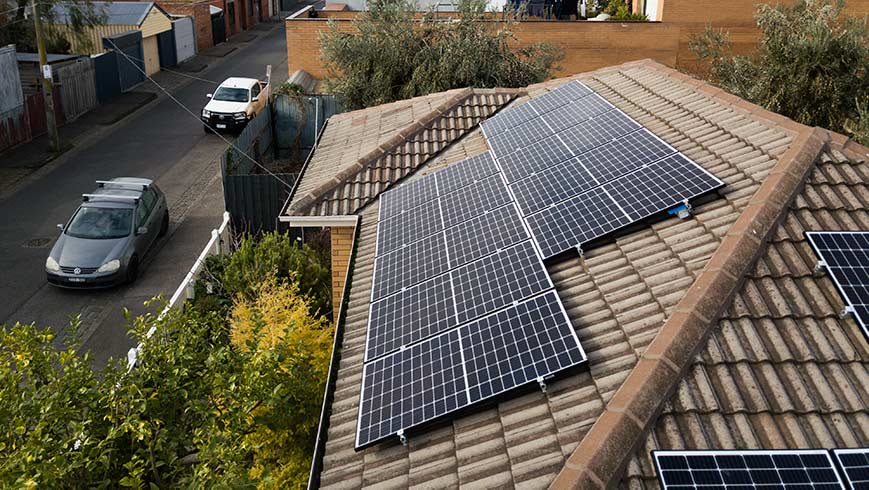
The average payback period for a residential rooftop solar system in Australia is on track to fall by a full year, a new report says, if retail energy prices continue to rise to levels currently being predicted.
In its latest quarterly carbon market report, the Clean Energy Regulator says the pay back period for rooftop solar could drop from four years to three, reinforcing its status as an “excellent investment” for Australian households.
The happy news on solar ROI comes as the Australian Energy Regulator becomes the latest to forecast that energy prices are likely to remain elevated for the next two years, thanks largely to high global coal and gas prices.
According to the AER, forward price expectations are highest in winter 2023, when they are forecast to range from $190/MWh in Victoria to an eye-watering $280/MWh in New South Wales.
“The key drivers for continued high price expectations are varied but include expected high international gas and coal prices, uncertainty around reliability of baseload coal generation, local coal supply issues, forecast La Niña weather conditions and the closure of the final 3 units at Liddell Power Station… tightening supply,” the AER says.
This is tough news to hear – but, as the saying goes, there is a silver lining to every cloud.
The silver lining
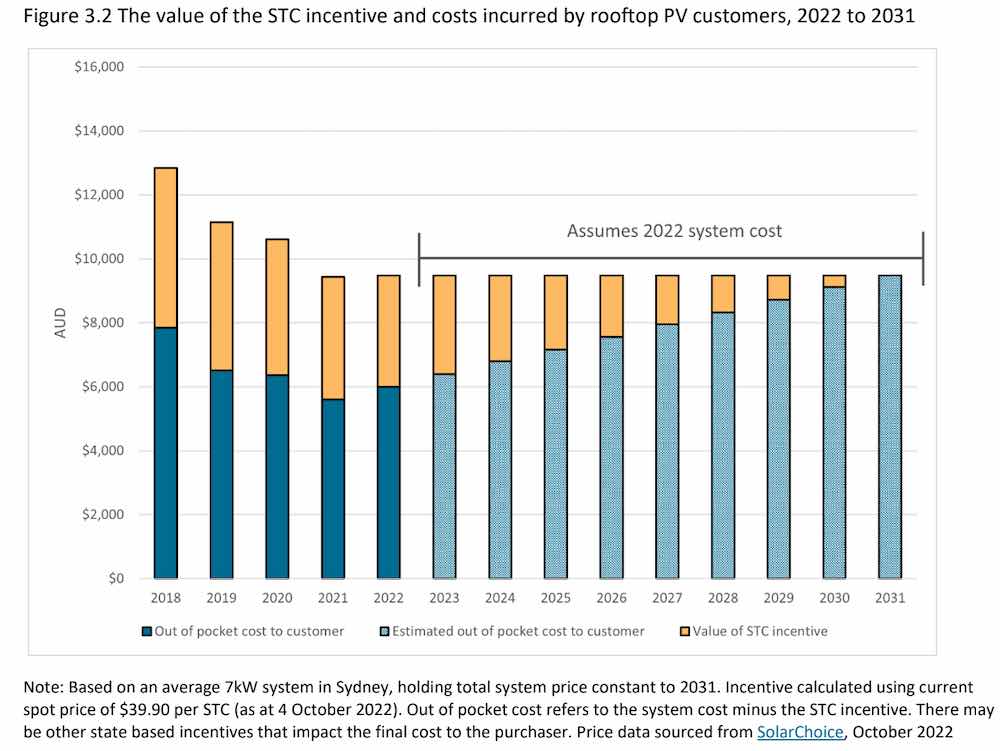
The Clean Energy Regulator says that despite a couple of recent supply chain blips and the declining deeming – that is the annual reduction in the subsidy offered under the federal government scheme – the net cost of a solar PV system continues its downward march.
Accordingly, once supply chain constraints ease, and if key component costs continue to fall in line with pre-pandemic trends, the out-of-pocket costs may not increase at the level suggested in Figure 3.2 (below).
And if coal and gas prices continue to stay high, the picture for solar gets even better.
“If retail energy prices increase next year to the level some are predicting, the average pay back period for a
rooftop solar system could decline from about 4 years to 3 years, still making it an excellent investment,” says the CER.
“This … does suggest that now could be a good time to invest in rooftop solar for those in a position to do so.”
Already, this message appears to be getting through to households.
A rebound in rooftop solar uptake
The CER says it has been getting reports of substantial increases in the number of quote requests for rooftop solar, indicating consumers are looking for alternate energy sources in response to increased energy costs.
And according to the data from the third quarter of 2022, rooftop solar installations are definitely on the way back up, with more than 700MW installed over the three-month period.
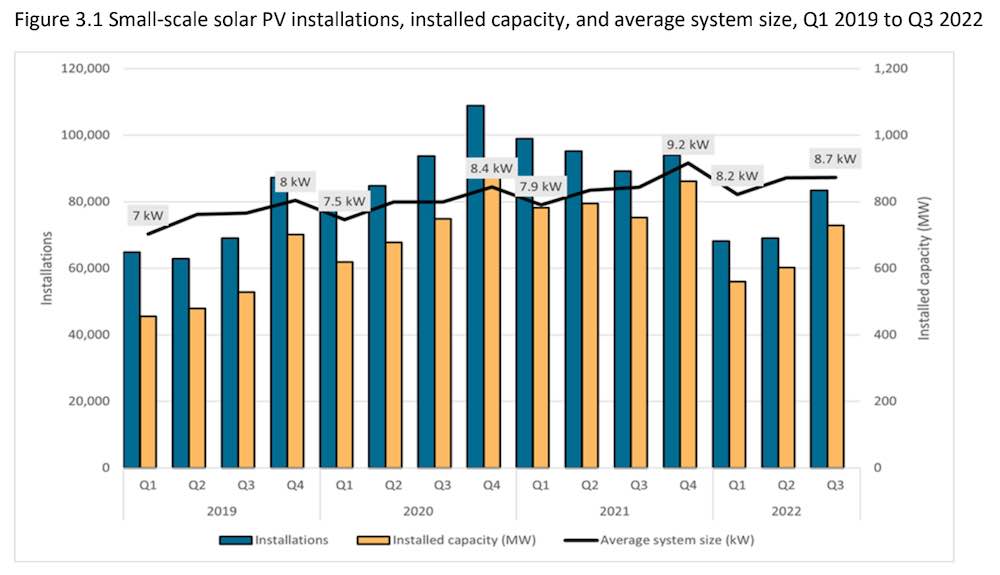
“The rooftop solar PV market appears to be picking up from the decreases seen in the first half of 2022,” the report says.
“After two quarters of substantial year-on-year declines, Q3 saw an estimated 729MW of small-scale PV capacity
installed, just 3% below the 752MW in Q3 last year.”
This takes the total installed in 2022 to date to 1.9GW, which is still behind 2021 levels by 19%, but the gap is narrowing, leading the CER to revise up its 2.3GW estimate for 2022.
“Increased installations of rooftop solar systems are happening off the back of an increase in retailer enquiries that began in July,” says CER chair David Parker.
“If this trend continues, total [added] capacity in 2022 will be about 2.7 gigawatts (GW),” he said.
Savings beyond solar
And of course, consumer efforts to cut energy bills don’t have to stop – or even start – with the installation of solar panels.
The CER says it has also noted a “significant increase” in installations of air source heat pumps, with 23,000 units installed in the third quarter of 2022 alone, compared to an average of 17,000 a year for much of the past decade.
“Households are switching from old, less efficient electric and gas hot water systems to newer and more efficient air source heat pumps to meet their energy needs,” Parker says.
But solar advocacy group Solar Citizens says more technologies should supported by policies like the federal government’s Small-scale Renewable Energy Scheme, to further help households manage the rising cost of living.
While the SRES – which is overseen by the CER – incentivises rooftop solar, solar hot water and hot water heat pumps, Solar Citizens argues that electric heating and cooling systems, electric stove tops and batteries should also be subsidised federally.
“It was smart government policy that kick-started the household solar industry, and now governments can replicate that success by supporting the accelerated uptake of household battery storage and electrification,” says Solar Citizens deputy director Stephanie Gray.
“In particular, we’re calling on the federal government to expand the Small-scale Renewable Energy Scheme to also provide a financial incentive for battery storage, as well as offering no-interest loans for households to invest in bill-slashing clean technology.”
Solar Citizens also wants governments to implement programs to support broader access solar, including people living in rental properties, social housing and apartments.
“At the moment renters and people living in apartments are unlikely to have access to cheap solar energy, so it’s up to governments to implement incentive schemes and also introduce mandatory minimum energy efficiency standards in rentals,” says Gray.
“By doing this they can make sure no one is left fully exposed to high fossil fuel prices.”

Sophie is editor of One Step Off The Grid and editor of its sister site, Renew Economy. Sophie has been writing about clean energy for more than a decade.