
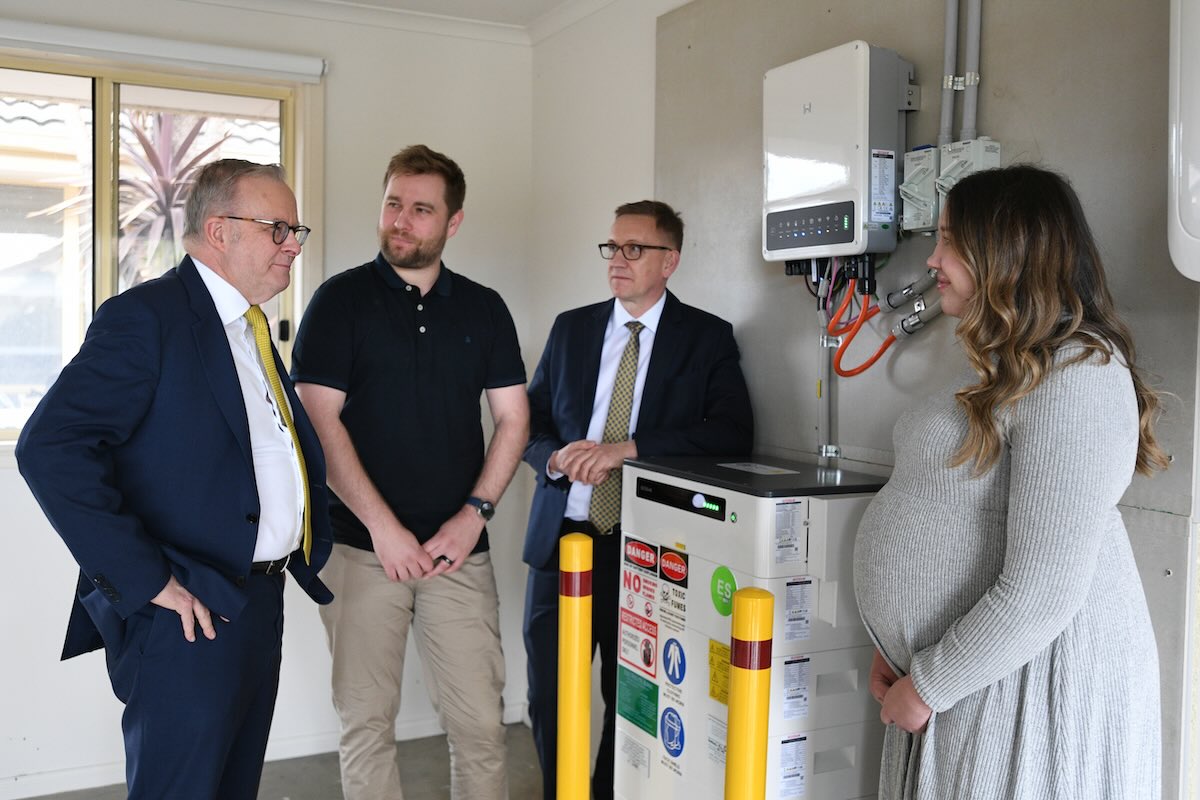

Rooftop PV installs in Australia are tipped to surge – despite a dip caused by the rush of installs of household batteries – with the Clean Energy Regulator pointing to a backlog of upgrades, and replacements and new systems.
The CER, in its latest quarter report, notes that rooftop solar PV installs in the first half of the year fell to 1.3 gigawatts – a 12 per cent fall from the same period a year earlier.
It blamed this on the impact of the successful federal battery rebate – officially known as the Cheaper Batteries Program – which it said had caused many consumers to wait for their batteries before installing new PV systems, and the sheer volume of new battery installs that took up most of the time for installers.
“Installers are focusing on battery installations for their recent PV system client base, rather than pursuing new clients for PV systems,” the CER says. It also noted that in some cases, systems were also being physically installed to the point of ‘Ready to Commission’ in Q2 but not finalised until Q3.
“As the backlog of ‘Ready to Commission’ Q2 installations are finalised and installers pivot back to installations of new PV systems, as well as replacement and upgrades to older systems, PV capacity and installation figures should recover through to the end of the year.
“As such, the CER has left our estimate of 2.9 to 3.2 GW of installed capacity in 2025 unchanged, but note that the uncertainty around the range has increased as the initial impacts of new policy play out.
Interestingly, the CER says the share of PV systems that were replacements for old systems rose to a new record of 22 per cent of total installs in the June quarter, and around one-third of all Q2 2025 installations in Queensland were replacement systems.
It said this higher rate could be partially driven by the impact of Cyclone Alfred, citing high replacement rates in cyclone-affected regions such as Moreton Bay and Redland.
It also expects the replacement rates to increase in coming years, particularly in Queensland where historically high state-based solar feed-in tariffs are coming to an end.
Meanwhile, analysis of the first two completed months of the solar battery rebate shows that 50 per cent of the validated batteries were sized between 10 and 20 kWh, with an average of 15 kWh.
Around 45 per cent of battery installations are estimated to be ‘concurrent’ installations, which means that they come with a new, expanded or replacement solar PV system.
The remaining 55 per cent of battery installations are estimated to be ‘retrofitted’ to an existing solar PV, and most of these to a solar system installed more than a year ago.
“Unsurprisingly, households and businesses with bigger solar PV systems tend to install bigger batteries,” the CER says.
“On average, installed battery capacity is equal to the maximum amount of energy that the solar PV system can generate over 2 hours.”
The CER says it received around 55,000 applications by mid-September, representing over one GWh of capacity, with more than 700 MWh validated – more storage capacity than Australia’s largest in-service battery at the Waratah Super Battery in NSW.
“Longer term, we expect to see an increase in PV capacity as households seek to make full use of their newly installed batteries. There is expected to be strong demand for new solar PV systems to replace older and smaller systems that have reached the end of their contracted feed-in tariff.”

Giles Parkinson is founder and editor of One Step Off The Grid, and also edits and founded Renew Economy and The Driven. He has been a journalist for 35 years and is a former business and deputy editor of the Australian Financial Review.