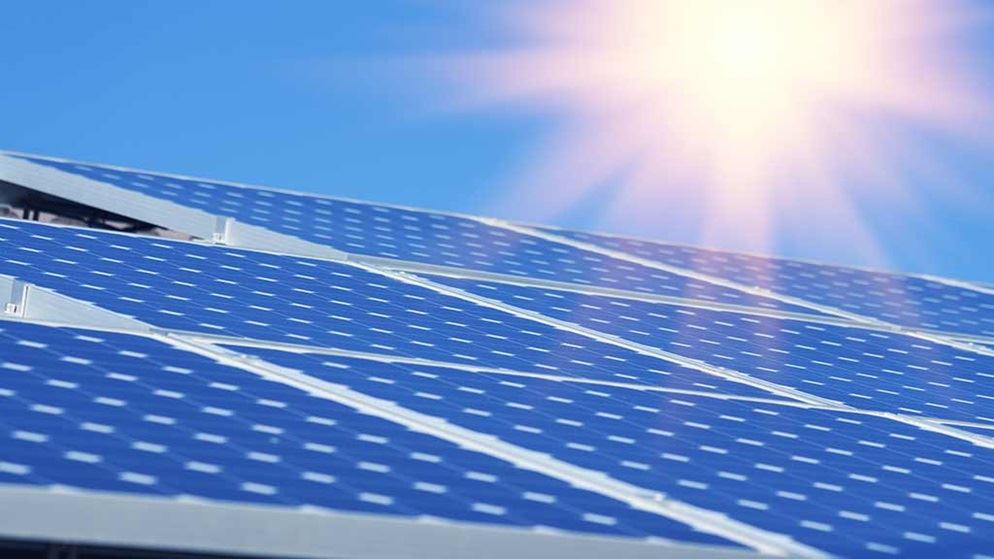

Distributed PV offers many potential benefits, from producing clean energy and giving homeowners energy independence to offering the utility multiple energy sources. The challenge with solar energy is that solar energy production does not match typical residential consumption patterns.
 Storage technology can be particularly useful and profitable to residential PV systems. By combining PV with a storage solution, homeowners gain from a variety of possibilities to increase self-consumption, improve system profitability, and get backup power. However, it is important to know how to select the right kind of storage solution.
There are a number of factors and considerations that need to be taken into account in order to assure that a storage solution will meet the needs of a system owner. One of the most important tips is to make sure that the energy demands will be met by the battery’s capacity.
There are a number of different batteries on the market today, but if the battery doesn’t have enough capacity, then this limits the amount of energy that can be stored. This not only limits the amount of energy that a homeowner can use later, it also means, if there is a feed-in limitation, that energy will be lost. The battery size directly relates to reducing energy costs and improving system Return on Investment.
Another important factor that needs to be taken into account is how quickly a battery can charge. If the battery can only charge at a rate of 1kW/h instead of 3kW/h then the battery charge time will be longer and the homeowner may not have energy available when needed. A good way to imagine this is if you were filling up two pools of water, each with its own hose.
One pool had a very wide hose, while the other had a very slim hose. The pool with the large hose would fill up much more quickly and be ready to swim in on a hot day when you need to cool off. This is the same concept as with energy storage in a battery. You want more energy to flow into the battery more quickly.
Just as important as the battery charge time is the battery power capacity. A storage battery should have a high power rating. If a battery has a low power rating or is unable to discharge quickly, then homeowners will only be able to power a minimum of loads. Some storage vendors on the market offer modular battery solutions, that probably won’t cover the basic power needs of an average homeowner.
For instance, a homeowner might be able to power some lightbulbs and a toaster with a battery that has a low capacity and low discharge. But with a battery with a large capacity and quick discharge, a storage solution could power lightbulbs, a toaster, a refrigerator, a coffee maker, and a washing machine. Modular solutions therefore require several battery units to provide the equivalent power of just one high capacity battery.
Installation is another factor that needs to be taken into account for storage systems. Many solutions cannot be installed outdoors. This can limit not only the location of the installation, but may actually cause some installations to be cancelled due to a lack of space indoors.
Backup power is becoming an increasingly important function that can offer superior convenience when the grid is down. Natural disasters and grid instability can cause power outages that have severe consequences for the homeowner, such as floods, dark nights, spoiled food, no electric heat, no means to charge mobile communication devices, and more.
After the 2010-2011 Brisbane floods, the Queensland utilities were able to restore power to most homes only 5 weeks after peak outage. It is important to make sure that a storage system provides backup power when the grid is down, so that during such scenarios, backup power can be supplied day or night by a combination of PV and battery to enable families to receive basic needs until full power is restored. In this type of scenario, PV power can both supply the house with energy and charge the battery, so that the battery can supply energy to backed up loads during the night.
Lastly, it is important to make sure that energy does not go to waste with multiple DC-AC conversions. Each time that there is a conversion from AC to DC or vice versa, there is some amount of energy loss in the process.
But when PV power is stored directly in the battery in its DC form, there are no additional conversions from AC to DC and then back again to AC for use in the home or export to the grid, like in some microinverter storage solutions. This means that a DC-coupled solution allows for higher system efficiency because there will only be one total conversion versus an AC system that requires three separate conversions.
By following this checklist for how to select storage solutions, installers and homeowners alike can assure that they are installing storage solutions that meet their home energy needs.
Lior Handelsman, VP of Marketing and Product Strategy, founded SolarEdge in 2006 and currently serves as our Vice President, Marketing and Product Strategy where he is responsible for SolarEdge’s marketing activities, product management and business development.