
Solar Shading Solutions
Solar shading is the dirty phrase of the solar industry. There are plenty of people who have been sold a solar system only to find that its output is far less than what was promised. In extreme cases, solar shading can cause your panels to prematurely fail, or even form hot spots and cause a fire.
Is it possible to beat shading and boost the output of a solar system? The short answer is no, but we can certainly optimize or increase the output of existing situations with technology that will provide a return on investment. Most importantly, we can stop panel mismatch and therefore ensure the longevity of your solar panels.

What happens when a solar panel is shaded?
When a solar panel is shaded, it changes from being an electrical generator and becomes an electrical load. This means that instead of producing power, it consumes power. Let’s just think about that for a second. Many people think that if they have a panel which is shaded, they will lose part of that panels output. This is simply not true. What happens is the shaded panel starts drawing power from other panels in the string and therefore pulls down the output of the whole channel.
What about bypass diodes?
Solar panels are equipped with ‘bypass diodes’ which ensure that power can only flow in one direction. Without bypass diodes, a shaded solar panel would draw the full current of the string and lose it as heat in the shaded area. This would result in hot spots, followed by a fire. When a bypass diode is added, the shaded panels are removed from the output equation and the string operates more efficiently. Bypass diodes are a very simple circuit with very low accuracy. They tend to operate on a threshold of around 20-30 percent and are aimed more at ensuring safety moreo than any attempt at increasing system efficiency.
String Systems
A traditional solar system consists of a string inverter and one or more strings. These strings are highly susceptible to mismatch issues between panels, which are caused by manufacturer tolerances, shading, or soiling. Due to this, a string system must be designed with careful intent to ensure that no shading takes place. In many cases it will be better to have less panels, than have a system which is partially shaded.
Solar Shading Solutions
The PV industry has come a long way since the invention of the string inverter. We like to compare them to steam engines. They work, but they have plenty of limitations and they’re prone to failure. It is for this reason that two modern approaches have become apparent. One approach is to add module level electronics which ‘optimize’ the output of each solar panel and counteract mismatch issues. Common brands include Tigo and Solaredge. Tigo in particular, has an excellent niche in the retrofit market where it can now be ‘snapped in’ to older modules and therefore offer excellent solar shading solutions. Before the Tigo TS4 arrived, our best advice was to unplug the panel and shorten the string!
The second approach is to take the string inverter and shrink it down into a micro inverter package. Micro inverters are now very common and enable all sorts of high-level functions beyond shade and mismatch tolerance such as design freedom and high-level logging. If youre looking at a new install, then chances are micro inverters will be the best solution for you.
Solving Existing Shading Problems
If you have a system already installed, Tigo is one of the best solar shading solutions for you. At a cost of roughly $100 per panel, a Tigo TS4 module can be retrofit onto the back of your existing solar modules and therefore ensure that your shading and mismatch issues are overcome. For the budget conscious customer, there is no need to refit the entire array. Your installer simply clips optimizers onto the back of the shaded modules and away you go. If you are looking for a high-end solution, or would like to see how the performance is affected, we recommend installing Tigo’s across the array. The system can then be connected to Tigo’s cloud gateway, which enables panel level monitoring and a very high level of display.
PV Optimisers and PV Micro Inverters
How much will a Tigo Optimizer improve the output of your system? When added to a north facing non-shaded array, Tigo’s will increase the output of a solar system by 3.4%. This may not sound like much, but it adds up over 20 or more years. When added to a shaded solar system, Tigo’s will increase your production by between 10 and 15% during shaded conditions. This is a huge increase which will most certainly pay off the technology within its lifespan.
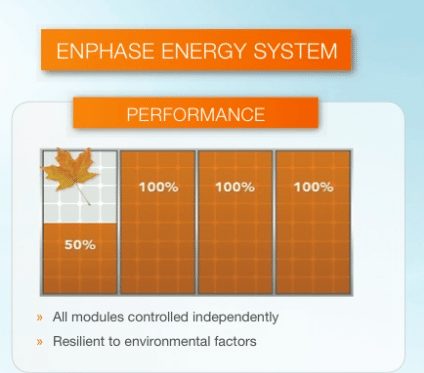
Enphase micro inverters will increase these results even further and provide up to 5% additional output, even in non-shaded conditions.
Its important to note that none of these technologies make solar suitable for heavily shaded environments. They are designed to counteract partial shading from trees and clouds during seasonal low points. If you have an array which is shaded during parts of the year, then snap in optimizers will work for you.