
• Skip to primary navigation
  • Skip to main content
  • Skip to primary sidebar
  • Skip to footer
One Step Off The Grid

One Step Off The Grid

Solar, storage and distributed energy news

  • Solar
  • Battery/Storage
  • Off-Grid
  • Efficiency
  • Software
  • Podcasts
  • Tariffs
  • Electric Vehicles
  • Electrification

State dangles extra $400 discount for heat pump hot water systems made in Australia

June 10, 2025 by Joshua S Hill Leave a Comment

heat pump
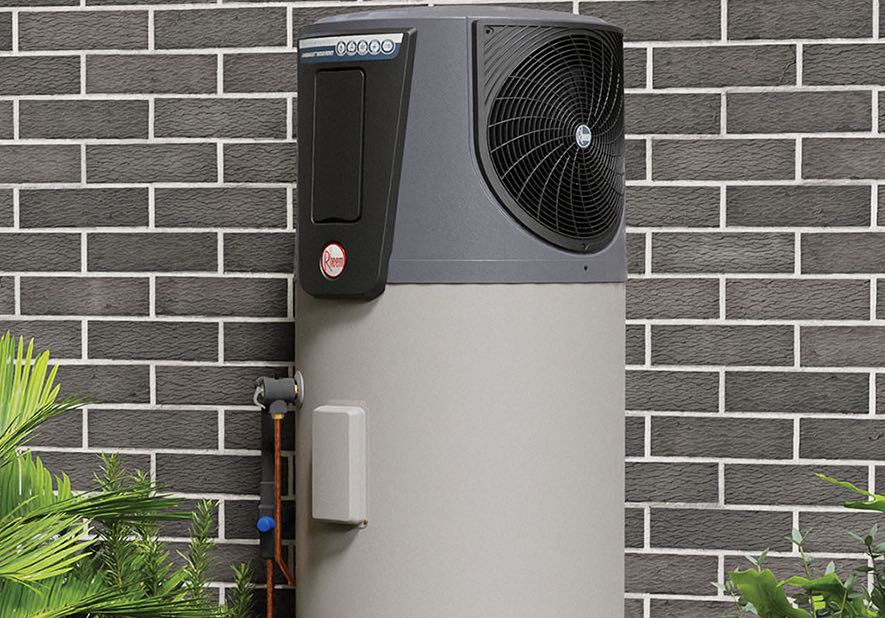
Image source: Rheem
heat pump

The Victorian government will provide an extra $400 rebate to households seeking to upgrade their hot water system to an electric heat pump – if they buy Australian-made. 

Victorian energy minister Lily D’Ambrosio says households applying for a discounted electric heat pump hot water system through the state’s Solar Homes Program could add $400 to the $1,000 already on offer by choosing an eligible product from an Australian manufacturer. 

The move by the Victorian Labor government comes as the NSW Labor government and its Liberal predecessor both come under fire over the state’s heat pump incentive scheme, which industry claims has favoured cheap, low-quality systems from overseas over higher quality Australian products.

“We know there is a strong history of locally manufactured hot water products,” Victoria’s D’Ambrosio said in a statement announced the new incentive on Sunday.

“We want to make sure local jobs are supported and that money spent in Victoria stays in Victoria.”

The minister notes that the $1,000 rebate still exists on its own, allowing customers the choice of system, but the extra rebate amount is designed to ensure Australian manufacturers are not overlooked. 

Victoria’s Solar Homes Program, which is operated by Solar Victoria, received $29.7 million boost from the 2025/26 state budget that the government is keen to direct towards electrification by subsidising appliances like heat pump hot water systems, reverse cycle air conditioners, and – to help power it all – solar panels. 

Solar Victoria says using an efficient electric heat pump rather than gas for hot water can save a household up to $330 a year on its energy bills. 

And Victorians have proved the value of heat pumps, making them the most popular part of the Solar Home Program with a 151 per cent increase in the number of installations on the previous year. 

“We’re on the side of Victorians – helping families cut energy costs and take back control of their bills,” said D’Ambrosio.

https://reneweconomy.com.au/editorial-guidelines/ 

Filed Under: Electrification

Primary Sidebar

Sign up for our weekly newsletter

Emissions Counter

Renew Economy

RSS Energy News from Renew Economy

  • State’s stand-alone solar fail: The energy transition should deliver more than a new landlord
  • Energy Insiders Podcast: Electric truck network starts to take shape
  • Watchdog warns spike in home battery complaints could damage consumer trust
  • Offshore wind developers pray for bipartisan support ahead of key state election
  • State utility bets on Australian-first compressed CO2 “energy dome,” with up to 12 hours of storage

RSS Electric Vehicle News from The Driven

  • Tesla strikes deal with Australian finance company for “guaranteed future value” loans
  • EVs hit record high as car lobby flags structural shift | The Driven Podcast
  • The seven best-selling EVs from Australia’s record breaking month of electric car sales
  • China’s electric revolution is extending beyond EVs and trucks to ferries and cargo ships
  • GWM Ora 5 first drive: A new electric SUV at an affordable price

Press Releases

  • Huge luxury Saudi resort goes 100pct renewables with one of world’s biggest batteries
  • How solar + storage can be a game-changer for people with disabilities

Footer

Technologies

  • Solar
  • Battery/Storage
  • Electric Vehicles
  • Energy Efficiency
  • Software/Gadgets
  • Other Renewables
  • Policy
  • Tariffs
  • Contact
  • Advertise with us
  • About One Step Off The Grid
  • Terms of Use
  • Privacy Policy

Copyright © 2026 · OneStep Genesis on Genesis Framework · WordPress · Log in