

Thirteen Victorian water utilities have banded together to forge a major renewable energy off-take deal that will supply between 20 and 50 per cent of each corporation’s total electricity needs, and lower water bills for consumers.
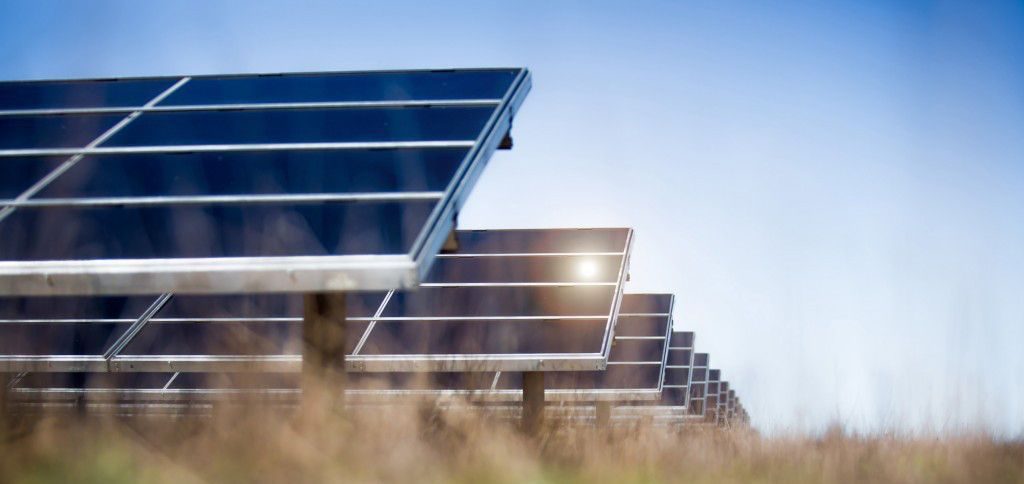
The utilities, under an umbrella organisation called Zero Emissions Water Ltd (ZEW), have signed a deal with the 200MW Kiamal Solar Farm – Victoria’s largest such project to date, which is being developed in the state’s north-west by Total Eren.
Victorian water minister Lisa Neville said on Tuesday that the power purchase deal, starting October 2019, meant the utilities would be able to source electricity at “a much cheaper rate” than would be possible individually.
This would not only slash the utilities’ emissions, but reduce operating costs in what is a notoriously energy intensive industry, and allow those savings to be pass on to consumers.
“It’s great to see our state’s water corporations working together on this innovative new model, which will not only help protect our environment into the future but also keep water bills affordable for Victorians,” Neville said.
“We’ve seen the effects of climate change on our water storage levels, which is why it’s more important than ever to create solutions that will reduce greenhouse gas emissions.”
The chair of Zero Emissions Water, Paul O’Donohue, said the deal was as much about ensuring a secure and sustainable water supply as it was about cutting emissions and costs.
“The security of Victoria’s water supply relies on our response to climate change and this is a solution that will greatly reduce greenhouse gas emissions,” O’Donohue said.
“The Victorian water industry is working together to meet renewable energy targets whilst seeking to reduce costs for customers at a time when the cost of living can feel unpredictable for some.”
The ZEW consortium includes Barwon Water, Central Highlands Water, City West Water, Coliban Water, East Gippsland Water, Gippsland and Southern Rural Water, Lower Murray Water, South East Water, South Gippsland Water, Wannon Water, Westernport Water, Western Water, and Yarra Valley Water.
Among that list, a large number of utilities have already taken measures to cut their operating costs and emissions through renewables, largely through installing their own solar, wind and or battery storage systems.
Wannon Water, for example, switched on a 250kW solar array at a water treatment plant in December last year, that will cut that facility’s grid power consumption by 50 per cent. It is also in the process of installing a 800kW wind turbine, to power 100 per cent of its Portland water and sewage treatment facilities.
And earlier this month, Barwon Water – which aims to source 100 per cent renewable electricity by 2025 – revealed plans to install a 180kW/200kWh battery storage system, alongside a 300kW solar array at its Wurdee Boluc Water Treatment Plant.
City West Water managing director, David Ryan, said that the ZEW deal would allow that utility to purchase 3.76 gigawatt-hours (GWh) a year of renewable energy, or 30 per cent of its annual energy needs.
“This is a key project that will help us achieve an ambitious target of net zero emissions by 2030, while reducing our energy costs and placing downward pressure on customer bills,” Ryan said.
“We’re proud to have played a key role in this project, from conception to execution, and will continue to play a strong role in water sector collaboration to reduce emissions.”
And while the deal marks a first of its kind for Australia’s water sector, it is not a first for Victoria. It follows in the ground-breaking footsteps of the Melbourne Renewable Energy Project (MREP) – a bulk-buy renewables consortium of 14 of leading Victorian universities, cultural institutions, corporations and Councils, and led by the now 100 per cent renewable powered City of Melbourne.
It also comes amid a flurry of renewables power purchase deals being made between individual corporations and renewable energy developers all around Australia, that deliver both cheaper and cleaner electricity for business and investmen certainty for solar and wind farm developers.
Total Eren’s Kiamal Solar Farm has been setting the pace for corporate renewables financing deals in Victoria, namely with the fast growing energy retailer Flow Power, which is contracted to buy 50MW of capacity from Kiamal, to offer to its business clients, including Mars Australia.
The details of the June 2018 deal between Flow and Total Eren were not made public, but at the time Flow Power CEO Matthew van der Linden described it as “really cheap” and “well below the rates out in the market.”
The new deal, with the ZEW consortium, is no doubt another major endorsement for Kiamal, whose location not far from Mildura, places it in Victoria’s so-called “rhombus of regret” – a part of the network that has been overloaded with wind and solar projects planned for the area.
That concentration of projects on an ill-equipped part of the grid had led to a warning from the Australian Energy Market Operator last May that renewable energy developments within the rhombus faced significant curtailment.
Kiamal, as the largest solar project proposed for the area, was expected to be particularly badly hit, and after going back to the drawing board Total Eren decided to invest in a large synchronous condenser to advance the project.
The “syncon” will provide a fault contribution of greater than 600MVA, which is around three times the size of the peak output for the solar farm.
According to Michael Vawser, Total Eren decided on this course of action due to economies of scale, and because it will make the solar farm’s grid connection process smoother.

Sophie is editor of One Step Off The Grid and editor of its sister site, Renew Economy. Sophie has been writing about clean energy for more than a decade.