
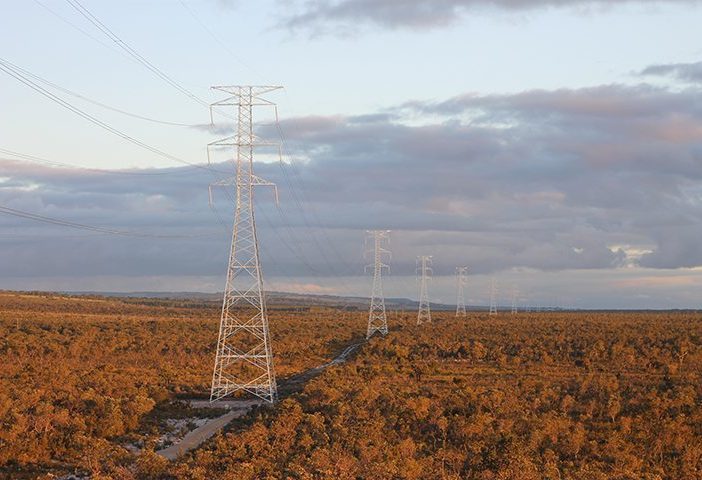

The shift from traditional centralised fossil fuel power generation to distributed renewable energy powered grids is widely accepted as a foregone conclusion by players in the global energy market. How quickly this will happen, however, is not.
For energy networks like Western Australia’s Horizon Power, for example, which averages one customer every 53 square kilometres and already operates 37 microgrids ranging from 30MW peak load to 100-150kW, this future will arrive sooner, rather than later.

“We believe that the future will be distributed energy, particularly in these small micro girds,” said Laurie Curro, Horizon’s general manager of power system services, in a presentation at Australian Energy Week 2016 in Melbourne last week.
“Centralised energy will be there in some form or other, but distributed energy will be the way to go.” And it will be the way to go, he added, because of cost – as the Horizon charts below illustrate.
“Because we run small micro grids we see this accelerating at a fast rate,” Curro says. And the graph above illustrates that point. The company estimates that distributed energy – rooftop solar and battery storage and other local generation – will leap from 1 per cent now to more than 50 per cent by 2025.
And that is based on the most economic outcome. By 2050, it suggests, centralised generation will be reduced from 98 per cent now to just 9 per cent.
And because the economics for the transition are so much more powerful in the remote and isolated grids that Horizon operates, Curro says Horizon’s experience will provide “a bit of a test bed” for the larger grid, and some of the solutions the still government-owned network is looking at may turn out to be a solution for the larger grid as well.
“We are looking at what other benefits we can get from this (shift to renewables),” he told the conference.
“So whether the distributed energy is owned by us or by somebody else, it doesn’t really matter, where the social demographic is such that people can’t afford to put their own systems in, we will probably put our own systems somewhere down the end of the street, batteries, etc. So we’ll approach a distributed energy future as much as we can, mainly because it is cost effective.
“Can we use the system for other things? Can we use the batteries for other things? Can we install the batteries ourselves and have other people maybe buy into it – a community type situation?
“Our challenge is not so much load, it’s more around making sure our customers can get some sort of supply. …We operate 38 grids within WA. One is the interconnected grid and the rest are microgrids.
“Storage will be a game changer and control, the ability to manage these systems, will also be the key to it,” he said.

This graph above further illustrates the economic argument. The thick black line is business as usual, while other options – going stand-alone, focusing on distributed generation, are clearly much cheaper. “The economics of past supply models are no longer competitive with current and future technology choices,” it says.
Curro said Horizon was working on a project called Blueprints, which was looking at the cost of supply for all its towns and “seeing what triggers we have and what opportunities we have.”
“Solar and storage is the key to this,” he said. “In about 30 of those 38 systems we don’t actually own that generation, the generation is provided by a third party. So as those contracts come of age, we look for the opportunity to basically do something else.”

Sophie is editor of One Step Off The Grid and editor of its sister site, Renew Economy. Sophie has been writing about clean energy for more than a decade.