


An Australian-first, five-year community battery storage trial in Western Australia has been deemed a success for saving participants hundreds of dollars on their energy bills and slashing peak demand on the local grid, but its greatest lessons might be in what not to do next time.
The Alkimos Beach Energy Storage Trial was conducted between April 2016 to the end of May this year, across 113 households at the multi-award winning 6 Star Green Star residential community of the same name in Perth’s northern suburbs.
The Synergy-led, ARENA-backed project, developed in partnership with Lendlease and DevelopmentWA, installed a 1.1MWh community-scale lithium-ion battery, and offered the solar households participating in the trial unlimited virtual storage for a monthly fee of $11.
Participants were also given access to a Peak Demand Saver plan – essentially a time-of-use tariff – that encouraged them to make the most of their solar by storing the excess energy generated for use during periods of peak demand, typically in the late afternoon and early evening.
Instead of selling any excess electricity back to Synergy, participants generated solar credits to offset their usage. At the end of each billing period, if a household had generated more solar credits than the amount of energy it consumed during the peak daily and off-peak evening periods (4pm – midnight), then these were credited to the bill.
According to an ARENA report published this week, the final results from the five-year trial show that over the life of the project, around 83 per cent of participants benefited nicely from the PDS tariff compared to the alternative regulated tariff.
“The structure of the PDS product incentivised participants to utilise virtually stored electricity from the community battery in the evening peak period to avoid paying higher rates,” the report says.
All told, the 113 households saved a combined total of $81,376 during the trial, which breaks down to $683.80 per participant over the five years, or $136.70 a year, or just under $36 per bill.
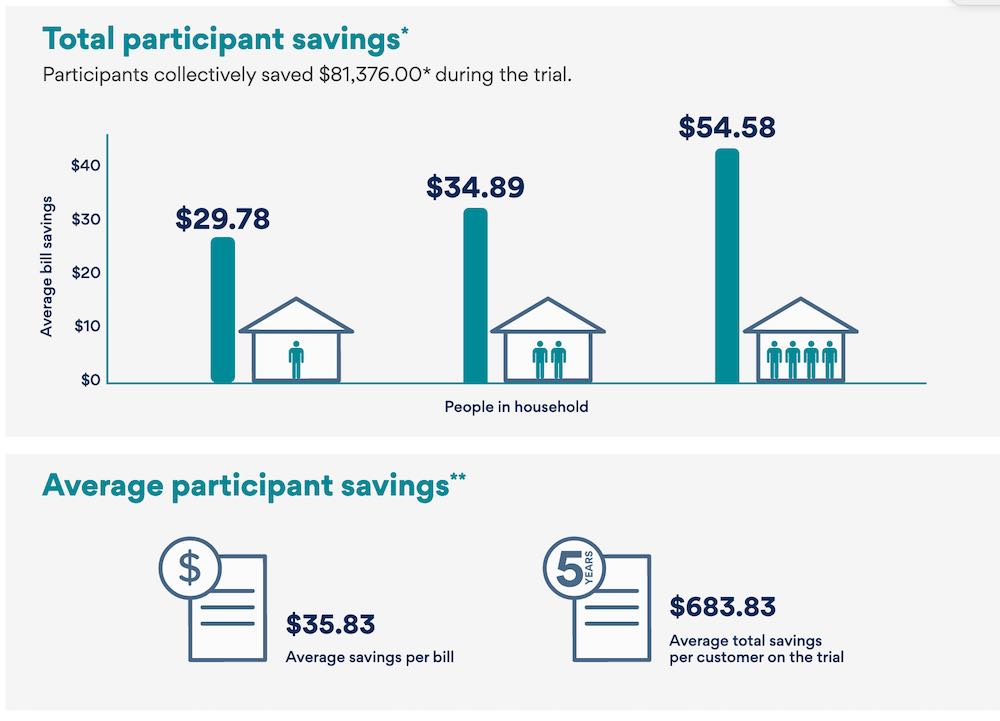
The report notes that participants also gained a better understanding of how to manage their electricity use as well as electricity costs because of the ToU tariff and more granular information provided – so another small win there.
In terms of the trial’s other objective, reducing the pressure on the grid at times of peal demand, the report found that this, too, was a success; with peak consumption offset by 85 per cent spread over the course of the trial.
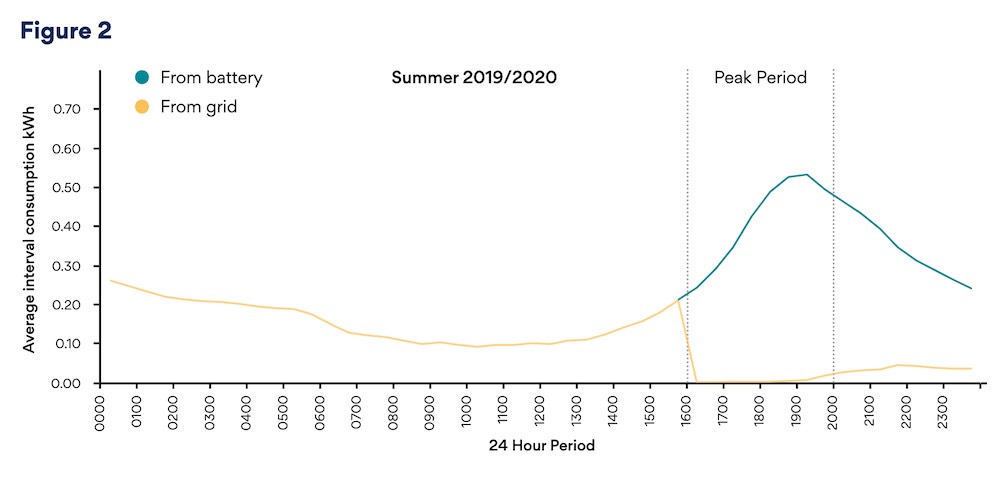
On the other side of the coin, the ARENA report notes that while the virtual battery product helped the Alkimos Beach households cut their electricity costs by leveraging the storage during the daily peak and therefore reducing network demand, it did not encourage them to reduce peak consumption, overall.
Another key “lesson learnt” – and one that has ensured the trial will not be carried forward as a regular market offering – was that the “highly subsidised” $11 a month battery subscription fee was “not a sustainable product” for Synergy.
“It has been demonstrated that a new retail servicing model that virtually connects individual household solar PV systems can be achieved. However, the trial has shown there are challenges in providing a sustainable tariff,” the report said.
“Greater exploration of tariff structures should be considered to encourage efficient use of the system, with a focus on determining how new tariffs can optimise customer participation and provide customer benefits against regulated single tariff structures.
“It is unfortunate that due to the high costs of maintaining the PDS tariff, the trial could not become a permanent offering to Alkimos Beach and/or additionally Alkimos Vista customers. This is something that future trials could look to resolve, to find the right balance between managing costs and customer benefits.”
All of that said, the report noted that there was “further value” Synergy might have been able to extract from the battery – had it known better at the time of the trial’s commencement – by supporting the electricity network beyond load-shifting, with dynamic services like frequency and voltage control.
As it happened, this was not fully understood at the time of the launch of the Australian-first trial, and the battery was installed with a “set and forget” charge and discharge cycle.
Lesson learnt? “Projects such as the ABEST should be leveraged to inform and expediate electricity market reform,” the report says. “We note work has been completed at Alkimos Beach to enable this capability going forward.”
Customer engagement was found to be all-important, and better carried out by some groups more than others (like the government-owned retailer).
The report also noted that customers might have been guided more clearly at the beginning of the trial about the size of their solar system – some could not participate because their generation capacity was too small – and the capabilities of their inverters.
“Future trials can build on this report and provide additional, valuable insights to electricity utilities and the wider community about new tariff models, shift in customer demand profiles and network control services,” the report concludes.
“Further analysis could be undertaken that explores the entire value stack from renewables and community scale energy storage to generators, retailers and customers. Larger solar PV systems improved customer savings for some customers.”

Sophie is editor of One Step Off The Grid and editor of its sister site, Renew Economy. Sophie has been writing about clean energy for more than a decade.