
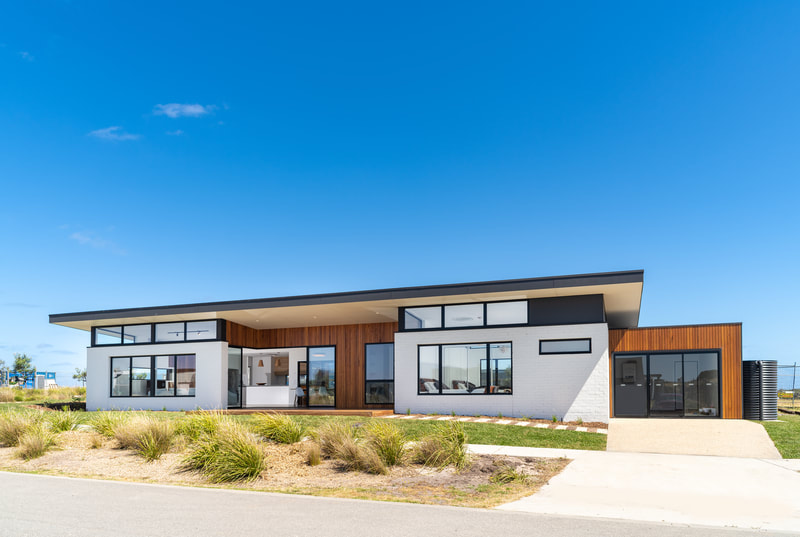

A group of more than 100 organisations and individuals led by the Property Council of Australia has called for a boost to the minimum energy efficiency requirements for new Australian homes – a move that could slash household energy bills by nearly $600 a year.
In a joint statement issued on Wednesday – two weeks ahead of a National Building Ministers meeting on August 26 – the alliance calls on Commonwealth, State and Territory governments to agree to amend the National Construction Code.
The August meeting follows a three-year collaborative process led by the Australian Building Codes Board (ABCB), with the goal of building on the Trajectory for Low Energy Buildings, agreed to by all Commonwealth, state and territory energy ministers in 2019.
The proposed amendments would include lifting the minimum thermal performance for new homes from 6 to 7 stars under the NatHERS rating system and introducing a “whole-of-home” energy budget for fixed appliances like hot water, heating, cooling and pool pumps.
According to the petition, even this sort of small level-up in building standards could deliver major household savings of up to $576 a year and lower the cost of grid upgrades by up to $12.6 billion by 2050.
Beyond the environmental and economic benefits, higher energy efficiency standards would also result in a housing stock that is more resilient to extremes of temperatures, more equitable, and less chained to high energy bills.
As it stands, Australia is woefully behind on energy efficiency standards in all of its buildings, despite these being well established as one of the cheapest way to cut greenhouse gas emissions and achieve climate goals.
“Many Australians are currently living in glorified tents, and that’s not just bad for our health but it’s also bad for our environment,” said Climate Council CEO Amanda McKenzie.
“This is Australia’s opportunity to improve its energy efficiency standards which will make our homes safer, more efficient, more affordable and help to address climate change.”
Whether states and territories will seize that opportunity at the upcoming meeting, however, remains to be seen.
A Consultation Regulatory Impact Statement prepared by ACIL Allen for the Australian Building Codes Board and published late last year controversially determined that raising the bar on energy efficiency building standards – even by just one star – would wind up costing society more than it was worth.
The highly questionable report – which Victoria rejected as “skewed” – said “there would need to be a very significant increase in wholesale energy costs … and/or a very significant reduction in the capital costs” for a 7-star minimum to be worth it.
Less than one year later, at least one of those prerequisites – and probably both of them – has been well and truly satisfied, as Australian households already squeezed by inflation struggle through a cold winter of record high electricity and gas prices.
Meanwhile, the push to raise the bar in Australia on energy efficiency has gained some considerable heft.
The 100-plus signatories of the petition for raised building standards this week includes the Green Building Council of Australia, the Energy Efficiency Council, Energy Consumers Australia, the Australian Council of Social Services, property developers and social housing providers.
“With Australia’s National Construction Code sitting idle for 10 years, Australia has let itself fall further and further behind international standards, and now is the time to catch up with the rest of the world,” said Property Council chief Ken Morrison.
“With housing and rental affordability at crisis point and inflation yet to peak, if our political leaders are serious about easing long term cost of living pressures, while also addressing climate change, then these amendments, which have been considered for quite some time, should be seen as a no brainer,” he said.
“Raising minimum energy efficiency standards for new homes is essential to reducing poverty and inequality,” said ACOSS acting CEO Edwina MacDonald.
“It means everyone living in housing built in 2023 and beyond, including social housing and private rentals, will benefit from cheaper energy bills and better health outcomes.”
“Rising energy prices, increasingly hotter and colder temperatures and the imperative to reduce the emissions footprint of our homes mean that we can no longer continue building inadequate housing,” said Energy Consumers Australia CEO Lynne Gallagher.
“There is overwhelming support for lifting the burden of poor housing on Australian families, with three in four households supporting the 7 star rating standard for new homes.”

Sophie is editor of One Step Off The Grid and editor of its sister site, Renew Economy. Sophie has been writing about clean energy for more than a decade.