
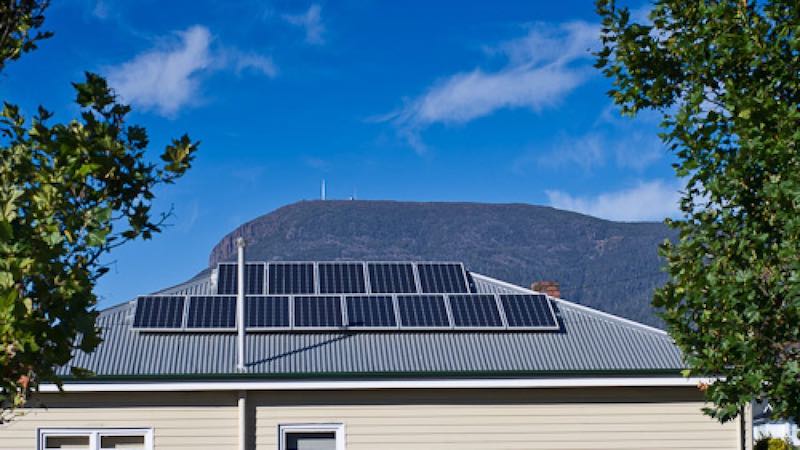
The Australian Competition Tribunal has rejected rule changes aimed at restricting access to buy-now-pay-later (BNPL) rooftop solar finance, arguing that the rules will do more harm than good to consumers and the market.
The push to tighten the rules around BNPL, which offers zero up-front cost and/or zero interest repayments on rooftop solar installations, has been led by the Australian Competition and Consumer Commission and has centred on better protecting consumers from “cowboy” sales tactics, including door-knocking and cold-calling.
In response to some well-publicised complaints, the ACCC in December made amendments to the New Energy Tech Consumer Code – a long-awaited distributed energy rulebook setting minimum standards of good practice and consumer protection – forbidding the use of BNPL products for unsolicited sales of rooftop solar installations.
The ACCC had also called for installers to ensure BNPL providers conducted responsible lending checks on customers, as set out in the credit laws, and wanted this written into the code, too. This would address the fact that BNPL finance providers were not regulated the same way as other credit providers, in that they aren’t required to assess if the loans are really suitable or going to leave people overindebted.
“Households can pay significant amounts for products like solar panels and battery storage, and sometimes they end up with expensive products that don’t suit their needs or they can’t afford,” ACCC Commissioner Stephen Ridgeway said in December last year when launching the new Code.
But the added restrictions, which were supported by the Consumer Action Law Centre, were met with a fight from the BNPL sector, led by ASX-listed FlexiGroup, which took the matter to the Tribunal. And on Tuesday, the ACT ruled in favour of FlexiGroup.
“The Tribunal considers that unregulated consumer credit in the form of ‘buy now pay later’ finance is a significant and popular form of finance used by consumers to acquire New Energy Technology products,” the determination said.
“Most of the proposed restrictions on the supply of ‘buy now pay later’ finance in the proposed code will generate substantial public detriments by reducing the availability of such finance to consumers, thereby reducing consumer access to NET products,” it added.
The ACT also ruled that the evidence presented by the ACCC failed to establish that the provision of BNPL for solar and related products generated material consumer harm.
Rather, the ACT said, the data indicated that arrears and defaults were significantly lower for all types of finance used to finance rooftop solar, thanks mainly to “the nature of the product” which generated energy cost savings for consumers.
In a statement on Tuesday, FlexiGroup welcomed the Tribunal’s decision to reject the ACCC’s December changes to the NETCC as a “win for consumers,” saying it paved the way for BNPL – and its own product, “humm” – to continue supporting rooftop solar uptake.
FelxiGroup noted that the NETCC, while not compulsory for retailers to sign up to, already required signatories to meet minimum standards of good practice and consumer protection on marketing, distribution and financing.
“We have supported the NETCC’s intent of increasing consumer protection from the outset,” said FlexiGroup CEO Rebecca James.
“Humm has financed over 210,000 solar installations or nearly 10% of all installed grid-connected solar systems in Australia. Of these, less than 1% have experienced any hardship or default, clearly illustrating that additional regulation is not required to ensure great consumer outcomes and industry-leading customer satisfaction,” James said.
“BNPL increases competition and has been meaningful in driving the adoption of green energy solutions, benefiting consumers and the environment. It is the simplest and cheapest form of finance, offering consumers the swiftest payback on their investment.
“We look forward to working with our merchants to drive the continued adoption of new energy technologies across an increasing number of households who support a more sustainable environment.”
The decision will also be welcome news to fellow rooftop solar financier, Brighte, whose CEO last week told the Smart Energy Council conference that Australia has been a leader in the development of BNPL, which had been used in the solar sector for more than a decade.
“Not many people know, but ‘buy now pay later’ was founded in Australia,” said Brighte’s Katherine McConnell. “It is this huge global phenomenon, but it was founded in Australia. This amazing financial innovation that’s taking over the world.”
Brighte has provided finance for more than 52,000 rooftop solar installations in Australia and argues that, when done appropriately, BNPL can help breakdown the barrier that higher upfront costs can create, while allowing finance for a rooftop solar system to be paid off using the savings generated by the solar installation.
On the other side of the ledger, meanwhile, the Australian Consumer Law Centre was not happy with the Tribunal’s decision, calling it a “missed opportunity” to improve dodgy solar sales practices.
“The Tribunal decision is very disappointing”, said Gerard Brody, the Centre’s CEO. “We have seen many cases where people have been ripped off …including people signed up to finance without their knowledge.
“We also provided evidence to the Tribunal of Australians purchasing solar panels using buy now pay later finance who may have been significantly overcharged for their solar energy systems.
“In short, this is a missed opportunity for industry to fix its own problems. Now it’s time for government to act to ensure people are better protected,” said Brody.
Brody also called on the Australian Securities and Investment Commission to consider independent evidence of consumer harm and hardship in its upcoming report into the BNPL industry, rather than relying on “industry’s say so.”
“Many Australians rightly want to get on top of energy bills and invest in renewable energy options at home. But allowing ongoing consumer rip-offs only serves to undermine the transition to cleaner energy. It is up to state and federal governments, as well as regulators, to act.”

Sophie is editor of One Step Off The Grid and editor of its sister site, Renew Economy. Sophie has been writing about clean energy for more than a decade.