
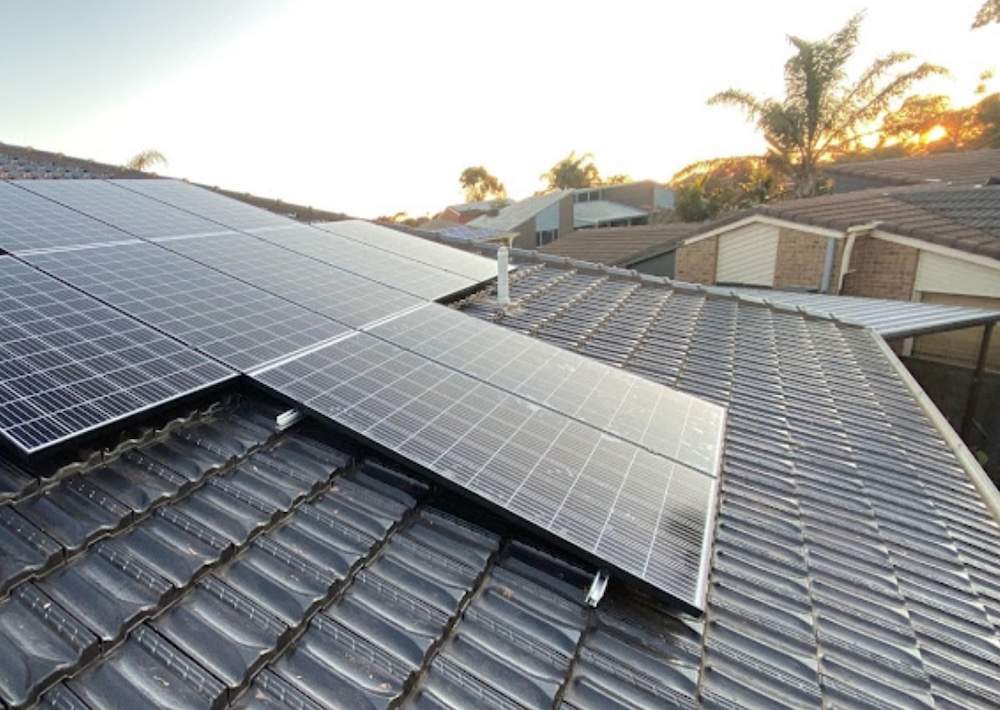
The South Australia network company that first called for the introduction of rooftop solar export tariffs has this month started charging the so-called “sun tax” to retailers on its grid, marking the second state to introduce the measure.
South Australia Power Networks (SAPN) says it will now charge energy retailers a “small cost” for solar exports from households and businesses, which energy retailers may then pass on to customers.
The export tariff applies to all residential and business customers who can send solar to the grid – inverters sized up to 30kW – but only affects exports over a certain daily threshold and a set period of time during the middle of the day.
For households and businesses with smart meters, export tariffs will be charged only for exports of more than 9kWh per day, and between 10am to 4pm.
In this case SA Power Networks will charge retailers 1c per kWh for customer exports above the 9 kWh daily threshold during that six-hour, middle-of-the-day window.
If a customer does not use all of their daily free export, it can be used on another day within the billing cycle, which is typically 30 to 31 days.
As noted above, SAPN says the customer bill impact for solar homes and businesses will depend on whether or not the retailer passes on the export charges. If the tariffs are passed through, SAPN estimates this could cost a typical residential customer about $1.50 per month, based on a 5kW inverter with medium self-usage and medium exports.
For a typical small business customer, the cost could be around $6.00 per month, based on a 15 kW inverter with medium self-consumption and medium exports.
“South Australia is leading the nation in terms of the installation of rooftop solar, and the need to invest in the network to efficiently manage excess solar generation,” SAPN says here.
“The Export Tariff (also known as two-way pricing) is applied to excess energy exports only, so the more people self-consume the solar they generate, the less likely it is that they will be charged to export excess energy.
“It means that electricity network upgrades to support these energy exports, are funded by those who benefit from them the most. This makes it fairer for those who do not have the ability to export energy.”
The perennially controversial subject of solar export tariffs has been a topic of hot debate since it was first put to the Australian Energy Market Commission (AEMC) in 2020.
At that time, it was proposed as a rule change by SAPN and a group of consumer advocacy groups, including the Total Environment Centre, the St Vincent de Paul Society Victoria and the Australian Council of Social Services.
SAPN has also been at the forefront of reforms and trials of new technology and approaches that seek to avoid curtailing solar and – in some cases – incentivise customers for not exporting their solar at times of grid congestion.
Elsewhere in Australia, New South Wales has been the only other state where network companies have opted to apply an export tariff to solar customers.
Almost all of the 300,000-plus solar households on the Ausgrid network will be subject to PV export tariffs from the start of the 2025-26 financial year, which could cost them an average of $2.50 a year depending on whether their retailer passes the tariff through.
For Endeavour Energy and Essential Energy, export tariffs are only being applied to new and upgrading solar customers and existing solar customers that opt in – and any customers can opt out.
Essential Energy has estimated that around 16% of exporting customers will be on its solar export tariff in 2025-26. Between July 2026 July 2028, all small customers who can export to the grid will be moved to an export tariff, with the option to opt-out remaining in place until July 2028.
Other states, like Victoria, have ruled out charging customers for solar exports, but have reduced feed-in tariffs to just above zero – 0.04c/kWh from July this year.
All told – and depending on the size of solar system and usage patterns – the impact of the full force of the “sun tax” on NSW and South Australia households could actually wind up being less dramatic than the changes facing homes in Victoria, with its ultra-low solar FiT.
Still, it is difficult to find many people outside of the networks and rule makers who will argue in favour of charging solar households for excess solar exports as a sensible answer to the problem.
Tim Buckley, founder and director of Climate Energy Finance, says progressive cuts to feed-in-tariffs are “the logical end-point” for Australia’s rooftop solar success story.
“Expecting to be paid for electricity exports when they are worse [than] worthless is ill-informed. Why should a renter or apartment dweller subsidised the richer home owners?” he writes in a LinkedIn post on the subject this week.
But Buckley says moving to a “Sun Tax” is exactly that – “demanding the poor subsidise the better off.” There are better ways to ensure the grid is not flooded with excess solar during the middle of the day.
“Climate and Energy Minister Chris Bowen has offered a far better solution – with his $2.3 billion 30% rebate to battery installations nationally,” Buckley writes.
“That means rooftop solar system owners cut their exports of negative value solar and in storing it, time shift the use or export of this zero emissions cheap electricity to when it is far more valuable. Then repeat daily.
“There are technology solutions available to benefit both the home owner and all energy consumers.”

Sophie is editor of One Step Off The Grid and editor of its sister site, Renew Economy. Sophie has been writing about clean energy for more than a decade.