
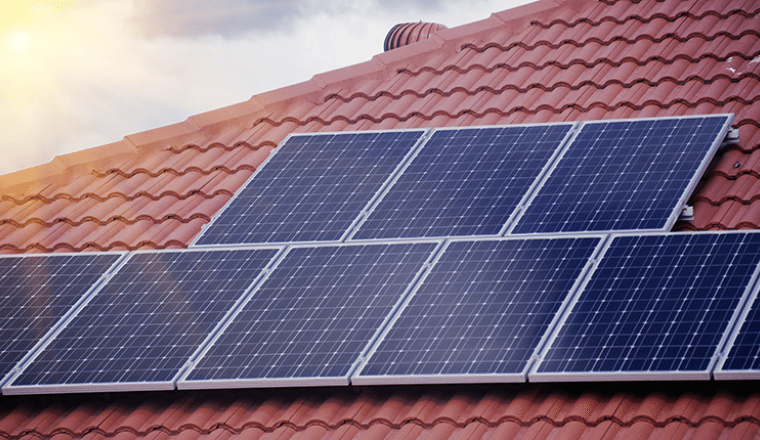
NSW solar households could soon be paid slightly more for the electricity they export to the grid after the state’s Independent Regulatory and Pricing Tribunal recommended boosting the feed-in tariff to match rising wholesale power prices.

In its final determination on solar feed-in rates for the 2016-2017 financial year, IPART said the recommended ‘benchmark range’ for new solar homes – and those not still on a premium solar FiT – would rise from 4.7-6.1c/kWh to 5.5-7.2c/kWh.
The range – which is not compulsory – will be of interest to the 146,000 households that will lose their “premium” tariffs at the end of this calendar year. Many of these households, having effectively paid off their solar systems, are expected to look at battery storage to deflect rising bills.
The mandatory ‘retailer contribution’ to state-sanctioned feed-in tariffs – that is the 60c/kWh or 20c/kWh previously offered under the Solar Bonus Scheme, which is soon to end – has also risen by about 1c/kWh.
IPART’s recommendations follow the decision of the Queensland Competition Authority (QCA) last week, to raised the solar tariff for its regional customers by more than 17 per cent, from 6.3c/kWh to 7.4 cents per kilowatt hour for 2016-17.
Like IPART, QCA said the raise in the tariff was mainly due to an increase in wholesale energy costs, in this case driven by increased demand from Queensland-based LNG plants and higher fuel costs for gas-fired generation.
“The QCA’s approach ensures customers with solar panels, receive a fair return for the energy they export to the grid. The QCA calculates the true market value of the energy,” said QCA Roy Green.
The new Queensland rate was welcomed, but also criticised for still failing to reflect the added benefits distributed solar offers the network in avoided infrastructure costs, the customer in lower power prices, and the environment, and other potential benefits.
These benefits were confirmed recently in a study by Victorian utility Ausnet, which found that the value of solar and storage was about equal to both consumers (who save money) and the networks (who avoid upgrades).
For NSW solar households, meanwhile, this week’s tariff changes will bring little benefit, both because the increase is so small, and because IPART’s benchmark solar feed-in rate range is a recommendation, only. In NSW, no electricity retailer is required to provide rates that high (or any rates at all, for that matter).

Sophie is editor of One Step Off The Grid and editor of its sister site, Renew Economy. Sophie has been writing about clean energy for more than a decade.