
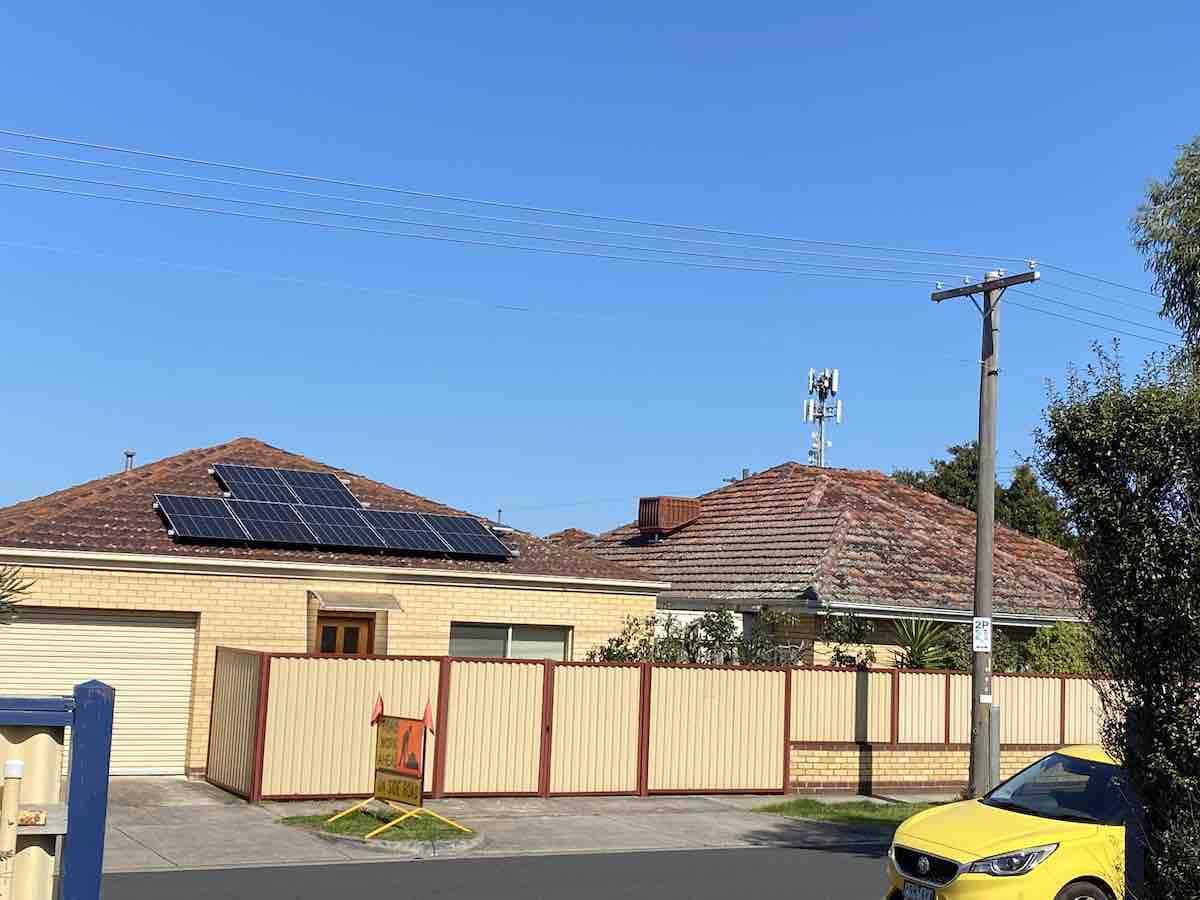

Victorian households are facing another sharp cut to amount they are paid for rooftop solar exports, with the state’s regulator flagging plans to ratchet down the minimum flat-rate feed-in tariff to a new low of just 3.3 cents per kilowatt-hour.
Rooftop solar tariffs have been on a steep downward slide over the past three years in Victoria, going from a recommended floor price of 10.2c/kWh in 2022-22, to 6.7c/kWh in 2022-23, and then down again to the current 2023-24 rate of 5.2c/kWh.
In a draft decision published on Wednesday, the Essential Services Commission says the proposal to slash the flat-rate rooftop solar FiT by another 33% come July 2024 follows the expected trajectory of wholesale power prices, which continue to be pushed down by – you guessed it! – rooftop solar.
“While wholesale electricity prices on average have increased in in recent years, they are forecast to decline in 2024-25,” the ESC says.
“This is especially true for wholesale prices during the day. Increased solar installations has reduced demand and increased supply during daylight hours leading to reduced prices when most solar exports are occurring.”
This is somewhat of an understatement.
The combination of rooftop and large-scale solar have this year regularly sent wholesale electricity prices into negative territory at times of peak generation; a phenomenon known as the Solar Duck Curve that, for now, can cause supply-demand balance headaches for the market operator, AEMO.
For its part, the market is doing what it can to discourage solar exports during the day, including through the reduction of solar feed-in tariffs, pushing solar home owners – and eventually the market – to get more creative about maximising the value of their solar panels (or to fork out for a battery).
Victoria, for its part, is among the first of the states to set price parameters for retailers to offer time-of-use feed-in tariffs that incentivise households to shift their solar exports to later in the day – or overnight if they have a battery.
“This is why the peak, early evening, shoulder and overnight time varying feed-in tariff blocks are higher
than the daytime periods,” the ESC explains … before also explaining that it is recommending sweeping cuts to time-of-use tariffs, too.
“Although the proposed overnight and early evening tariff rates are higher than the day rates, they are also decreasing,” the decision says. “This is because wholesale prices are currently forecast to be lower on average across all parts of the day.
“Night-time wholesale electricity spot prices are higher than daytime prices. But night-time solar weighted wholesale electricity prices are nevertheless forecast to decrease in 2024-25.
“This leads to our proposed early evening and overnight feed-in tariff rates also being lower than their
equivalents in 2023-24”
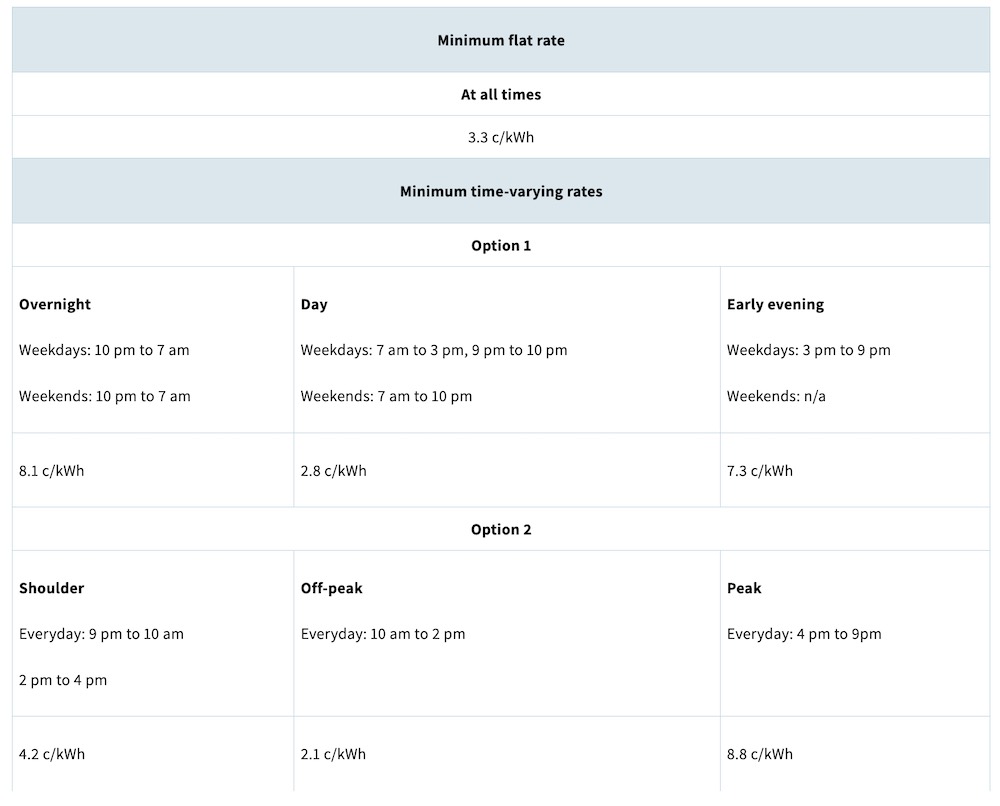
For 2024-25, the ESC is proposing a couple of options for time-varying minimum feed-in tariff rates, ranging between 2.1 and 8.8 cents per kWh, which is 17 and 46 per cent lower than the corresponding rates for 2023–24.
All of this said, Victoria is certainly not the worst state for solar feed-in tariffs. For starters, retailers who choose to offer a flat solar feed-in tariff must offer customers at least the minimum rate that the regulator sets in its final decision. (In other states, like NSW, it is entirely voluntary to meet the minimum rates recommended by regulators.)
This means retailers can, of course, offer rates above this – the ESC last year reported at least half a dozen Victorian retailers offering a very small premium on the recommended minimum rate.
For those who are able to shift their energy use into the middle of the day, or who do have a battery, there are some great deals around that can help consumers get the most bang for their solar buck. EVs, with their huge batteries on wheels, will become good solar soakers for others.
Meanwhile, the downward march of solar FiTs is happening in all states and territories, with the ESC and other pricing regulators pushing the line that savings from solar self-consumption, not earnings from solar exports, are the way forward.
“The main financial benefit for solar customers is the savings to their electricity bills from using the electricity they generate to avoid paying retail rates for electricity,” the draft decision says this week.
“Therefore, customers should install a solar system that best aligns with their own consumption and not necessarily rely on exports.”

Sophie is editor of One Step Off The Grid and editor of its sister site, Renew Economy. Sophie has been writing about clean energy for more than a decade.