


The University of New South Wales has set a firm date on its plans to go 100 per cent renewable, after unveiling a roadmap this week to take its buildings emissions-free and source all of its electricity from clean energy sources by 2020.
The UNSW, a champion of global PV research, said this week that it would expand its on-site solar generation and boost energy and water efficiency as part of a new three-year environmental sustainability plan.
The plan builds on the ground-breaking deal the University signed with China-based renewables developer Maoneng Australia and retailer Origin Energy back in December 2017, to buy 124,000MWh a year from Maoneng’s 200MW Sunraysia Solar Farm in south western NSW.
As we reported at the time, the consultancy firm that helped broker the “tripartite” deal, Energy Action, said it was also notable for providing the UNSW with a “direct line of sight over the source of renewables supply, reduced emissions, and greater certainty around prices.”
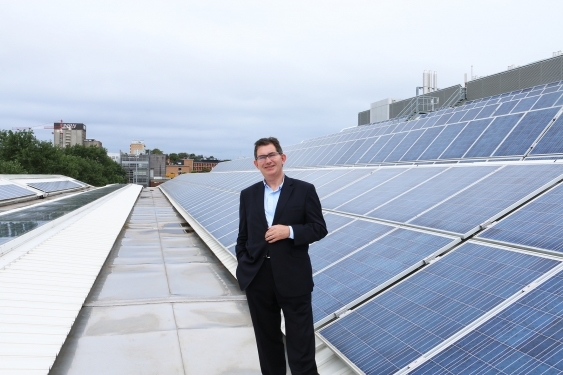
And while the solar supply from Sunraysia was designed to meet the University’s annual energy needs – starting this year – the Environmental Sustainability Plan 2019-2021 will see the UNSW top up its on-site solar capacity to 1.2 MW by 2022, up from the 800kW currently installed.
Beyond the boosted solar capacity, the ESP will also design new buildings to operate emissions free and introduce centralised waste collection in offices to cut down on single-use plastic bin liners.
Energy efficiency upgrades will target the least efficient buildings on campus, saving enough electricity to power around 400 homes by 2022. Improvements to water efficiency on campus will save 12,000 cubic metres of water per year or enough to fill five Olympic swimming pools.
“The University has the scale of a small city, so it is right that we grow and invest like any sustainable city would, with a responsible and clear plan,” said UNSW President and Vice-Chancellor Professor Ian Jacobs in comments on Wednesday.
The plan will also endeavour to live up to the University’s towering reputation as a world champion of solar PV efficiency.
“About 50% of the solar panels sold worldwide today use UNSW-designed technology, and our alumni are at the forefront of the photovoltaics and energy transition industries globally,” Professor Jacobs said.
“Our new plan builds on these achievements while significantly raising our levels of ambition to respond to the scale of environmental challenges we face today.”
UNSW says the ESP was developed following an internal review and consultation process, involving more than 350 students, professional and academic staff and government representatives over the course 2018.
“Under this plan, we will develop a set of resources that engage the student and staff community in the SDGs through learning and teaching programs, while making sure academic staff are able to decide how to include SDG thinking within their courses,” UNSW Head of Environmental Sustainability William Syddall said.
“Once UNSW has eliminated greenhouse gas emissions from building energy use by 2020, our focus will turn to indirect sources of emissions such as travel, embodied emissions and purchased goods and services,” he said.
“We hope this plan inspires not only our University community but the wider community to take action for a sustainable future.”
A number of other Australian universities have also committed to targets of 100 per cent renewables, including the University of Newcastle, Victoria’s Monash University, and the University of Queensland.

Sophie is editor of One Step Off The Grid and editor of its sister site, Renew Economy. Sophie has been writing about clean energy for more than a decade.