

Victoria’s energy regulator has flagged another cut to the state’s recommended minium solar feed-in tariff, less than six months after the floor price was slashed by one-third from 10.2c/kW to 6.7c/kWh in July.
In a draft decision published by the Essential Services Commission this week, the regulator flagged plans to reduce minimum feed-in tariff energy companies must pay solar households for their exports to 5.2c/kWh, starting July 2022.
As the ESC noted, the proposed drop continues the trend of the last two years of falling wholesale electricity prices, which in no small part have been driven down by the addition of more and more cheap distributed solar power to the grid.
“Wholesale electricity makes up most of the costs covered by the minimum feed-in tariff,” the CER said in this explainer here.
“In recent years, wholesale electricity prices have been going down, particularly in the middle of the day when most solar is exported.
“We expect this trend to continue in future years. This is driven by increased rooftop solar installations which decrease demand for electricity from the National Electricity Market and increase supply during solar generating hours.”
And while cutting the amount solar households get paid for their part in reducing wholesale electricity prices for all seems a bit back-to-front, ESC pricing regulator says the real value to solar customers is in not having to pay retail for the electricity they use – at least not all of it.
“The latest data shows participants in Victoria’s home solar program are saving an average of $1,073 on their annual power bills while making a major contribution to reducing emissions,” Crudden said.
“Matching your usage where possible by putting on appliances or using timers to when solar power is available rather than using mains power and paying retail rates is the best way to maximise savings,” he said.
On this note, Victoria also gives the option for retailers to offer time-of-use tariffs, meant to incentivise solar the export of solar at times of peak demand, and discourage it during the middle of the day when solar generation is plentiful.
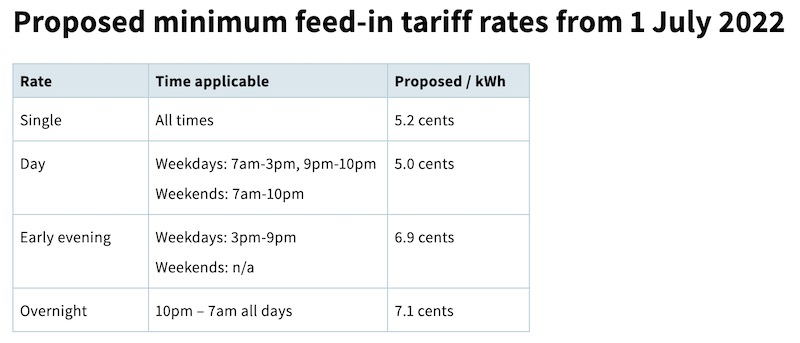
According to the draft decision, the minimum FiT for the early evening peak (3pm – 9pm) under the ToU model would be 6.9c/kWh, with 7.1c/kWh offered for battery stored solar exported to the grid overnight, between 10pm and 7am.
Solar households looking for better deals for their solar power can find them – as Crudden notes, the ESC sets the minimum rates expected from retailers, and there are those who opt to pay more.
“We encourage customers to shop around when deciding on a retailer offering feed-in tariff rates and to consider their energy consumption and generation,” he said.
But bigger FiTs are not always better – depending on your usage patterns and size of system, among other things – and customers should always read the retailer’s fine print.
Last year, Pacific Hydro-owned retailer Tango Energy offered rooftop solar customers in Victoria a 20c/kWh feed-in tariff – the equal-highest in the state and almost twice the (then)10.2c/kWh minimum mandated rate. But as One Step explained here, the offer came with a couple of key catches.

Sophie is editor of One Step Off The Grid and editor of its sister site, Renew Economy. Sophie has been writing about clean energy for more than a decade.