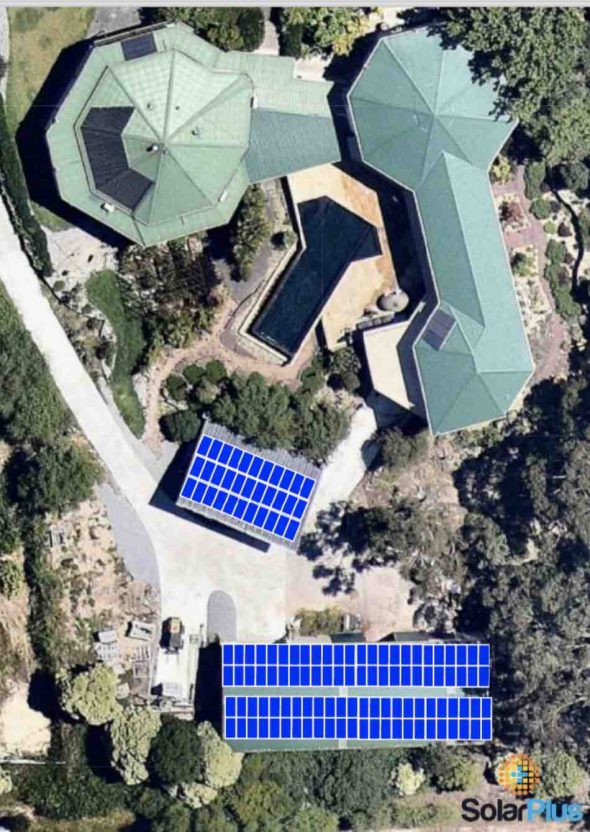
Industry reports suggest more and more Australian households are choosing to quit the grid, and they’re doing so for a mixed bag of reasons.
Angry and frustrated, more customers are quitting the grid


One Step Off The Grid
Solar, storage and distributed energy news
Industry reports suggest more and more Australian households are choosing to quit the grid, and they’re doing so for a mixed bag of reasons.
When an islanded microgrid at Stone Edge Farm near Sonoma kept operating for 10 days through California fires and grid outages, the operators seized the opportunity to learn as much as possible from the surprises they encountered.
Coalition’s new energy policy appears to lock in Australia’s extraordinary high energy costs for at least another decade. This will encourage more households and businesses to turn to solar, or even leave the grid altogether. Here is how one Brisbane family quit the grid.
A Queensland local government council has installed what is believed to be Australia’s first off-grid solar and battery storage system to use a Tesla Powerpack, to maintain local drinking water quality around the clock.
During natural disasters, access to electricity is more critical than ever, a growing body of evidence suggests that states and countries that replace old, costly fossil-fired generators found greater reliability and resilience at lower costs.
Western Power pilot shows stand-alone solar + battery + diesel systems 15 times more reliable than grid, and could save $300 million in avoided network upgrade costs – but only if rules are change changed to allow the systems to be rolled out.
John Kobylec believed that installation of a solar system at his Bruny Island retirement home would be prohibitively expensive, but is now a now total convert.
Tasmania’s Bruny Island sees the benefits as 11 of 35 solar-powered battery systems installed in private homes start contributing to the local electricity grid.
ARENA backed NT project commissions first 10 solar, battery storage systems, cutting diesel fuel use by more than a million litres a year.
The boom of solar in Australia is great, but traditional PV systems are essentially invisible to our networks and our markets. And that’s problematic.